
10 DIY Coffee Tables You Can Finish in a Day
A coffee table can completely change the look and functionality of a living room, but you don’t necessarily need an expensive designer piece to get that polished appearance.
With the right materials and a straightforward design, you can create a DIY coffee table that looks intentional, stylish, and surprisingly high-end.
The best part is that many simple coffee table projects can be completed in a day, especially when you choose a design that doesn’t require complicated joinery or extensive finishing.
In my experience, the key to making a DIY coffee table look expensive is simplicity. Clean proportions, attractive wood grain, a restrained finish, and sturdy construction can make a basic project feel much more sophisticated.
Think about your existing furniture before choosing a design. A rustic wood table may work beautifully in a warm farmhouse living room, while a minimalist slab table may be better suited to a contemporary space.
You can also use the project as an opportunity to solve a practical problem. Add a lower shelf for baskets, choose a lift-top design for small spaces, or build hidden storage into the base.
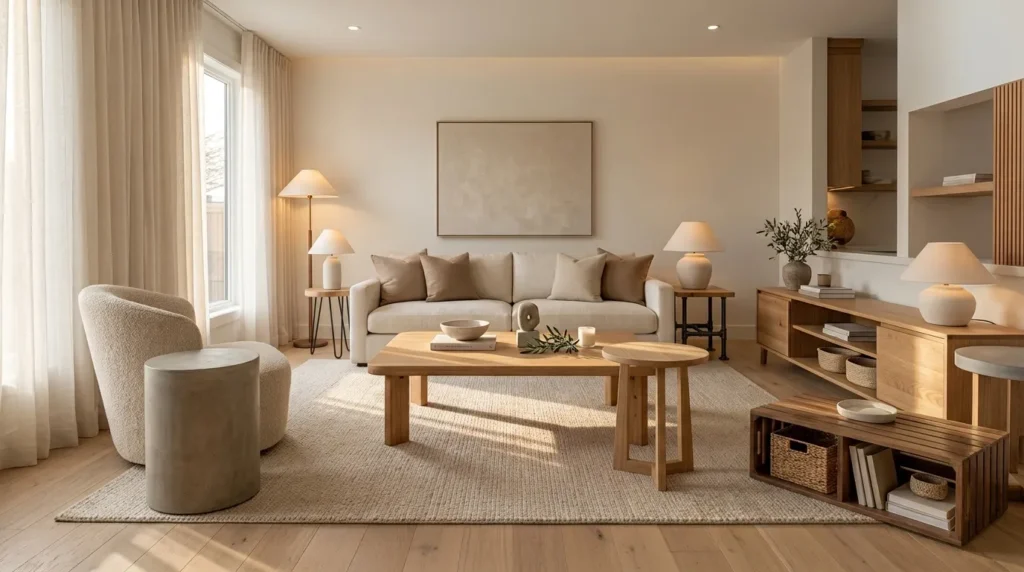
Here are ten DIY coffee table ideas that combine approachable construction with stylish results.
Table of Contents
- Simple Wood Slab Table
- Box Frame Coffee Table
- Hairpin Leg Table
- Storage Crate Table
- Round Pedestal Table
- Two-Tone Wood Table
- Concrete Top Table
- Lift-Top Coffee Table
- Reclaimed Wood Table
- Minimalist Platform Table
1. Simple Wood Slab Table
Quick Benefits
- Easy to customize
- Creates a natural focal point
- Works with many styles
- Requires relatively few components
- Can look high-end
Why It Works
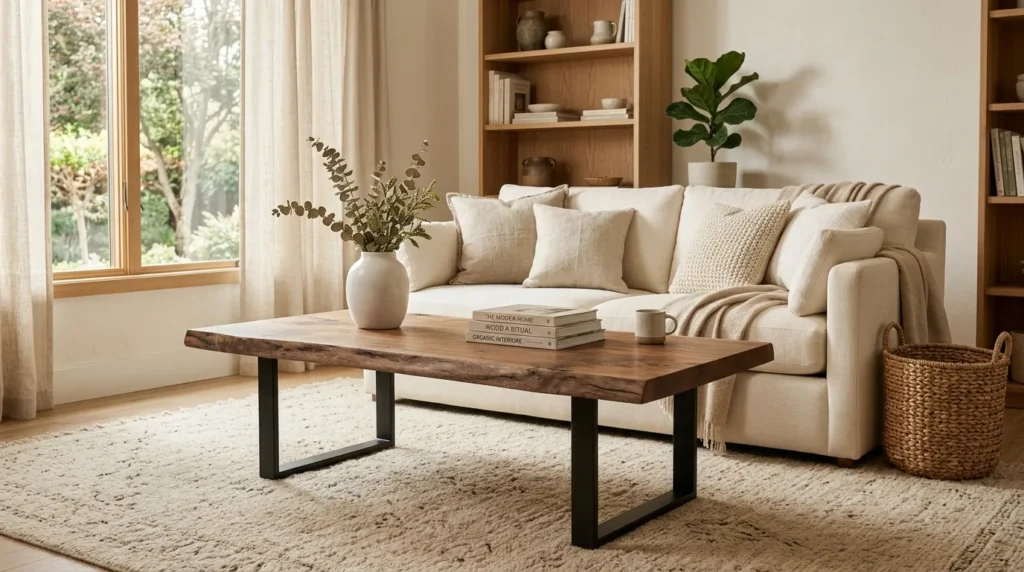
A simple wood slab design relies on beautiful proportions and natural material rather than complicated construction.
A thick wood top paired with a clean base can look remarkably sophisticated.
This style works particularly well in modern organic, farmhouse, Scandinavian, and transitional interiors.
How To Style It
Choose a properly prepared wood board or slab suitable for furniture use.
Sand the surface thoroughly and apply an appropriate finish.
Pair it with a simple wooden or metal base.
Keep the tabletop relatively uncluttered so the wood remains the focus.
2. Box Frame Coffee Table
Quick Benefits
- Provides visual structure
- Creates storage possibilities
- Looks modern
- Can be customized
- Works well in family rooms
Why It Works
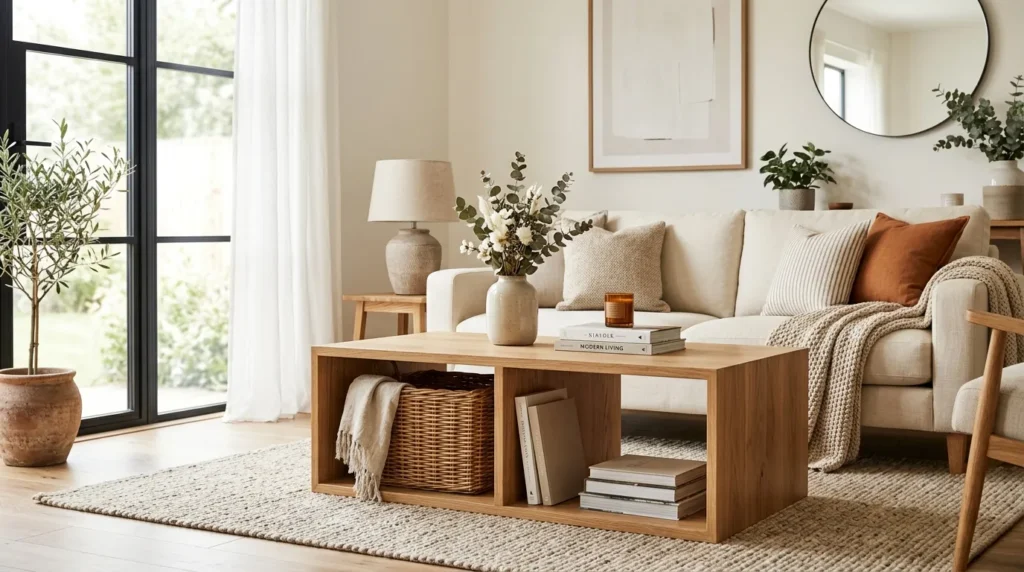
A box-style coffee table can combine a substantial appearance with relatively straightforward construction.
The enclosed base creates strong geometric lines while offering opportunities for baskets, books, or decorative storage.
How To Style It
Use a natural wood finish for a warm look.
For a modern appearance, consider a painted neutral finish.
Add a lower compartment for baskets or books.
Keep the surrounding furniture soft and comfortable to balance the table’s structured shape.
3. Hairpin Leg Table
Quick Benefits
- Simple design
- Lightweight appearance
- Easy to customize
- Works in small rooms
- Modern aesthetic
Why It Works
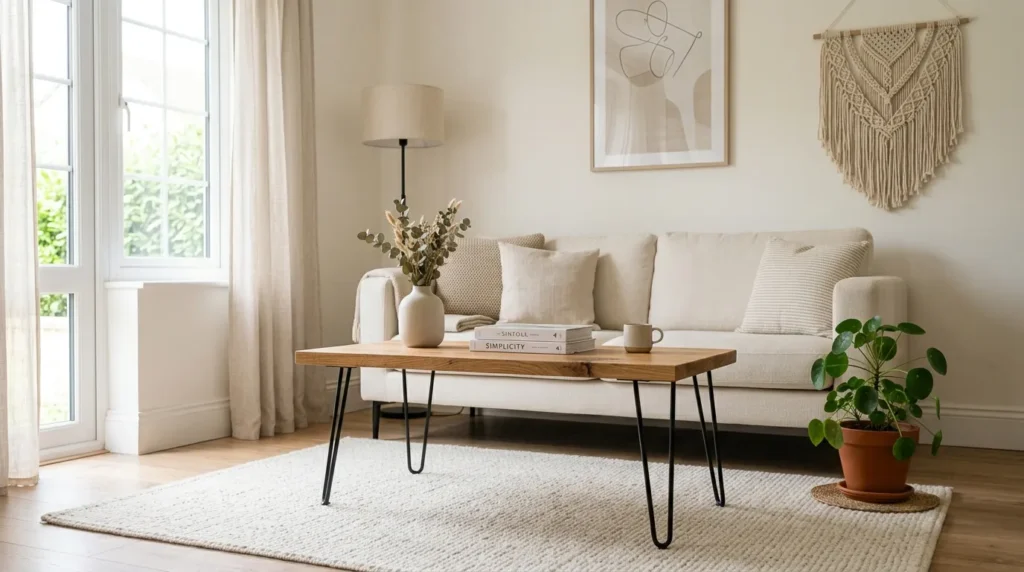
Hairpin legs create an open base, which allows more of the floor to remain visible.
That makes this style especially useful in smaller living rooms where bulky furniture can feel overwhelming.
How To Style It
Pair metal hairpin legs with a warm wood top.
Choose a top with enough thickness to balance the slender legs.
Add a neutral rug underneath to define the seating area.
Keep accessories minimal to maintain the table’s clean appearance.
4. Storage Crate Table
Quick Benefits
- Budget-friendly
- Adds storage
- Reuses simple materials
- Easy to personalize
- Great for casual spaces
Why It Works
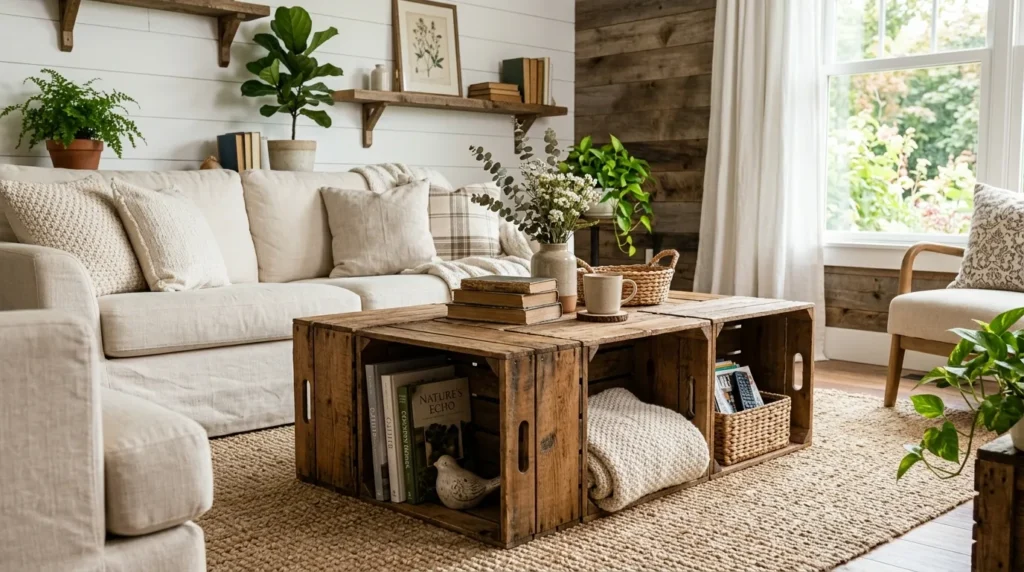
Wooden crates can provide built-in compartments while creating a relaxed rustic appearance.
This design is particularly useful in family rooms where blankets, books, and small items need a designated home.
How To Style It
Arrange suitable crates securely to create the base.
Add a sturdy tabletop.
Sand and finish the wood before use.
Use woven baskets or fabric containers inside the openings to soften the appearance.
5. Round Pedestal Table
Quick Benefits
- Softens square furniture
- Improves movement
- Works in compact spaces
- Creates a stylish focal point
- Eliminates sharp corners
Why It Works
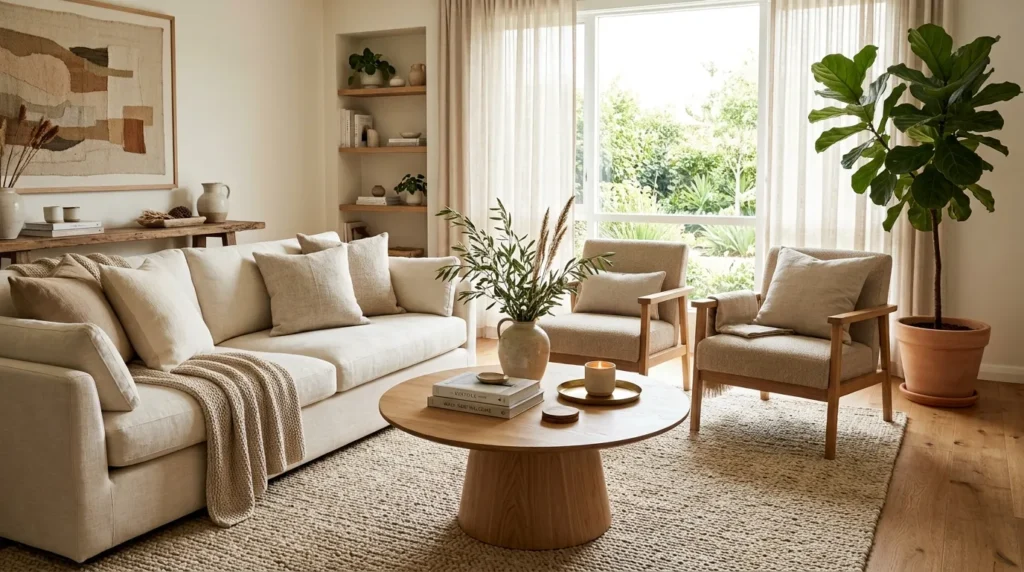
A round coffee table can make a living room feel more fluid.
Without corners, it can also make circulation around seating easier.
A pedestal base creates a clean silhouette and keeps the design visually cohesive.
How To Style It
Choose a round tabletop that fits comfortably within the seating arrangement.
Keep the base sturdy and appropriately weighted.
Use a neutral wood or painted finish.
Style the center with a simple tray, coffee-table books, or a ceramic vase.
6. Two-Tone Wood Table
Quick Benefits
- Adds contrast
- Highlights craftsmanship
- Creates visual interest
- Works with neutral interiors
- Can look custom-made
Why It Works
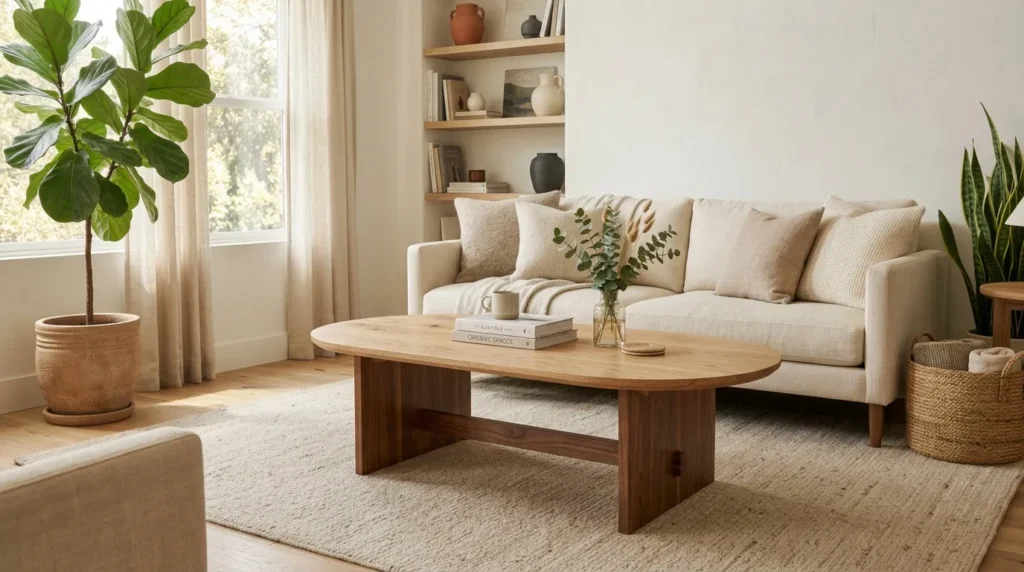
Combining two complementary wood tones creates subtle contrast without relying on bold colors.
For example, a lighter top can be paired with a slightly deeper base.
How To Style It
Keep the two wood finishes related rather than completely mismatched.
Repeat one of the tones elsewhere in the room.
Use neutral upholstery and rugs so the table remains the focal point.
7. Concrete Top Table
Quick Benefits
- Contemporary appearance
- Durable surface
- Adds texture
- Works with modern interiors
- Creates an architectural feel
Why It Works
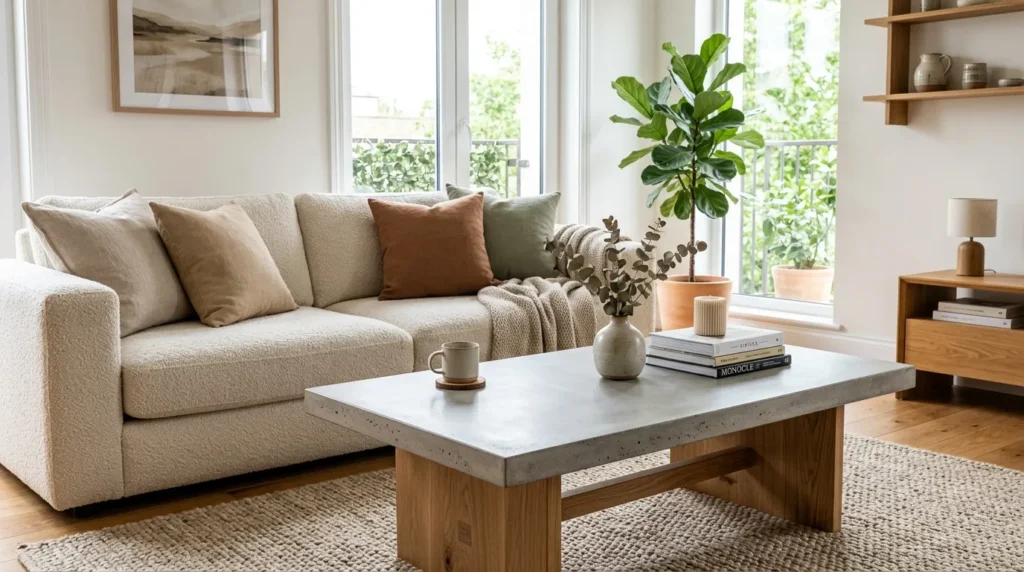
Concrete introduces a strong material contrast against soft sofas and textiles.
Its naturally understated gray tone can work beautifully with warm wood, cream upholstery, and neutral rugs.
How To Style It
Use a suitable furniture-grade concrete method and allow appropriate curing time.
Pair the top with a simple wood or metal base.
Balance the industrial surface with warm textiles and natural accessories.
Avoid making every element in the room industrial.
8. Lift-Top Coffee Table
Quick Benefits
- Adds hidden storage
- Creates a workspace
- Useful for small homes
- Improves functionality
- Keeps surfaces organized
Why It Works
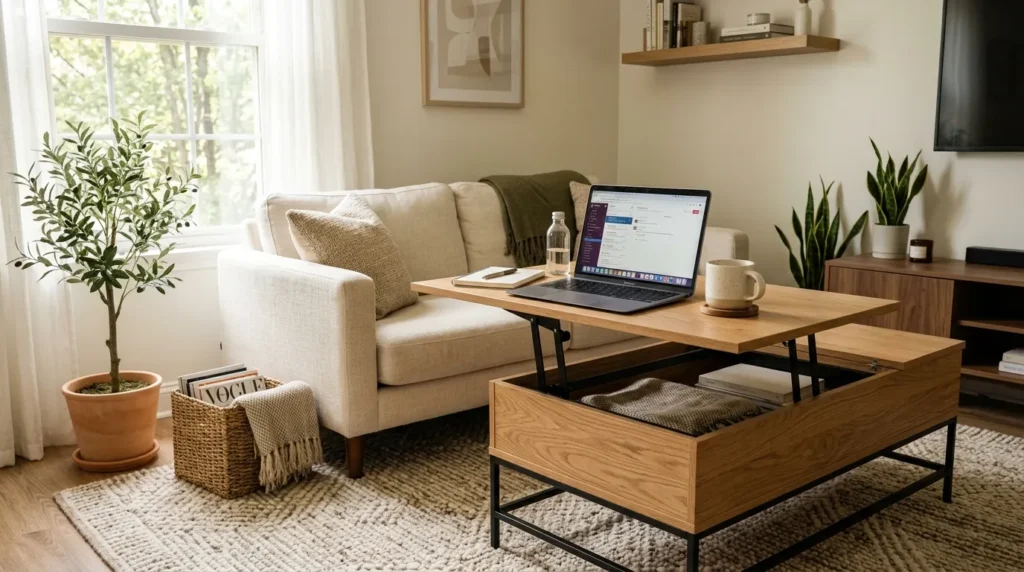
A lift-top design turns the coffee table into a multifunctional piece.
It can provide a convenient surface for working, eating, or writing while concealing items underneath when the top is closed.
How To Style It
Choose a simple exterior design.
Use hardware rated for the intended load and movement.
Keep the storage compartment organized with baskets or small containers.
This is especially useful when your living room needs to serve several purposes.
9. Reclaimed Wood Table
Quick Benefits
- Adds character
- Reuses materials
- Creates a unique appearance
- Works with rustic interiors
- Can be budget-friendly
Why It Works
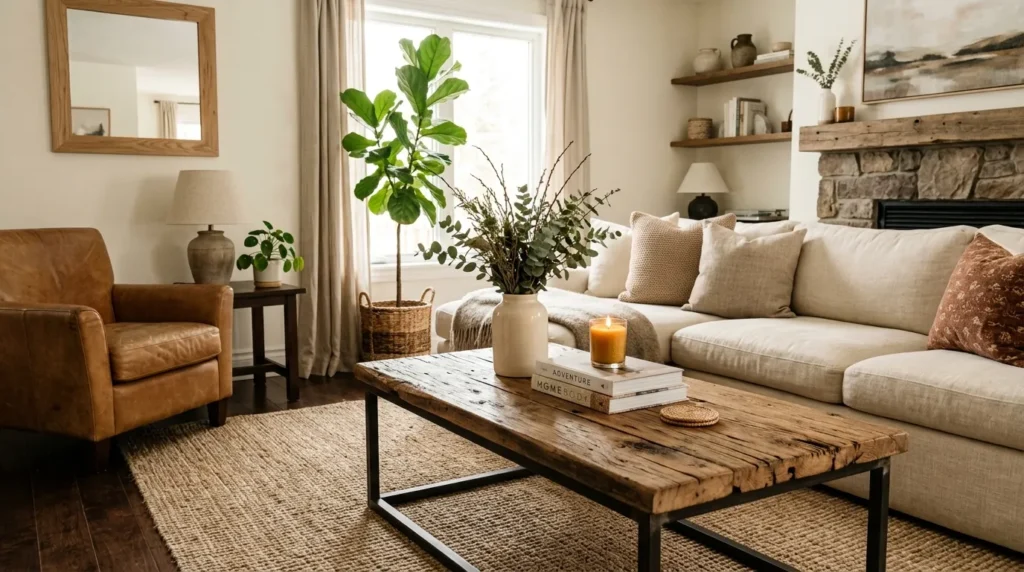
Reclaimed wood has natural imperfections that give each piece individuality.
Knots, grain variations, and subtle marks can make a simple table feel collected rather than mass-produced.
How To Style It
Inspect and properly prepare reclaimed wood before using it.
Sand rough surfaces and choose an appropriate protective finish.
Pair the table with soft upholstery, neutral textiles, and simple metal accents.
Let the wood’s natural character remain visible.
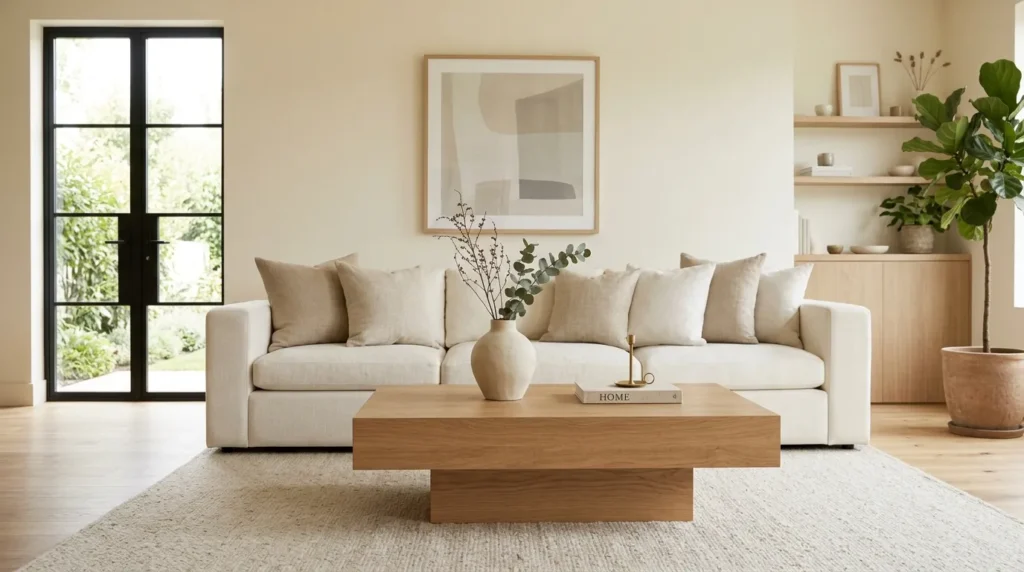
10. Minimalist Platform Table
Quick Benefits
- Clean appearance
- Simple silhouette
- Modern aesthetic
- Easy to style
- Works with neutral interiors
Why It Works
A platform table uses a simple geometric form to create a substantial but uncluttered appearance.
The minimalist design allows the material and proportions to do most of the visual work.
How To Style It
Choose a rectangular or square top with a clean base.
Use natural wood, warm white, or a muted neutral finish.
Pair it with a textured area rug and soft upholstered furniture.
Keep tabletop styling intentionally sparse.
How To Make a DIY Coffee Table Look Designer-Made
A DIY table doesn’t need complicated details to look expensive.
Focus on five things:
Proportion: Make sure the table works with your sofa and seating.
Material: Choose attractive wood, quality hardware, or an appropriate finish.
Edges: Clean, carefully sanded edges can make a major difference.
Finish: Apply the finish evenly and allow it to cure properly.
Styling: Don’t cover a beautiful tabletop with too many objects.
The final styling can be just as important as the construction.
Best Coffee Table Materials
Depending on the design, consider:
- Solid wood
- Plywood with a quality finish
- Reclaimed wood
- Metal
- Concrete
- Wood veneer
- Suitable furniture panels
Choose materials based on durability, maintenance, and the look you’re trying to achieve.
Coffee Table Styles for Different Homes
Modern
Choose clean lines, simple bases, and minimal finishes.
Farmhouse
Try reclaimed or natural wood.
Scandinavian
Use pale wood and lightweight silhouettes.
Industrial
Combine wood with metal.
Organic Modern
Pair natural wood with rounded shapes and neutral textiles.
Small-Space
Choose round, slim, nesting, or multifunctional designs.
Common DIY Coffee Table Mistakes
Making the Table Too Large
A coffee table should leave enough room for comfortable circulation.
Ignoring Height
The table should relate comfortably to the surrounding seating.
Skipping Proper Sanding
Rough surfaces can ruin an otherwise attractive project.
Choosing Weak Hardware
Use hardware appropriate for the weight and intended use.
Overstyling the Finished Table
Leave some empty surface area.
FAQ
Can I really build a coffee table in one day?
Some simple designs can be assembled and finished within a day, particularly projects using prepared materials and straightforward construction. More complicated designs or certain finishes may require additional drying or curing time.
What is the easiest DIY coffee table?
A simple wood top with ready-made legs is one of the most approachable designs. Hairpin legs can also make assembly relatively straightforward.
What wood is best for a DIY coffee table?
The best choice depends on your budget, desired appearance, and availability. Solid wood can provide durability and natural character, while quality furniture-grade panels can work for certain designs.
How do I make a DIY coffee table look expensive?
Use clean proportions, attractive materials, careful sanding, a quality finish, and restrained styling. Good construction details matter more than complicated decoration.
What coffee table works best in a small living room?
Round, slim, open-base, or multifunctional coffee tables can work particularly well because they preserve visual and physical circulation.
How tall should a coffee table be?
A useful starting point is to keep the tabletop around the height of the sofa seat or slightly lower, depending on the furniture and how you use the table.
Can I use reclaimed wood?
Yes, provided the material is properly inspected, cleaned, prepared, and finished for furniture use. Remove or address unsafe fasteners and rough surfaces before construction.
Conclusion
A stylish coffee table doesn’t have to come from a high-end furniture store.
With a simple design, appropriate materials, and careful finishing, you can create a piece that feels custom-made for your living room.
Choose a wood slab for natural warmth.
Try hairpin legs for a lightweight modern look.
Use crates when storage is important.
Choose a round pedestal when circulation matters.
Or build a lift-top table when you want one piece to perform several functions.
Whatever design you choose, focus on proportion and finish.
A beautifully sanded tabletop, carefully chosen hardware, and restrained styling can make even a relatively simple DIY project feel polished.
The best coffee table is ultimately one that looks good and works for the way you live.