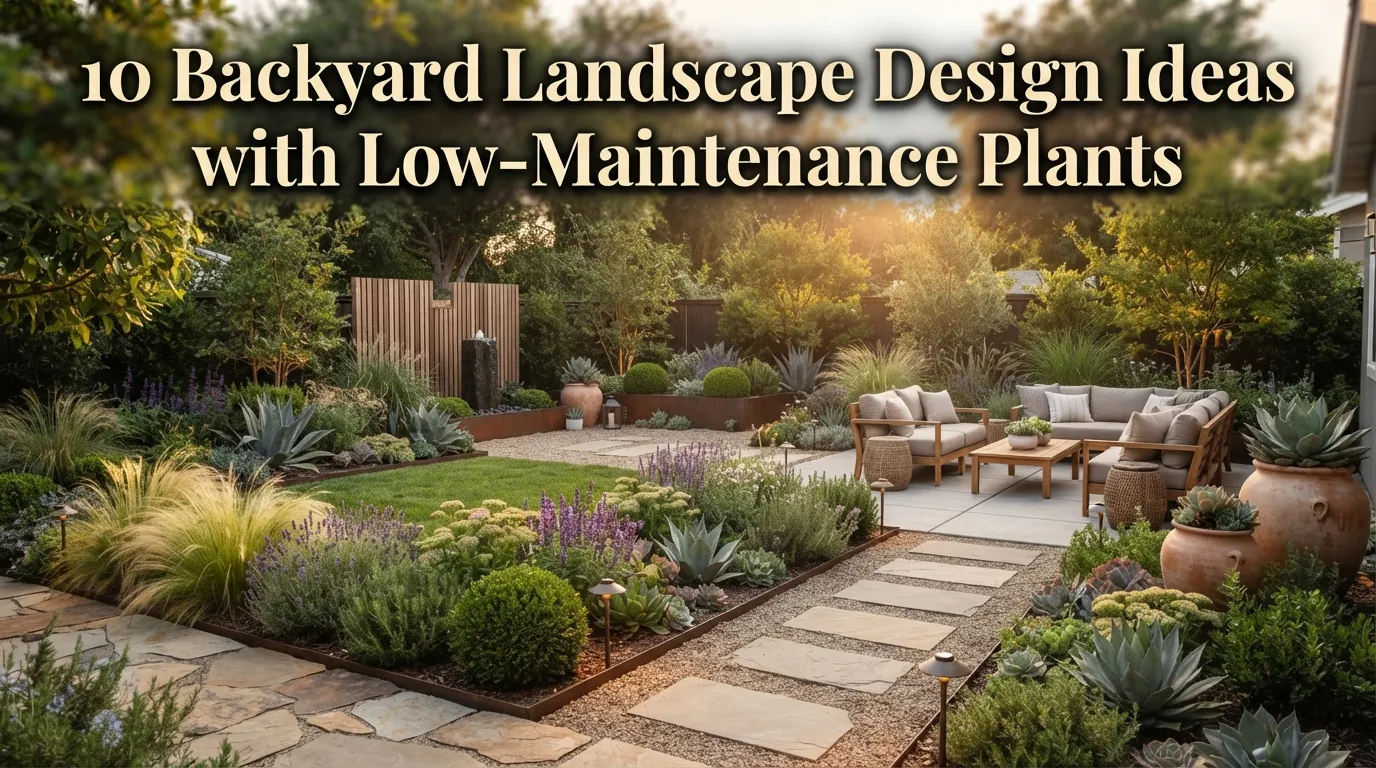
10 Backyard Landscape Design Ideas with Low-Maintenance Plants
A beautiful backyard doesn’t have to become a second full-time job. If you’re tired of spending every weekend mowing, pruning, watering, and replacing plants that never seem to thrive, a thoughtful landscape plan can make outdoor living much easier.
Low-maintenance landscaping is less about creating a yard with no upkeep at all and more about choosing plants, materials, and layouts that work with your climate, available sunlight, soil conditions, and the amount of time you’re realistically willing to spend outside.
I’ve noticed that the most successful low-maintenance yards usually have one thing in common: they are designed intentionally from the beginning. Instead of filling every empty area with plants, they use a combination of planting beds, pathways, mulch, hardscaping, and carefully selected greenery.
That approach can also make a backyard feel more polished.
Ornamental grasses can add movement without demanding constant trimming. Native or well-adapted perennials can provide seasonal interest. Evergreen shrubs can create structure, while ground covers can soften pathways and reduce exposed soil.
The best part is that low-maintenance doesn’t mean boring.
You can still create a backyard with beautiful layers, attractive borders, seating areas, colorful flowers, privacy, and plenty of personality.
Whether you have a spacious suburban yard, a modest backyard, or a small outdoor entertaining area, these landscape ideas can help you create a space that looks intentional while keeping routine maintenance manageable.
Table of Contents
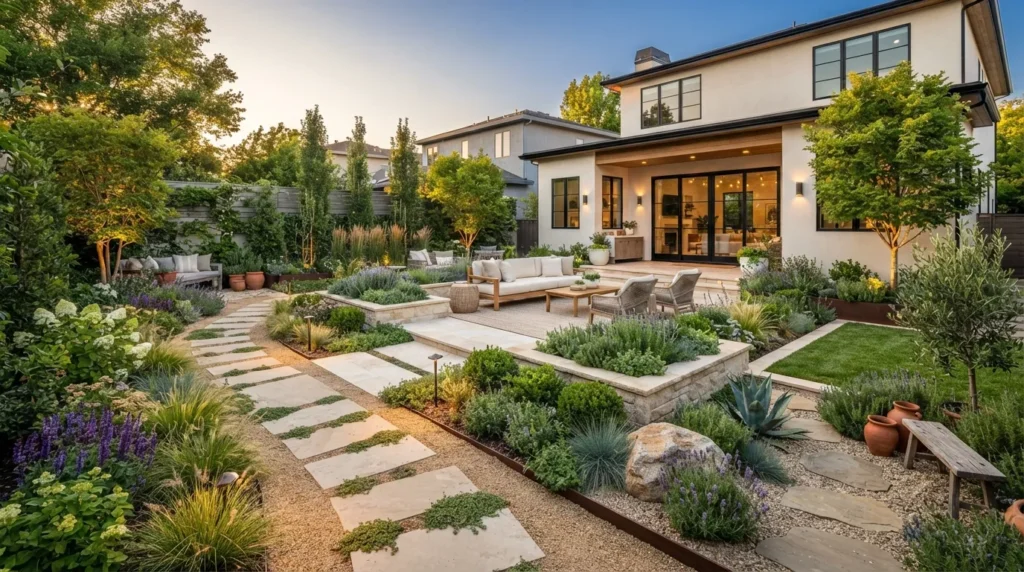
1. Native Plant Beds
Build resilient planting areas around plants suited to local conditions.
2. Ornamental Grass Borders
Add movement and texture with easy-care grasses.
3. Gravel Garden Paths
Create attractive walkways with minimal lawn maintenance.
4. Evergreen Foundation Plants
Give the landscape year-round structure and greenery.
5. Layered Perennial Beds
Combine plants with different heights and seasonal interest.
6. Mulched Planting Zones
Reduce exposed soil and simplify routine maintenance.
7. Low-Water Garden Areas
Create attractive planting zones with efficient water use.
8. Defined Lawn Spaces
Keep grass intentional instead of covering the entire yard.
9. Shrub Privacy Screens
Add privacy with strategically placed long-term plantings.
10. Patio Garden Layers
Combine hardscaping and greenery for an inviting outdoor retreat.
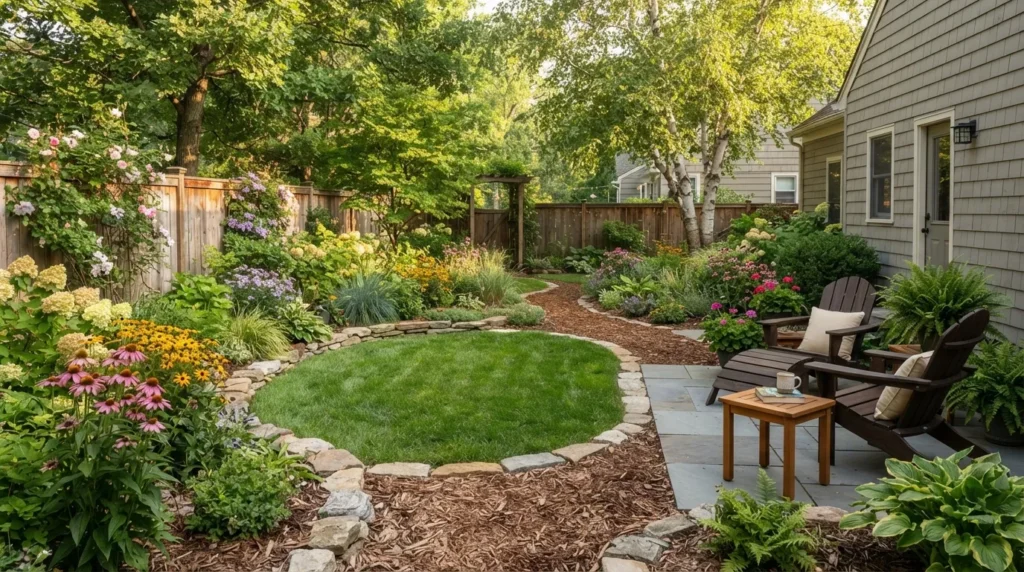
1. Native Plant Beds
Quick Benefits
- Can suit local growing conditions
- Supports regional wildlife
- Reduces excessive watering
- Adds seasonal interest
- Creates a natural-looking landscape
Why It Works
Native plants are adapted to the conditions of their region, making them an excellent starting point when you’re trying to create a manageable backyard landscape.
They can be particularly useful because they are already accustomed to factors such as local temperatures, rainfall patterns, and seasonal changes.
However, “native” doesn’t automatically mean maintenance-free. Every plant still has specific needs, and a plant that thrives in one part of the United States may not perform well somewhere else.
The smartest approach is to choose plants recommended for your specific area and site conditions.
How To Style It
Create defined planting beds instead of scattering individual plants throughout the lawn.
Use several plants with complementary heights.
Place taller varieties toward the back and lower-growing plants near paths and borders.
Repeat a few species throughout the bed instead of choosing one of everything.
This repetition creates a more intentional appearance.
Before purchasing plants, check local recommendations for sunlight, mature size, soil requirements, and water needs.
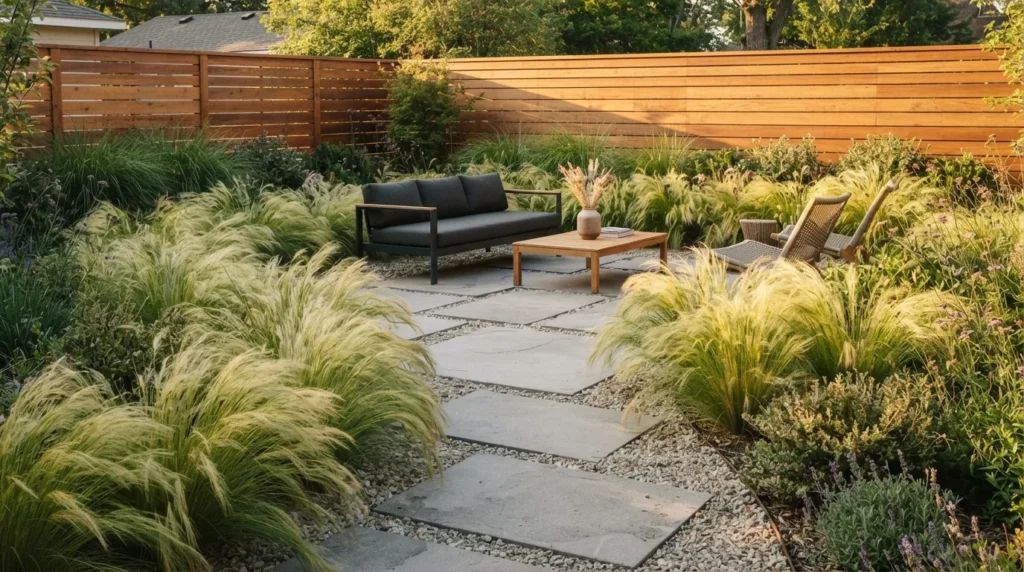
2. Ornamental Grass Borders
Quick Benefits
- Adds movement and texture
- Creates soft garden edges
- Offers strong visual interest
- Can complement modern yards
- Works well with stone and gravel
Why It Works
Ornamental grasses can give a backyard a beautifully relaxed appearance.
Their movement in the breeze adds life without requiring the same level of visual management as a highly formal flower garden.
They also work beautifully alongside modern hardscaping.
Grasses can soften concrete patios, stone paths, retaining walls, and gravel beds.
The important thing is choosing varieties appropriate for your region and available space.
Some grasses remain relatively compact, while others can become substantial.
How To Style It
Use ornamental grasses as repeating border plants.
Place groups of three, five, or another visually balanced number rather than planting every specimen individually.
Combine grasses with shrubs, perennials, or stone.
For a modern landscape, keep the surrounding planting palette restrained.
A combination of green grasses, warm gravel, concrete, and natural wood can create a polished contemporary appearance.
Always check mature dimensions before planting.
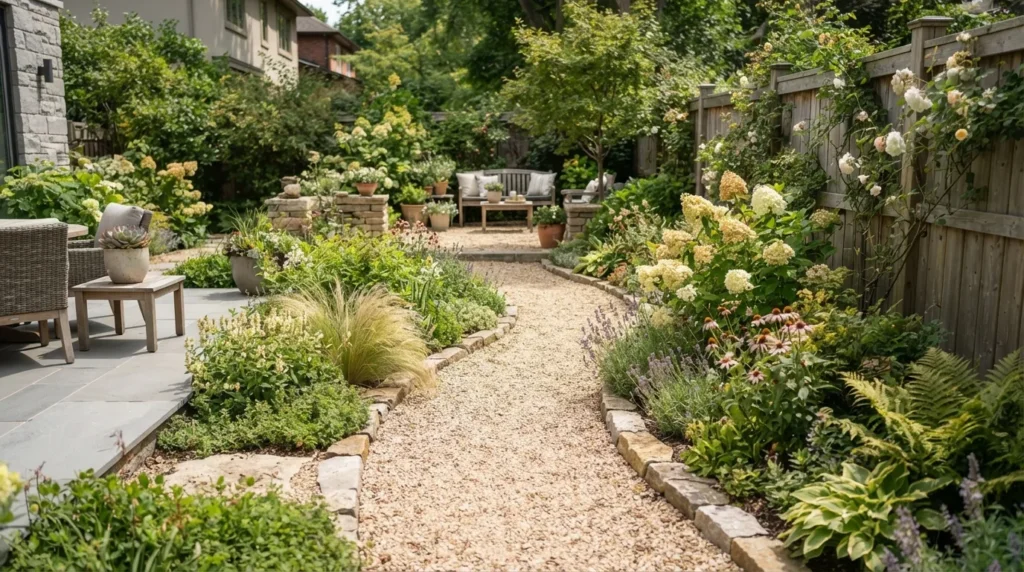
3. Gravel Garden Paths
Quick Benefits
- Reduces lawn area
- Creates defined circulation
- Adds texture
- Works with many landscape styles
- Can simplify maintenance
Why It Works
A backyard doesn’t need grass covering every square foot.
Gravel paths can create a practical transition between the patio, garden beds, shed, seating areas, and other outdoor zones.
They also give the landscape a structured appearance.
A path can be straight and modern or gently curved for a more natural garden feel.
Proper installation matters because loose gravel can migrate into planting beds or lawn areas if the edges aren’t well defined.
How To Style It
Use landscape edging to establish a clear boundary.
Choose gravel that complements the colors already present in your yard.
Warm tan or buff gravel works beautifully with natural wood and warm stone.
Gray gravel can create a cooler modern appearance alongside concrete.
Add stepping stones if desired.
Border the path with low-growing plants or ornamental grasses.
Keep the planting rhythm consistent so the walkway looks designed rather than accidental.
4. Evergreen Foundation Plants
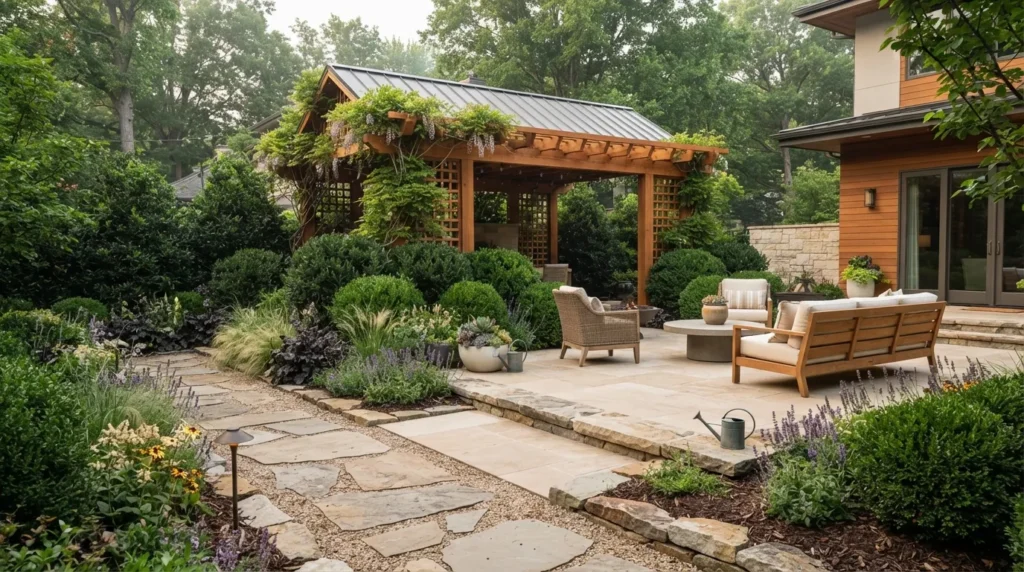
Quick Benefits
- Provides year-round structure
- Creates visual continuity
- Can frame outdoor areas
- Offers privacy potential
- Reduces seasonal emptiness
Why It Works
A landscape can look beautiful in spring and summer but feel empty once seasonal flowers disappear.
Evergreen plants help solve that problem by providing structure throughout much of the year.
They can be used around patios, fences, pathways, and the foundation of outdoor structures.
Choose varieties based on mature size rather than how small they look when purchased.
This is one of the easiest ways to avoid future maintenance problems.
How To Style It
Use evergreen shrubs as the structural layer of the landscape.
Then place flowering perennials or ornamental grasses around them.
This creates depth without requiring dozens of different plants.
Avoid planting large shrubs too close to structures or pathways.
Check mature width and height before installation.
For a modern look, repeat the same evergreen variety in several areas.
Repetition gives the backyard a cohesive appearance.
5. Layered Perennial Beds
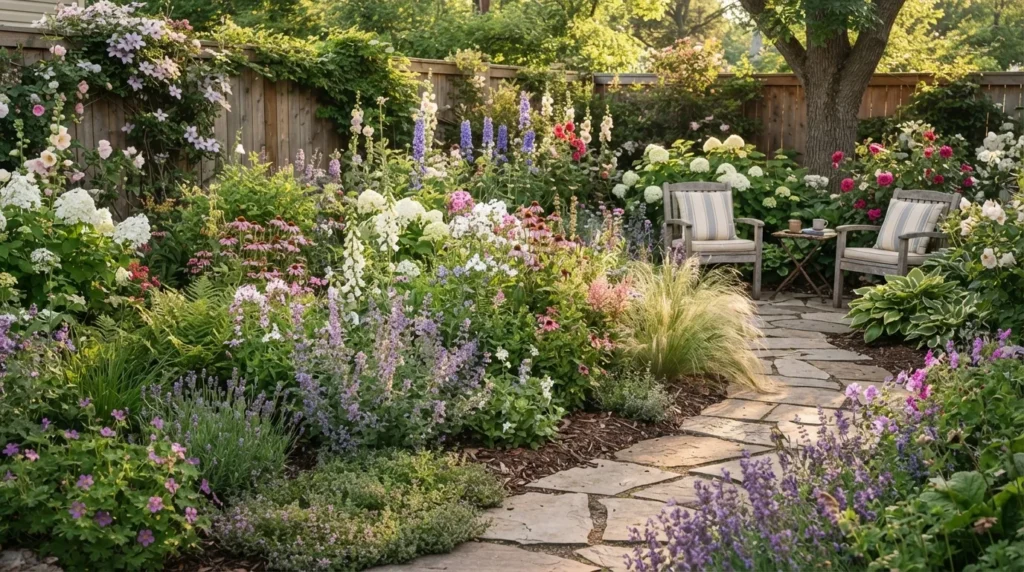
Quick Benefits
- Adds seasonal color
- Creates visual depth
- Supports pollinators
- Makes beds feel abundant
- Can reduce the need for annual planting
Why It Works
Perennial plants return year after year, making them useful for homeowners who want garden interest without replanting every season.
A well-designed perennial bed uses layers.
Low plants establish the front edge.
Medium-height plants occupy the center.
Taller plants create a backdrop.
This creates depth while allowing each plant to contribute to the overall composition.
The exact plants should depend on your growing region and conditions.
How To Style It
Choose a limited palette of complementary plants.
Repeat the same colors and forms throughout the bed.
For example, soft purple, white, and green can create a timeless combination.
Add taller plants toward fences or the rear of the bed.
Use lower-growing varieties along paths.
Mulch between plants while they establish.
As the garden matures, adjust spacing and remove plants that become overcrowded.
6. Mulched Planting Zones
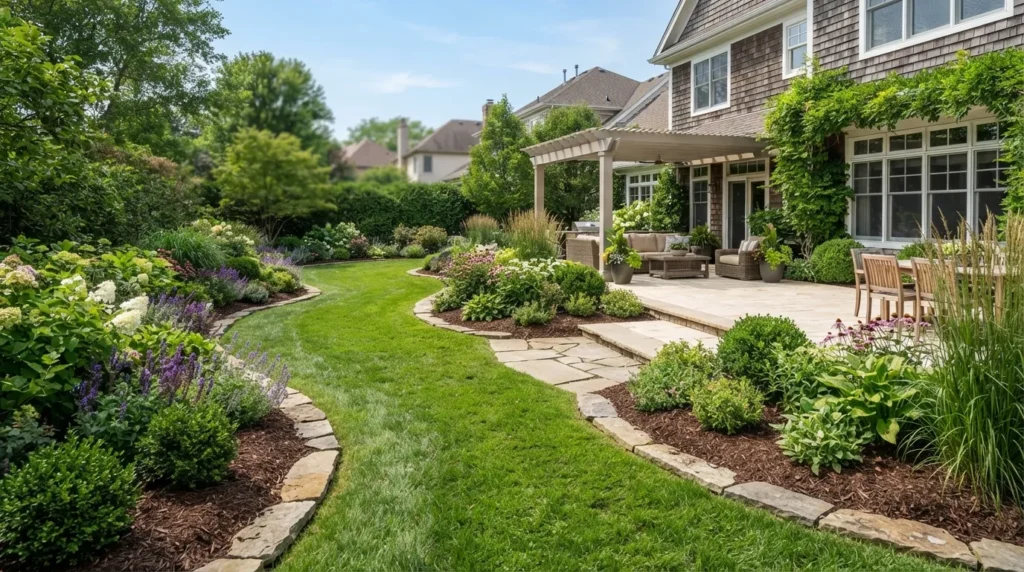
Quick Benefits
- Helps reduce exposed soil
- Gives beds a finished appearance
- Can reduce weed pressure
- Creates visual consistency
- Complements shrubs and perennials
Why It Works
Bare soil can make even a well-planned garden look unfinished.
Mulch provides a visual transition between plants and surrounding hardscape.
It can also help retain soil moisture and suppress some weed growth when applied correctly.
The type of mulch you choose affects the overall appearance.
Natural wood mulch creates a softer traditional look, while stone mulch can complement contemporary landscapes.
Mulch still requires periodic refreshing, so choose based on both appearance and practicality.
How To Style It
Create clearly defined planting beds first.
Install appropriate edging where needed.
Spread mulch evenly rather than creating large piles around plant stems.
Keep mulch away from direct contact with trunks and stems.
Use one primary mulch material throughout the yard if you want a cohesive appearance.
For a modern landscape, dark mulch paired with light stone can create strong contrast.
For a natural landscape, bark or wood mulch may blend more gently with the planting.
7. Low-Water Garden Areas
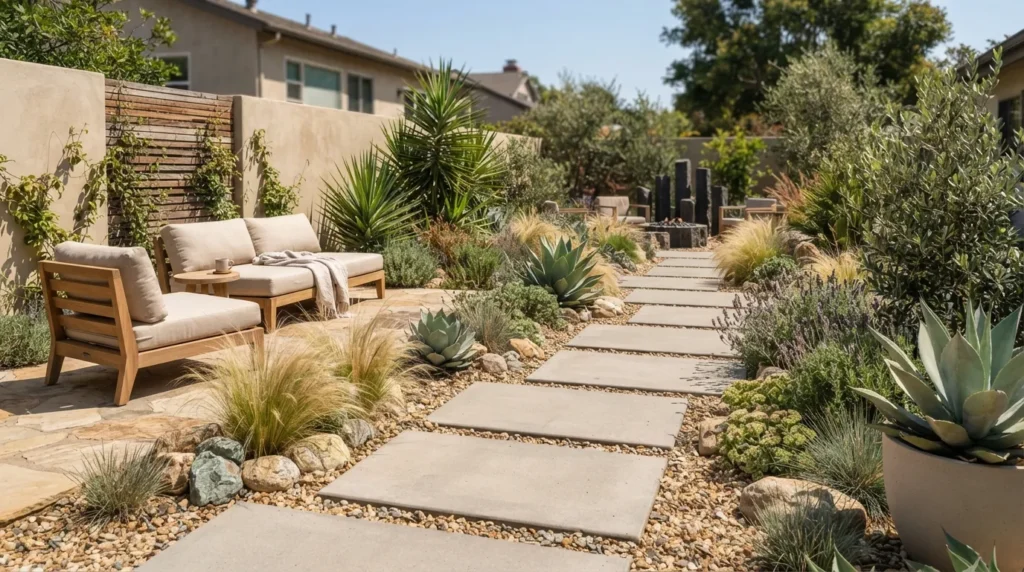
Quick Benefits
- Can reduce irrigation demands
- Works well in sunny areas
- Creates a distinctive landscape
- Adds texture through drought-tolerant plants
- Can reduce lawn dependence
Why It Works
Water requirements are an important consideration when planning a backyard.
Instead of trying to keep every part of the landscape equally lush, create specific planting zones based on their conditions.
A sunny, dry area can become a dedicated low-water garden rather than a struggling lawn.
Plants should still be selected according to your climate and soil.
“Drought tolerant” doesn’t mean a plant can survive without any water, especially during establishment.
How To Style It
Use gravel, stone, and drought-tolerant plants to create a structured garden zone.
Combine different shapes and heights.
A few upright plants can contrast with low mounding varieties.
Add large decorative stones as visual anchors.
Keep the palette simple.
This style works especially well with modern patios and contemporary outdoor furniture.
Use efficient irrigation where appropriate and follow local watering guidance.
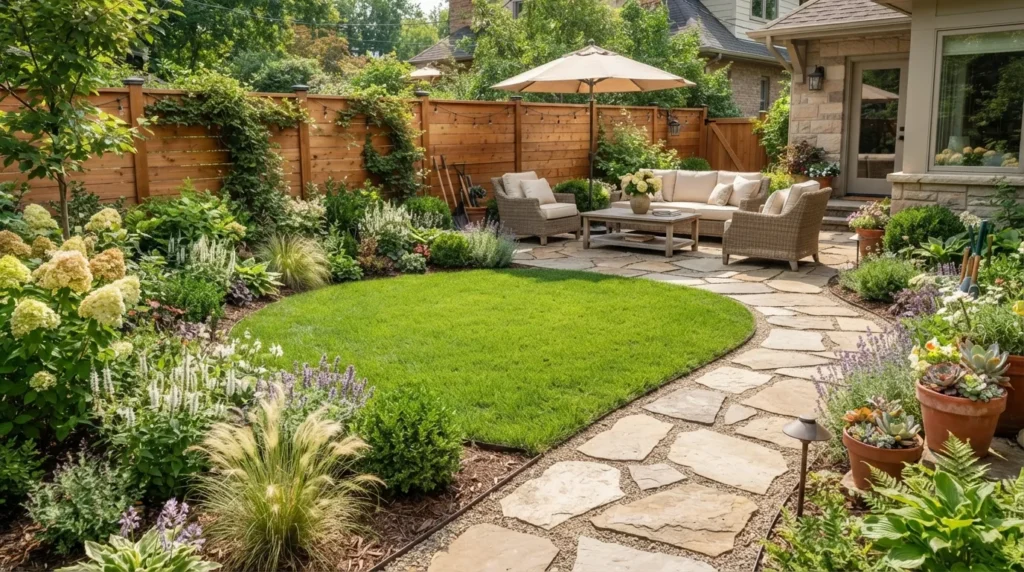
8. Defined Lawn Spaces
Quick Benefits
- Reduces unnecessary mowing
- Creates useful open space
- Makes the yard feel organized
- Gives children or pets room to play
- Balances planting areas
Why It Works
Low-maintenance landscaping doesn’t mean eliminating grass completely.
For many homeowners, a small lawn is useful.
It can provide a soft area for children, pets, outdoor games, or simply an open visual break between planting beds.
The key is defining it.
Instead of maintaining a large lawn simply because the yard has always been grass, consider how much space you actually use.
How To Style It
Create a clear lawn shape surrounded by planting beds or paths.
Curved edges can create a softer garden appearance.
Straight edges can feel more contemporary.
Keep nearby plants from spilling excessively into the lawn.
A crisp boundary makes mowing easier and helps the landscape look intentional.
Use shrubs, ornamental grasses, or low borders to frame the space.
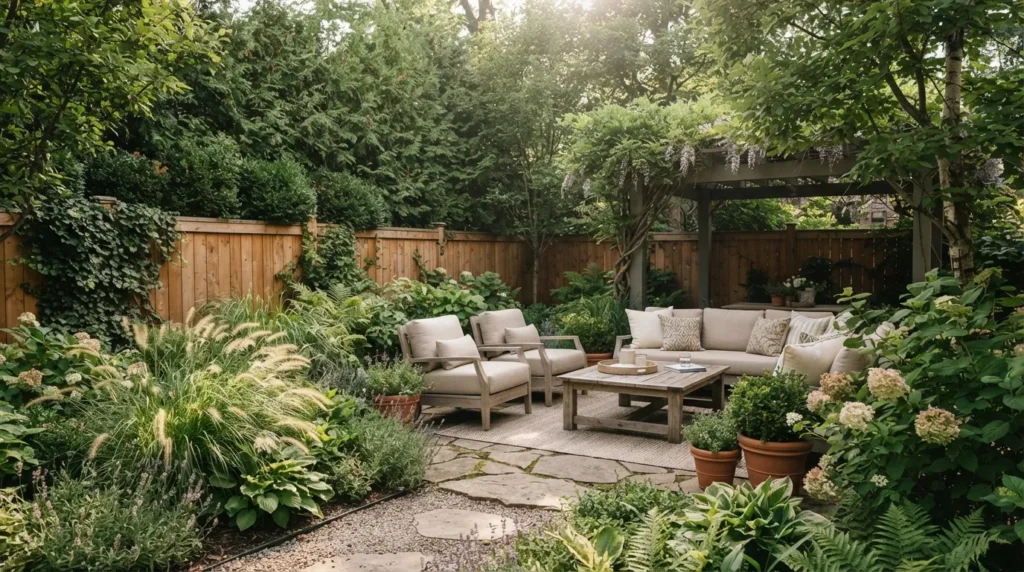
9. Shrub Privacy Screens
Quick Benefits
- Creates outdoor privacy
- Adds greenery
- Defines property zones
- Can soften fences
- Provides long-term structure
Why It Works
A backyard can be beautifully landscaped and still feel uncomfortable if it lacks privacy.
Shrubs and appropriately selected trees can create a softer screen than a solid fence.
They can also help make patios and seating areas feel more enclosed.
Privacy planting requires patience.
Young plants may look small initially, but their mature size should guide spacing and placement.
How To Style It
Choose plants appropriate for your climate, sunlight, soil, and desired mature height.
Plant in a deliberate rhythm rather than placing shrubs randomly.
Use evergreens where year-round screening is important.
Layer smaller plants in front of taller screening plants.
This creates a more natural transition.
Avoid planting large shrubs directly against structures.
Give each plant sufficient room to reach its mature size.
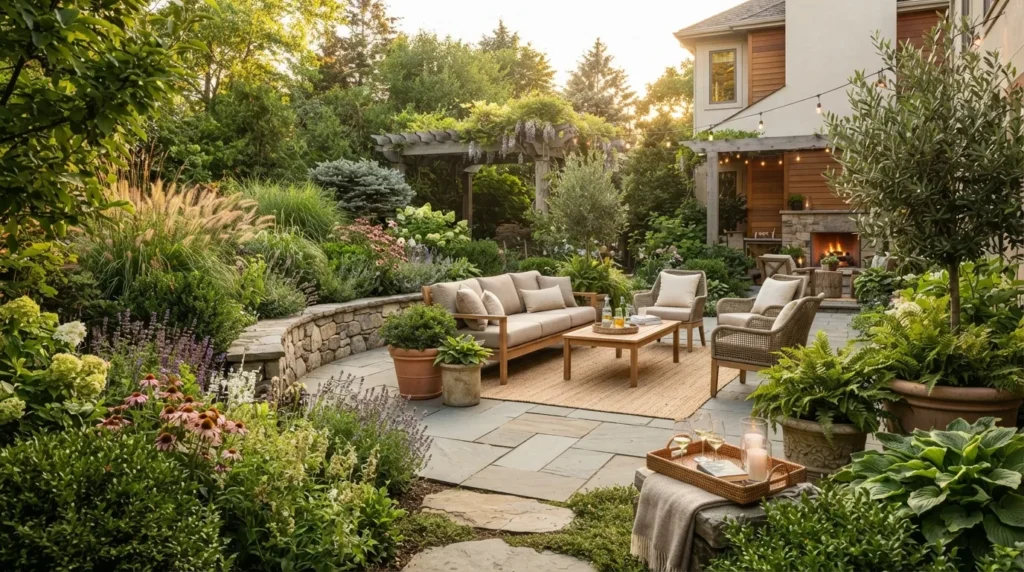
10. Patio Garden Layers
Quick Benefits
- Combines entertaining and greenery
- Creates an outdoor focal point
- Adds softness around hardscape
- Makes patios feel more inviting
- Supports multiple backyard uses
Why It Works
One of the most effective ways to make a backyard feel finished is to connect the patio with surrounding planting.
Instead of having a patio surrounded by an abrupt sea of lawn, use garden beds, planters, shrubs, and trees to create transitions.
This makes the outdoor living area feel integrated into the landscape.
It also creates natural zones for relaxing, dining, gardening, and entertaining.
How To Style It
Start with the patio furniture and determine where you want the primary circulation paths.
Then add planting around the edges.
Use large planters near seating areas for immediate impact.
Place taller plants farther away so they don’t obstruct views.
Add low plants around the perimeter.
Natural wood, stone, gravel, and greenery work especially well together.
Keep the planting palette cohesive with the materials used on the patio.
How To Choose Low-Maintenance Plants
The phrase “low maintenance” depends heavily on where you live.
A plant that thrives with little attention in one region may struggle in another.
Before buying anything, consider:
- USDA hardiness zone
- Hours of direct sunlight
- Soil drainage
- Average rainfall
- Irrigation availability
- Mature plant size
- Deer or pest pressure
- Seasonal appearance
Local extension services, botanical gardens, and reputable regional nurseries can be useful resources for identifying plants suited to your area.
The most important principle is to choose the right plant for the right place.
That usually requires less intervention than trying to force an unsuitable plant to survive.
How To Reduce Backyard Maintenance
Plant selection is only part of the equation.
The layout itself can make a major difference.
Group plants with similar water requirements.
Create defined beds.
Use paths where people naturally walk.
Avoid tiny planting islands that require difficult trimming around every edge.
Choose hardscaping strategically.
And leave enough space between mature plants so air circulation, pruning, and access remain manageable.
A landscape that looks slightly sparse when newly planted may become beautifully full once plants mature.
This is much easier to manage than a yard that starts overcrowded.
Low-Maintenance Doesn’t Mean No Maintenance
Every outdoor space needs some care.
Plants may require pruning, watering, fertilizing, dividing, or seasonal cleanup.
The goal is to reduce unnecessary work, not eliminate maintenance completely.
A well-planned yard should make routine tasks easier and more predictable.
Instead of spending every weekend fighting your landscape, you should be able to spend more time enjoying it.
That difference is what makes thoughtful landscape design so valuable.
FAQ
What are the best low-maintenance plants for a backyard?
The best plants depend on your region, sunlight, soil, and water conditions. Native plants and well-adapted perennials are often good starting points. Ornamental grasses, evergreen shrubs, and appropriately selected ground covers can also provide long-term structure.
How can I make my backyard landscape easier to maintain?
Reduce unnecessary lawn, group plants with similar water requirements, define planting beds, use mulch where appropriate, install practical pathways, and choose plants based on their mature size and site conditions.
Is gravel good for low-maintenance landscaping?
Gravel can be useful for paths, garden areas, and outdoor spaces because it reduces the need for mowing. Proper edging and installation are important to prevent gravel from spreading into lawns and planting beds.
Are native plants really easier to maintain?
Native plants are adapted to local environmental conditions, which can make them a practical choice. However, they still require appropriate placement, establishment care, and occasional maintenance. Native does not automatically mean maintenance-free.
How do I design a backyard with less grass?
Start by identifying the areas you actually use for recreation or pets. Keep those lawn spaces defined, then convert unnecessary lawn into planting beds, paths, patios, gravel gardens, or other functional zones.
What is the easiest way to add privacy to a backyard?
Planting appropriately sized shrubs or trees can create a natural privacy screen. Choose species suited to your climate and consider their mature height and width before planting.
How do I keep a landscaped backyard looking neat?
Use clear boundaries between lawn, planting beds, paths, and patios. Repeat plants and materials throughout the yard, maintain defined edges, and avoid overcrowding beds. Consistent structure usually creates a more polished appearance than having many different plants.
Conclusion
A beautiful backyard doesn’t have to demand constant attention.
The strongest low-maintenance landscapes begin with thoughtful planning rather than simply choosing plants labeled “easy care.”
Consider your climate, sunlight, soil, water availability, and the way you actually use the yard. Then create defined zones for lawn, planting, pathways, patios, and privacy.
Use native or well-adapted plants where appropriate. Add ornamental grasses for movement, evergreen shrubs for structure, perennials for seasonal interest, and mulch or gravel to create clear transitions.
Most importantly, resist the temptation to fill every available space.
A landscape with fewer, well-chosen plants often looks more sophisticated and is easier to care for than one packed with dozens of varieties.
Think about how the backyard will look several years from now, not just the day you plant it.
Allow plants enough room to mature. Keep paths accessible. Group plants with similar needs. And choose materials that complement your home’s architecture and your outdoor lifestyle.
Whether you’re creating a new backyard from scratch or gradually improving an existing landscape, you don’t have to do everything at once.
Start with one planting bed, one pathway, or one outdoor living area.
Build thoughtfully from there.
The result can be a backyard that feels lush, welcoming, and beautifully designed while giving you more time to actually enjoy the space.
Related Articles
- 10 DIY Garden Projects for a Beautiful Backyard
- 10 Garden Decor Ideas That Transform Any Backyard
- 10 DIY Fire Pit Ideas That Look Professionally Built
- 10 Backyard Landscape Design Ideas with Beautiful Garden Paths
- 10 Small Balcony Ideas That Feel Open and Relaxing