
How to Decorate a Bedroom That Feels Calm Every Day
A bedroom should feel like the easiest room in the house to slow down in. Yet between cluttered nightstands, harsh lighting, mismatched furniture, and too many decorative pieces, it can quickly become a space that feels visually busy instead of restful.
Creating a calm bedroom doesn’t require a complete renovation or an expensive furniture makeover. In many cases, the biggest improvement comes from simplifying what you already have and being more intentional about color, texture, lighting, storage, and layout.
I’ve noticed that the most relaxing bedrooms usually aren’t completely empty or perfectly minimal. They simply have a sense of balance. There is enough softness to make the room comfortable, enough storage to keep everyday items under control, and enough personality to make the space feel like yours.
The good news is that you can build that atmosphere gradually.
A softer color palette can immediately reduce visual noise. Layered bedding can make the bed feel more inviting. Warm lighting can change the mood in the evening, while curtains and rugs add texture without requiring major changes. Even something as simple as clearing the surface of a nightstand can make the entire room feel more peaceful.
Whether you’re decorating a primary bedroom, guest room, apartment bedroom, or compact sleeping space, the same principles can help.
The goal isn’t to create a showroom.
It’s to create a room that feels comfortable when you wake up, organized during the day, and genuinely relaxing when you’re ready to wind down.
Below are ten practical ways to create that feeling using thoughtful decorating choices rather than complicated renovations.
Table of Contents
1. Soft Neutral Palette
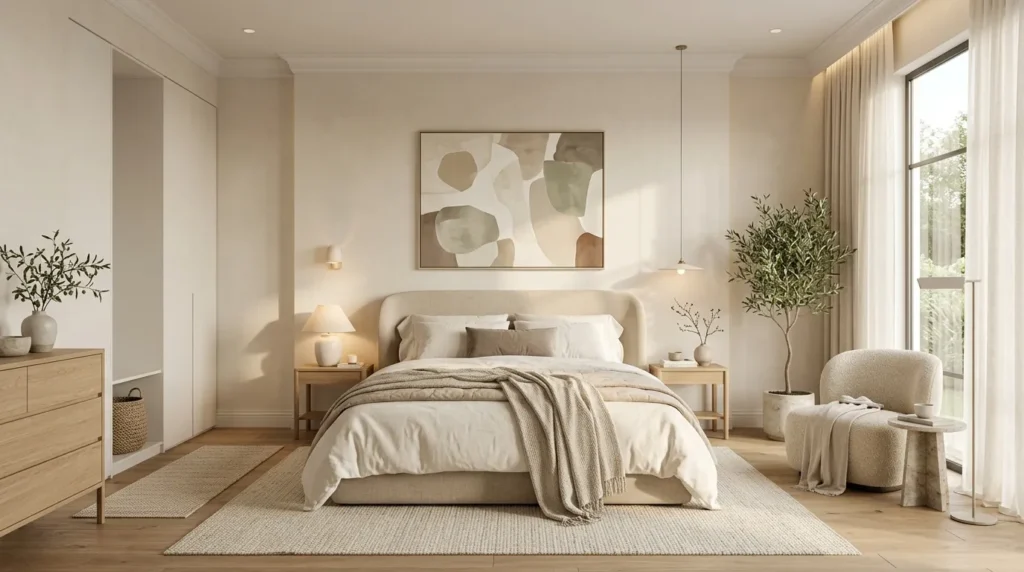
Use calming colors to create a visually gentle foundation.
2. Comfortable Bedding
Layer inviting fabrics for a softer and more restful atmosphere.
3. Warm Ambient Lighting
Replace harsh illumination with a relaxing lighting scheme.
4. Clutter-Free Nightstands
Keep bedside surfaces simple and functional.
5. Natural Materials
Introduce wood, linen, cotton, and woven textures for warmth.
6. Balanced Furniture
Arrange larger pieces to create visual breathing room.
7. Soft Window Treatments
Use curtains and shades to control light and add softness.
8. Grounding Area Rug
Add comfort and visual cohesion beneath the furniture.
9. Meaningful Decor
Choose personal pieces instead of excessive accessories.
10. Relaxing Evening Layers
Finish the room with small details that encourage slowing down.
1. Soft Neutral Palette
Quick Benefits
- Reduces visual distractions
- Creates a peaceful foundation
- Makes layering easier
- Works with many decorating styles
- Helps the room feel cohesive
Why It Works
Color has a powerful effect on how a room feels, particularly when you’re trying to create a restful atmosphere. Soft neutrals can make a bedroom feel quieter because they don’t compete strongly for attention.
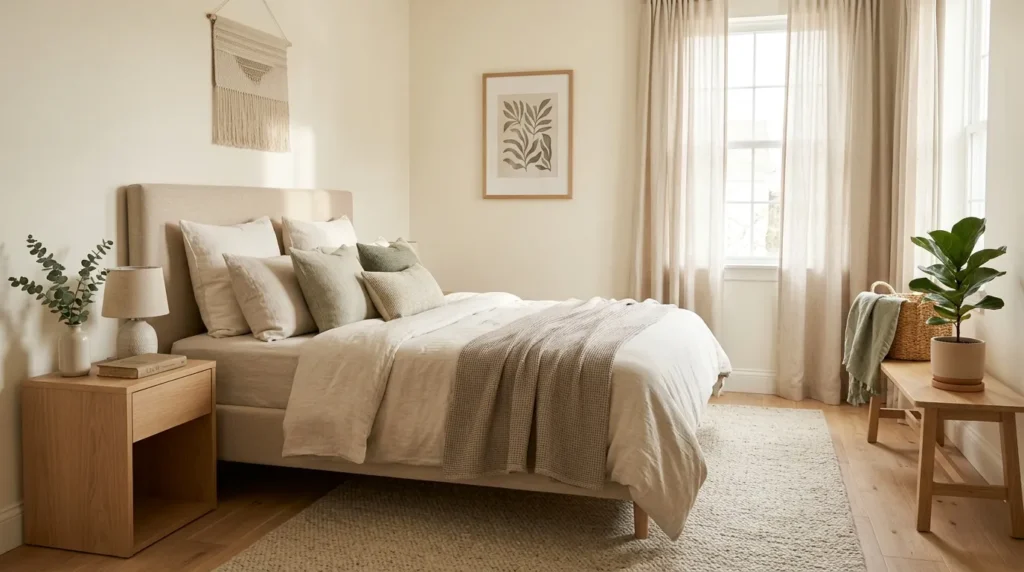
Cream, warm white, soft beige, muted taupe, pale greige, dusty blue, and gentle sage can all work beautifully. The important part is choosing shades that feel comfortable together rather than covering every surface in exactly the same color.
A mistake many homeowners make is assuming a calm room has to be completely white. In reality, too much stark white can sometimes feel cold, especially when paired with bright artificial lighting.
How To Style It
Start with one dominant neutral for the walls or larger furniture.
Then introduce two or three supporting shades through bedding, curtains, rugs, and accessories.
For example, warm ivory walls can work with beige bedding, light oak furniture, and muted sage accents.
If you prefer cooler colors, soft gray-blue can create a serene backdrop when balanced with cream and natural wood.
Keep stronger colors limited to small details.
This allows the bedroom to remain visually calm while still having personality.
2. Comfortable Bedding
Quick Benefits
- Makes the bed feel inviting
- Adds softness and depth
- Creates a natural focal point
- Can be changed seasonally
- Improves the overall visual warmth
Why It Works
The bed is usually the largest piece in a bedroom, which means its appearance strongly influences the mood of the entire space.
Comfortable-looking bedding can instantly make a room feel more welcoming.
Instead of matching every piece perfectly, layer different textures and closely related colors.
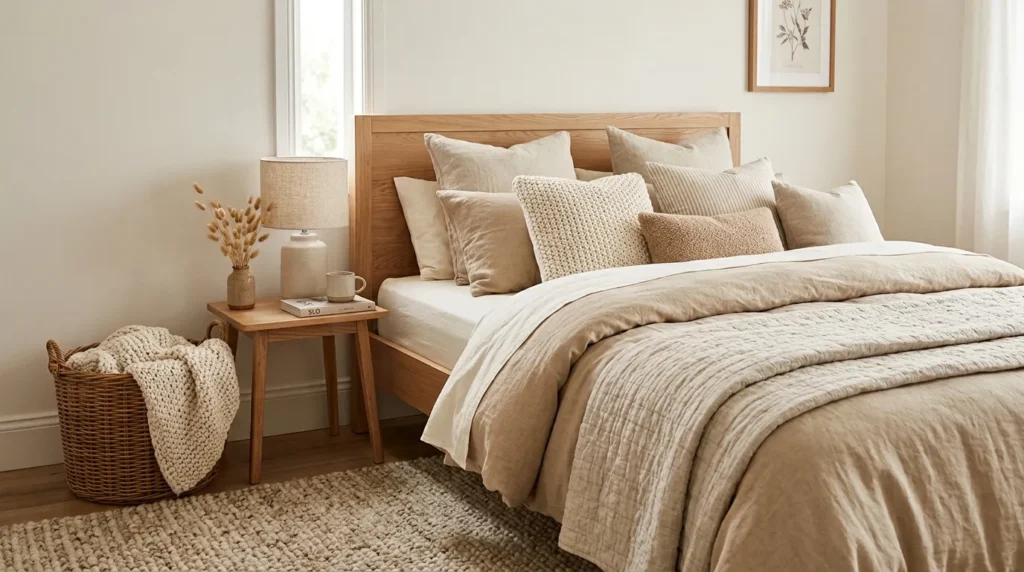
A cotton sheet set, linen duvet, quilted coverlet, knitted throw, and a few soft pillows can create depth without making the bed look overly styled.
The goal is to create an inviting place to rest rather than a perfectly rigid arrangement.
How To Style It
Begin with breathable sheets in a neutral shade.
Add a duvet or comforter in a slightly different tone.
Fold a lightweight blanket across the foot of the bed and add a small number of decorative pillows.
Use texture to create interest instead of bold patterns.
For example, combine smooth cotton with a waffle-knit blanket and a subtly textured lumbar pillow.
Keep the colors connected.
Cream, oatmeal, taupe, soft gray, and muted blue can create a beautiful calming combination.
3. Warm Ambient Lighting
Quick Benefits
- Creates a softer evening mood
- Reduces harsh shadows
- Makes neutral colors feel warmer
- Provides functional bedside illumination
- Adds decorative interest
Why It Works
Lighting can completely change the atmosphere of a bedroom.
A room that feels peaceful during the day can become uncomfortable at night if the only light source is a bright ceiling fixture.
Layered lighting gives you more control.
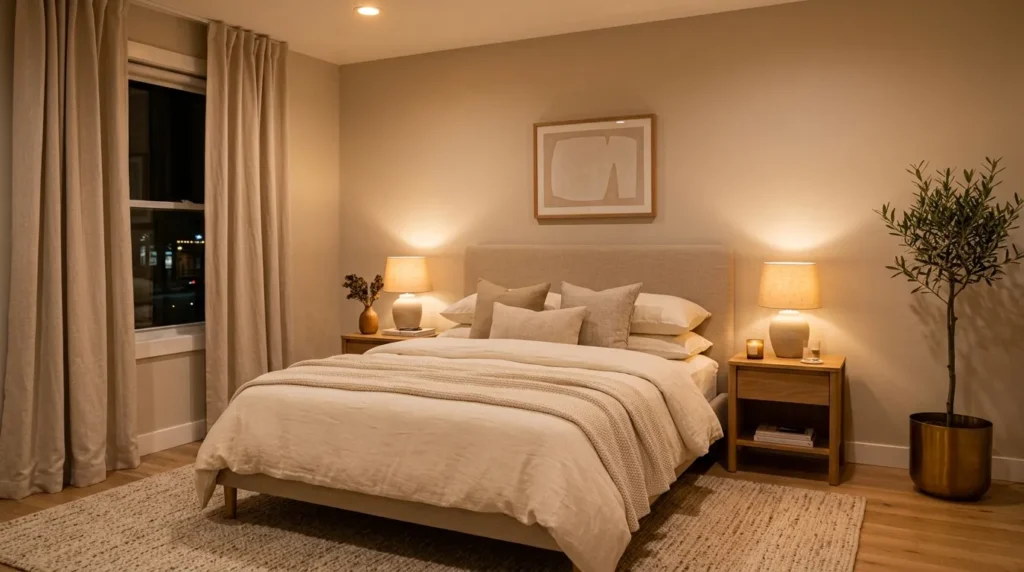
A combination of ceiling lighting, bedside lamps, wall sconces, and occasional accent lighting allows you to choose the level of illumination you need.
Warm-toned light can also make textiles and wood finishes feel richer in the evening.
How To Style It
Start with your practical lighting needs.
Place a lamp or sconce near each side of the bed if you share the space.
Use a ceiling fixture for general illumination.
If the room has a reading chair or empty corner, add a floor lamp.
Choose fixtures with soft shades or diffused light where possible.
Avoid placing too many bright fixtures throughout the room.
A calm bedroom usually benefits from several softer sources rather than one intense source.
4. Clutter-Free Nightstands
Quick Benefits
- Makes the room look cleaner
- Reduces visual noise
- Keeps essentials accessible
- Makes cleaning easier
- Creates a calmer bedside routine
Why It Works
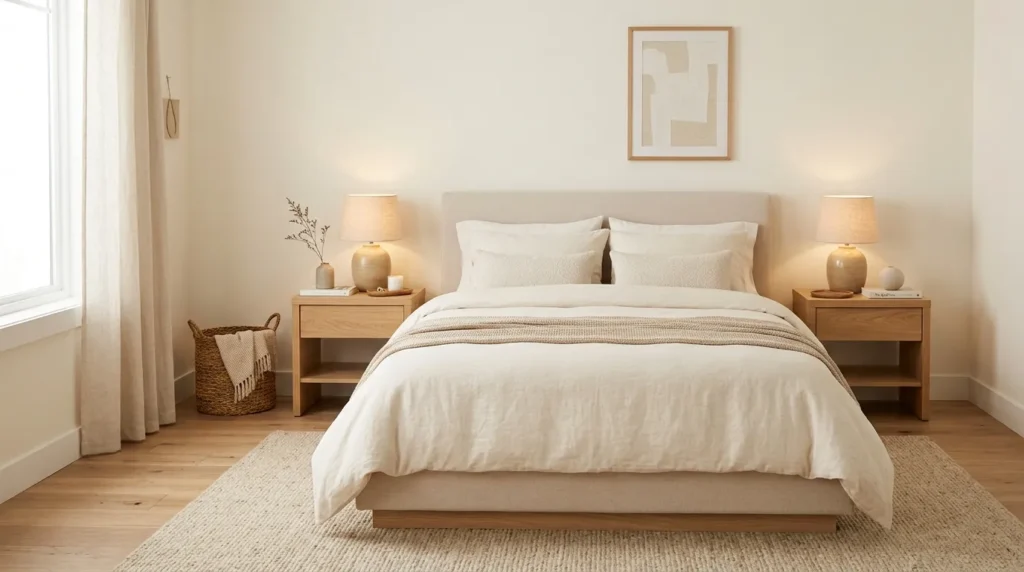
Nightstands are small, but they can have an outsized impact on how organized a bedroom feels.
Because they are within easy reach, they often collect everything from chargers and books to water glasses, skincare products, receipts, and miscellaneous items.
Even if the rest of the room is tidy, an overflowing bedside table can make the space feel unfinished.
The solution isn’t necessarily to own less.
It’s to give everyday items a designated home.
How To Style It
Keep only the things you actually use at night.
A lamp, small tray, book, and one decorative object may be enough.
Use a drawer or small basket for chargers and other necessities.
If your nightstand has open shelving, use attractive baskets to conceal smaller items.
A tray can also make several objects look intentional rather than scattered.
Try leaving some empty surface area.
That visual breathing room can make the entire bedroom feel more peaceful.
5. Natural Materials
Quick Benefits
- Adds warmth
- Creates visual texture
- Makes neutral rooms more interesting
- Works with many design styles
- Helps balance modern furniture
Why It Works
Natural materials bring a sense of softness that painted surfaces and synthetic finishes sometimes lack.
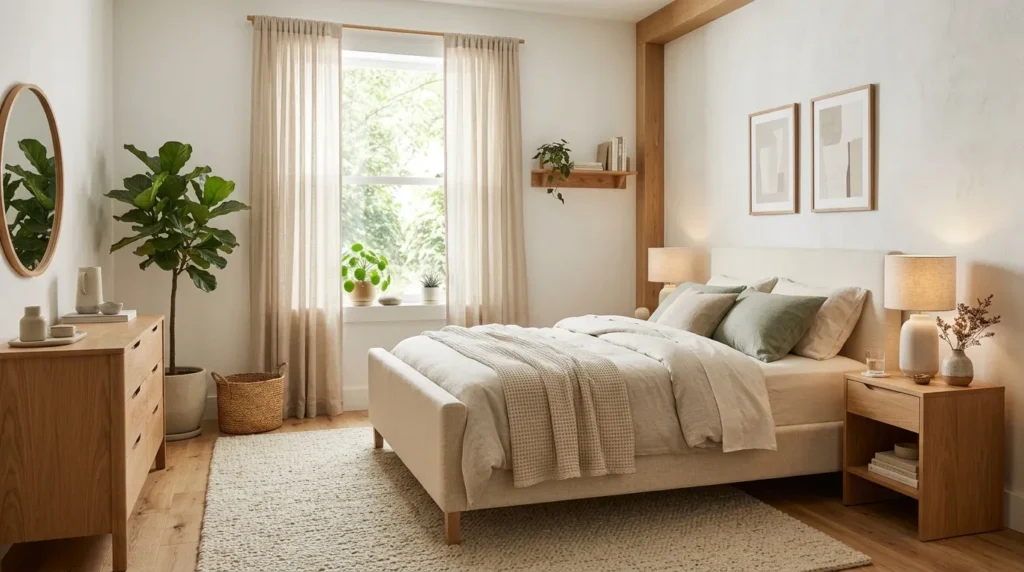
Wood, linen, cotton, rattan, jute, bamboo, stone, and ceramic can all contribute texture.
They are particularly useful when you’re decorating a neutral bedroom because they prevent the palette from feeling flat.
A room doesn’t need dozens of decorative objects to have personality.
A few well-chosen natural materials can create plenty of visual interest.
How To Style It
Start with furniture.
A natural wood bed or nightstand can immediately warm up a neutral room.
Then add smaller elements such as a woven basket, linen curtains, cotton bedding, or a ceramic lamp.
Avoid making every item rustic.
The goal is balance.
Pair natural textures with clean-lined furniture for a modern look.
For a softer traditional bedroom, combine wood with upholstered pieces and classic textiles.
6. Balanced Furniture
Quick Benefits
- Improves movement around the room
- Creates visual balance
- Makes the bedroom feel less crowded
- Highlights important furniture
- Works in both large and small spaces
Why It Works
A calm bedroom needs physical breathing room as well as visual breathing room.
Furniture that is pushed too close together can make the room feel cramped even when there is technically enough floor space.
Before buying anything new, consider whether your existing pieces are arranged in the most useful way.
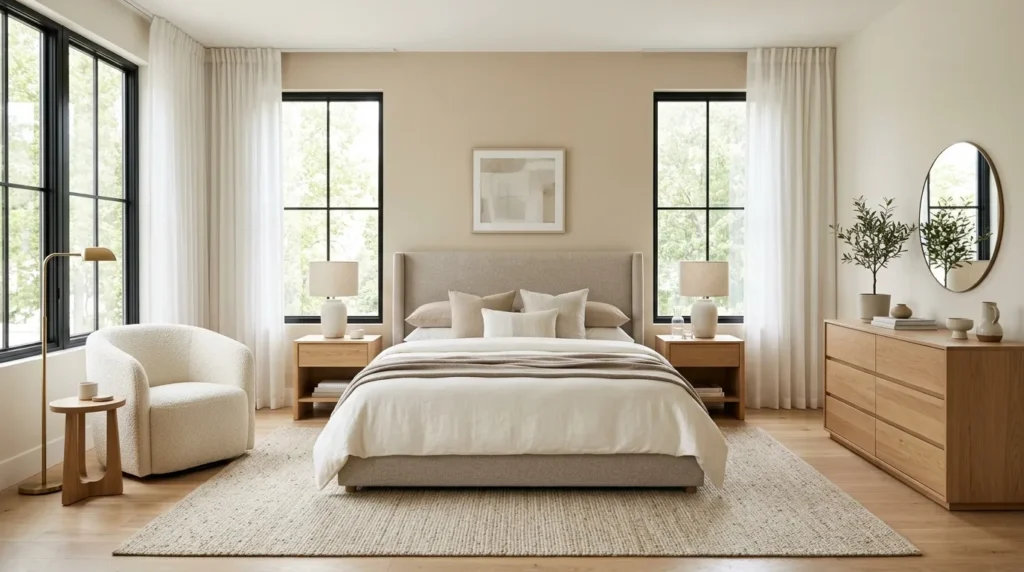
The bed usually acts as the anchor.
Other furniture should support its position rather than compete with it.
How To Style It
Start by positioning the bed where it feels natural and practical.
Allow comfortable walking space around it where possible.
Place nightstands at a useful height and distance from the bed.
If you have a dresser, avoid placing it where drawers or doors interfere with movement.
For smaller bedrooms, choose furniture with appropriate proportions.
A slim nightstand can often work better than a large bedside cabinet.
Leave at least a few intentional open areas rather than filling every corner.
7. Soft Window Treatments
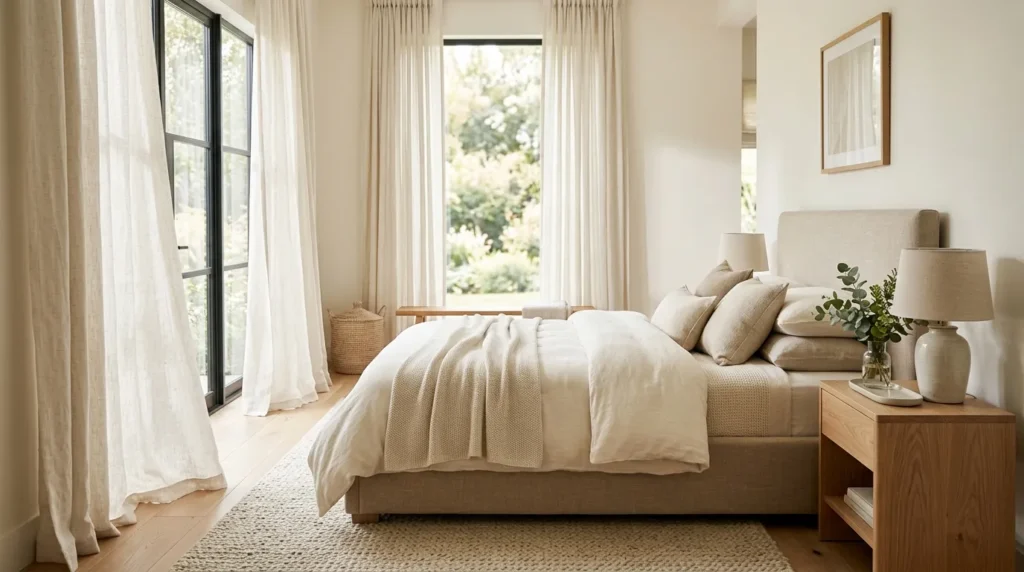
Quick Benefits
- Softens hard window lines
- Improves privacy
- Helps control daylight
- Adds texture
- Makes the bedroom feel finished
Why It Works
Windows are a major visual element, and leaving them completely untreated can sometimes make a bedroom feel unfinished.
Soft curtains add another layer of texture while giving you control over privacy and light.
They can also visually soften the room, especially when paired with hard flooring or modern furniture.
For a particularly calm appearance, simple fabrics in neutral colors usually work better than busy patterns.
How To Style It
Choose linen, cotton, or a linen-look fabric in ivory, cream, beige, oatmeal, or soft gray.
If your window arrangement allows, installing the curtain rod higher and wider than the window can create a more spacious appearance.
For bedrooms that need stronger light control, layer curtains with shades or blinds.
Make sure the window treatment is practical for your room.
Blackout options can be useful for people who need a darker sleeping environment, while sheer panels can help soften bright daylight.
8. Grounding Area Rug
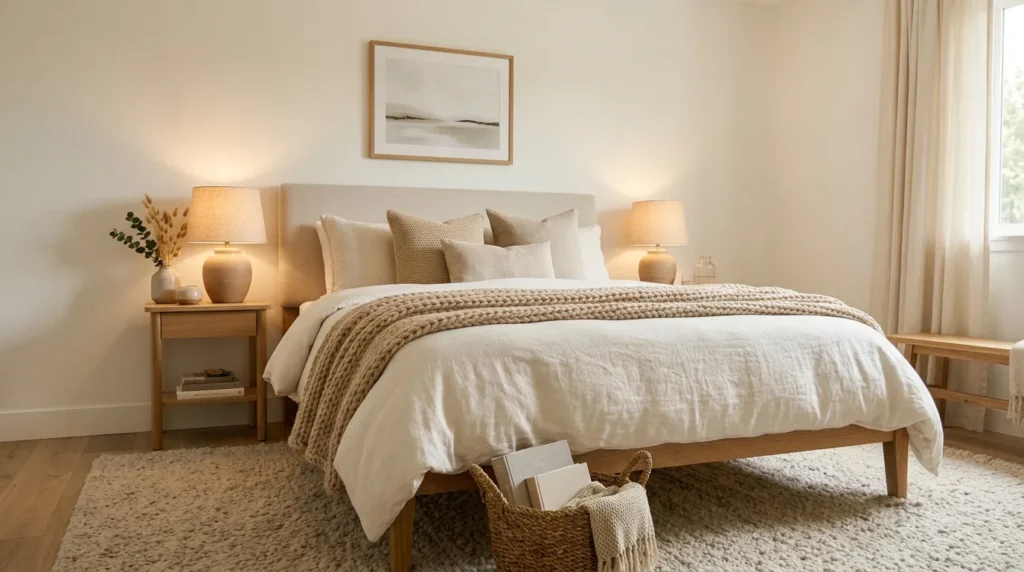
Quick Benefits
- Adds softness underfoot
- Defines the sleeping area
- Connects furniture
- Reduces visual hardness
- Adds texture without clutter
Why It Works
A bedroom can feel visually beautiful but physically cold if it has large areas of hard flooring without any soft surfaces.
A rug helps anchor the furniture and gives the room another layer of comfort.
It also provides an opportunity to introduce subtle texture or color without committing to a permanent change.
This is particularly helpful when the walls and furniture are neutral.
How To Style It
Choose a rug that fits the proportions of your bedroom.
If space allows, a larger rug positioned beneath the bed can extend beyond the sides and lower portion.
For smaller bedrooms, consider runners beside the bed.
Choose a texture that feels comfortable underfoot.
Wool, cotton, washable rugs, and other suitable materials can all work depending on your lifestyle.
If you have pets or children, consider durability and cleaning requirements before choosing a high-maintenance option.
9. Meaningful Decor
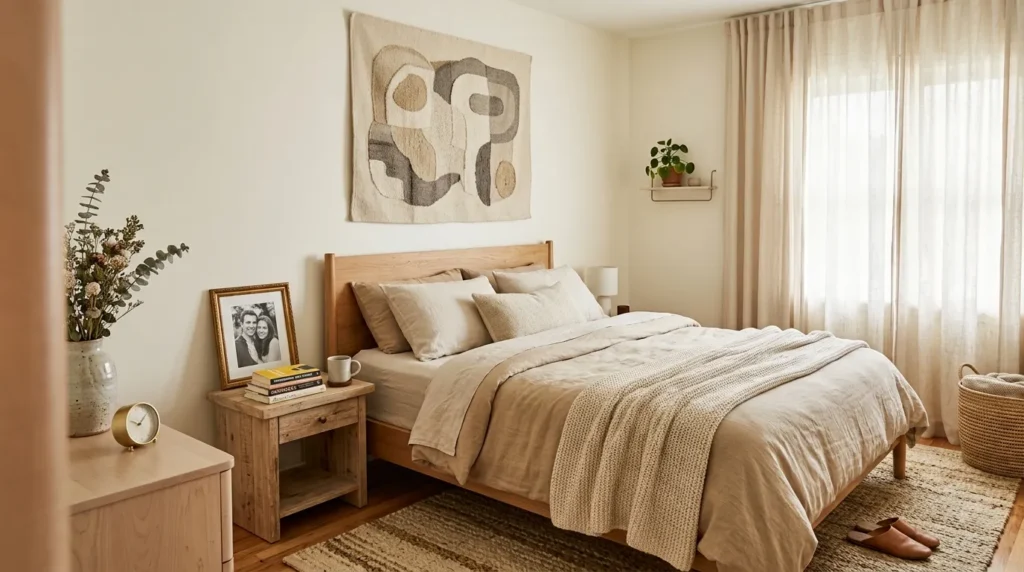
Quick Benefits
- Makes the room personal
- Avoids generic styling
- Reduces unnecessary clutter
- Creates emotional connection
- Adds character without overwhelming the room
Why It Works
A calm bedroom shouldn’t feel like a hotel room unless that’s specifically the look you want.
Personal details are what make a bedroom feel like home.
The trick is to choose meaningful items selectively.
A favorite photograph, artwork from a memorable trip, handmade ceramic piece, or small collection of books can provide personality without creating visual chaos.
You don’t need every surface covered with accessories.
How To Style It
Choose a few pieces that genuinely matter to you.
Display one meaningful artwork above a dresser rather than creating a crowded arrangement.
Place a favorite photograph in a simple frame on the nightstand.
Use books as both functional reading material and subtle decor.
If you collect something, display a small edited selection rather than everything at once.
The room should feel personal, but still have room to breathe.
10. Relaxing Evening Layers
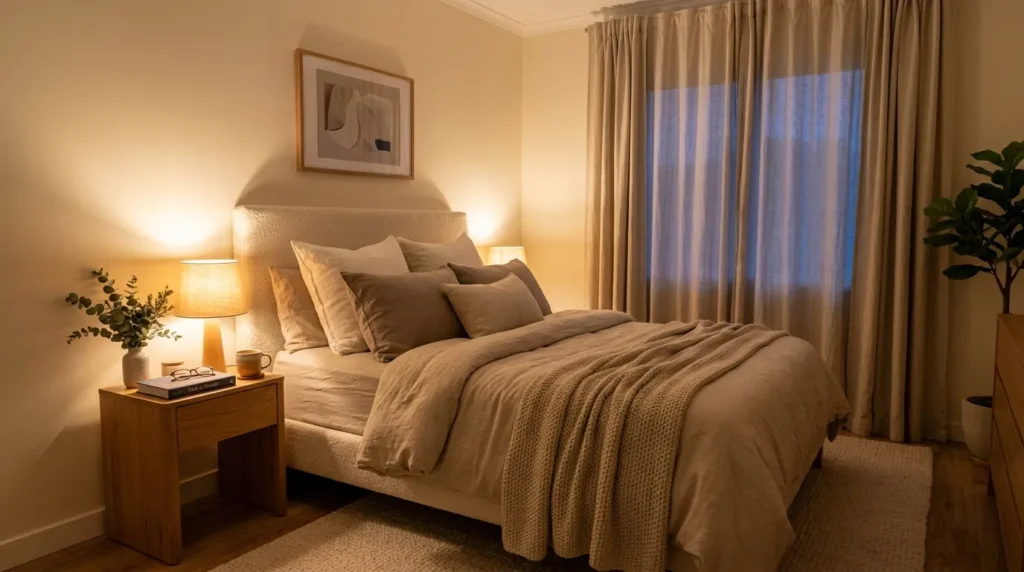
Quick Benefits
- Makes bedtime feel more intentional
- Creates warmth after dark
- Adds sensory comfort
- Helps transition the room from day to night
- Completes the overall design
Why It Works
The bedroom serves a different purpose in the evening than it does during the day.
During daylight hours, natural light and fresh air may dominate the atmosphere. At night, softer lighting, comfortable textures, and fewer distractions become more important.
Creating a small evening routine around the room can make it feel more inviting.
This doesn’t need to be complicated.
Sometimes the simplest changes have the biggest effect.
How To Style It
Dim the overhead lighting in the evening and use bedside lamps instead.
Keep a soft throw at the foot of the bed.
Place a book on your nightstand.
Close curtains or shades when you want more privacy.
Keep electronic accessories organized so cords don’t become visual clutter.
A small vase of greenery or seasonal branch can add a natural finishing touch.
The goal is to create a room that feels noticeably different from the busy spaces elsewhere in the home.
Small Changes That Make a Bedroom Feel Calmer
You don’t have to redecorate the entire room.
Start with the most visible sources of visual noise.
Remove unnecessary items from the nightstands.
Clear the floor.
Fold or store loose blankets.
Group decorative objects rather than scattering them.
Hide charging cables where practical.
Replace a harsh bulb with a warmer option compatible with your fixture.
Add one soft textile.
These small changes can make the room feel significantly more intentional.
I’ve found that decluttering often reveals that a bedroom already has many of the right ingredients. They simply aren’t arranged in a way that allows the room to feel calm.
How To Create A Calm Bedroom On A Budget
A peaceful bedroom doesn’t require expensive furniture.
Start with what you already own.
Rearrange the furniture before buying anything.
Remove pieces that make movement difficult.
Change the bedding if it looks tired.
Add inexpensive curtains or a soft rug.
Use baskets to organize visible clutter.
Move decorative items from other rooms instead of buying new ones.
Thrift stores and secondhand marketplaces can also be useful for finding solid wood furniture, mirrors, lamps, artwork, and baskets.
If you do spend money, prioritize pieces that affect the entire room.
Bedding, lighting, curtains, and rugs usually have a larger visual impact than small decorative accessories.
Common Bedroom Decorating Mistakes
A calm bedroom can quickly become visually busy when too many elements compete.
One common mistake is using too many colors.
Another is choosing furniture that is too large for the room.
Overfilling nightstands is another frequent problem.
Some bedrooms also rely entirely on overhead lighting, which can make evenings feel harsh.
Finally, don’t underestimate the importance of empty space.
You don’t need to decorate every wall, fill every shelf, or place furniture in every corner.
A little emptiness can make the things you do choose feel more intentional.
FAQ
What colors make a bedroom feel calm?
Soft neutrals such as warm white, cream, beige, taupe, pale gray, dusty blue, and muted sage can create a peaceful atmosphere. Choose shades that work with your natural lighting and existing furniture rather than relying on color trends alone.
How do I make my bedroom feel relaxing?
Reduce visual clutter, use comfortable bedding, add warm layered lighting, introduce soft textiles, and arrange furniture so movement feels easy. A calm bedroom should be comfortable and functional rather than simply looking minimalist.
Should a calm bedroom be minimalist?
Not necessarily. A calm bedroom can include artwork, books, plants, photographs, and decorative objects. The important thing is editing. Keep the pieces you genuinely enjoy and organize them so the room doesn’t feel visually crowded.
What type of lighting is best for a relaxing bedroom?
Layered lighting generally works well. Combine practical overhead lighting with bedside lamps, sconces, or floor lamps. Choose bulbs and fixtures appropriate for your needs, and consider warmer illumination for evening use.
How can I make a small bedroom feel calmer?
Use appropriately scaled furniture, keep walking paths clear, reduce visible clutter, and use a restrained color palette. Vertical storage and concealed organization can also help preserve valuable floor space.
What bedding is best for a cozy bedroom?
Breathable cotton and linen are popular choices because they provide comfortable texture and work across seasons. Layering sheets, a duvet or comforter, a lightweight blanket, and a few pillows can create a cozy appearance without excessive decoration.
How often should I declutter bedroom decor?
There isn’t one correct schedule. A seasonal review can be useful, especially if accessories accumulate over time. Remove items you no longer use or enjoy and keep surfaces practical and visually balanced.
Conclusion
A calm bedroom doesn’t have to be perfectly minimalist, expensive, or professionally decorated.
What matters most is how the pieces work together.
Start with a gentle color palette, then build comfort through bedding, rugs, curtains, and natural materials. Keep furniture appropriately scaled and leave enough open space for the room to breathe. Use warm layered lighting instead of relying entirely on a bright overhead fixture, and keep nightstands organized so everyday clutter doesn’t become part of the visual landscape.
Most importantly, allow the room to reflect you.
A favorite photograph, meaningful artwork, well-loved book, or handmade accessory can make the space feel much more personal than a room filled entirely with trendy decor.
If your bedroom currently feels chaotic, don’t try to fix everything in one afternoon.
Clear one surface.
Rearrange one corner.
Change the lighting.
Add one comfortable textile.
Small improvements can build on each other.
The best bedroom is ultimately one that supports the way you actually live. It should feel comfortable in the morning, functional during the day, and peaceful when you’re ready to turn the lights down at night.
Start with the change that would make the biggest difference for you, then let the rest of the room evolve naturally.
Related Articles
- 10 Modern Bedroom Ideas with Soft Beige Tones
- 10 Cozy Aesthetic Bedroom Ideas You’ll Love
- 10 Modern Bedroom Ideas with Cozy Minimalist Style
- 10 Bedroom Wall Decor Ideas That Add Luxury on a Budget
- 10 Ideas How to Make a Small Bedroom Look Expensive