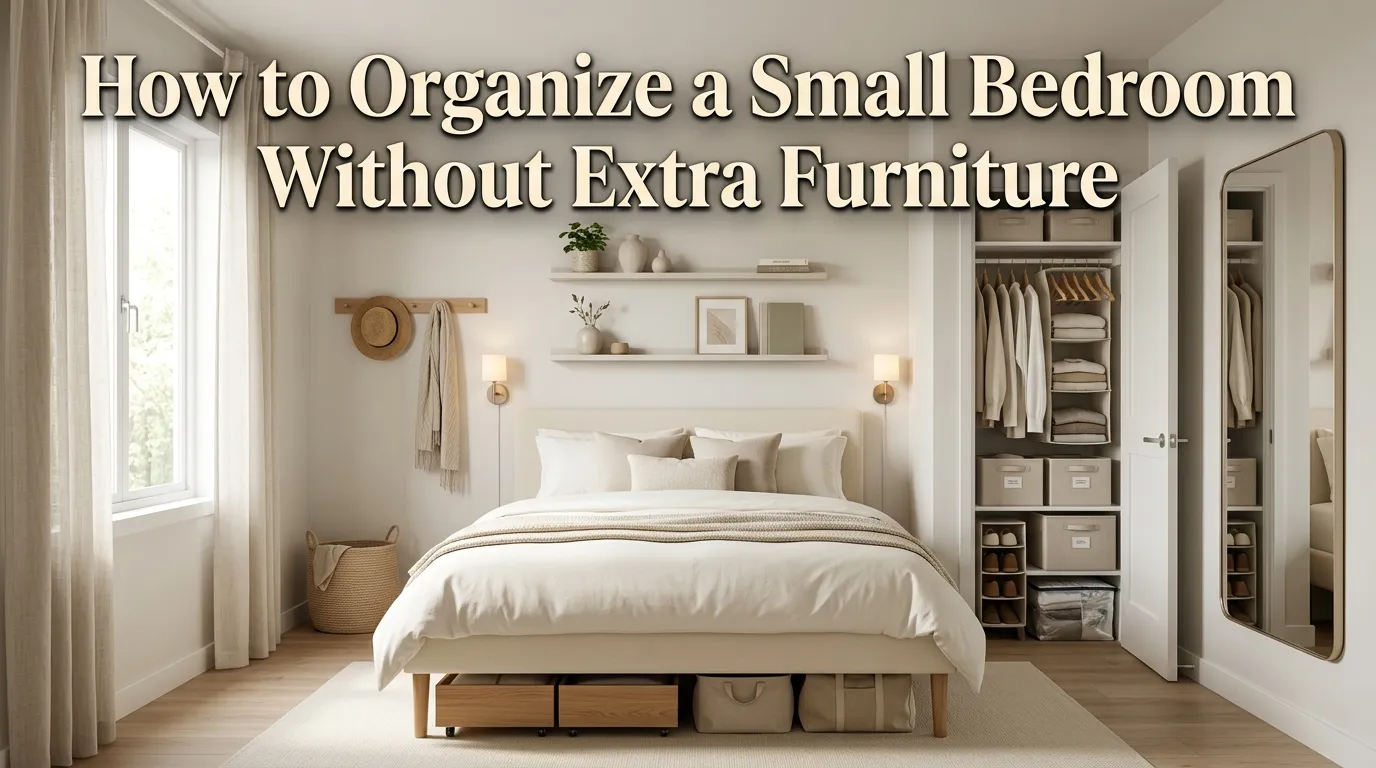
How to Organize a Small Bedroom Without Extra Furniture
A small bedroom doesn’t need more furniture to become more organized.
In fact, adding another dresser, cabinet, shelf, or storage unit can sometimes make the room feel even more cramped. The better approach is to make the most of the furniture you already have and use overlooked spaces more intentionally.
The secret is to organize vertically, reduce visual clutter, give everyday belongings a designated home, and make existing furniture work harder.
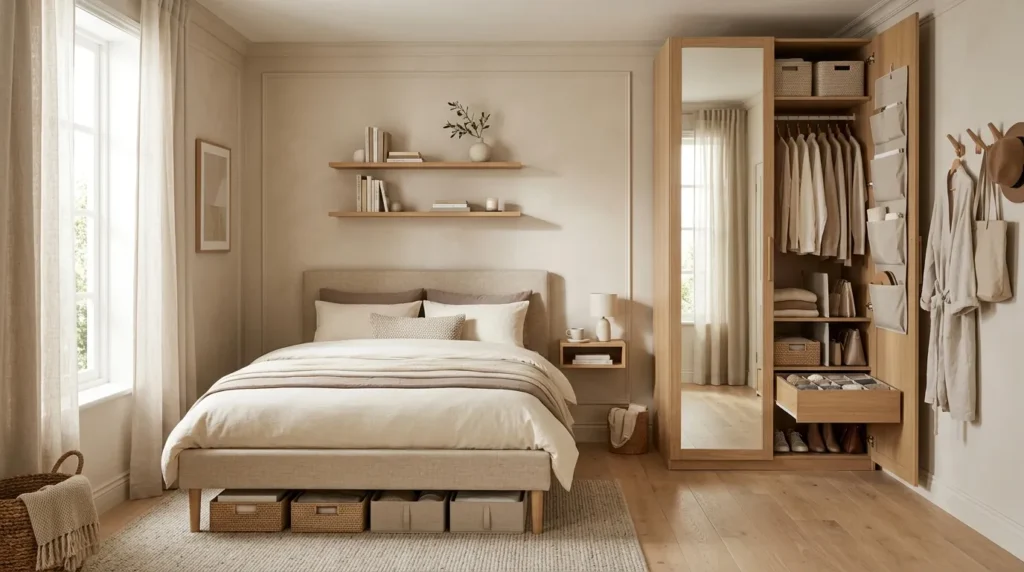
A nightstand can hold more than a lamp. The space beneath the bed can become useful storage. The back of a door can hold accessories, while the inside of a closet can accommodate much more when it’s properly arranged.
In my experience, small bedrooms feel messy quickly because there is very little margin for clutter. A few clothes on the chair or several items scattered across a dresser can make the entire room appear disorganized.
That is why organization should focus not only on storage but also on easy habits.
If putting something away takes thirty seconds and requires moving three other things first, you’re unlikely to do it consistently.
These ideas will help you organize a small bedroom using the furniture and spaces you already have—without filling the room with additional storage pieces.
Table of Contents
- Declutter Before Organizing
- Maximize Under-Bed Space
- Use the Closet Door
- Organize the Nightstand
- Double Up Closet Space
- Use Wall Space
- Fold Clothes Vertically
- Create a Daily Drop Zone
- Simplify the Dresser
- Keep the Floor Clear
1. Declutter Before Organizing
Quick Benefits
- Creates immediate space
- Makes organizing easier
- Reduces visual clutter
- Prevents overstuffed storage
- Costs nothing
Why It Works
Organization can’t compensate for having more belongings than your existing storage can comfortably hold.
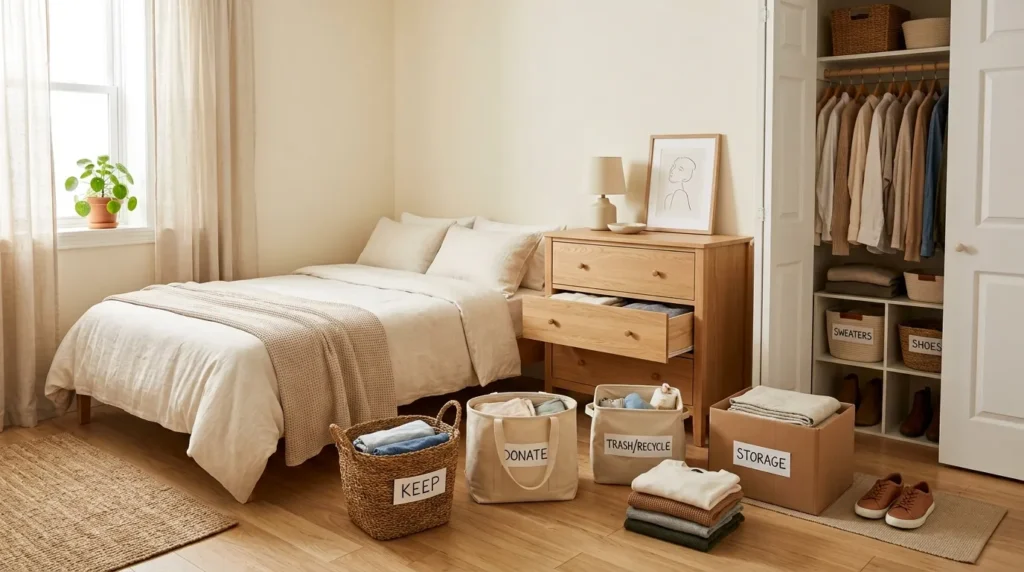
Before rearranging anything, remove items you no longer use, wear, need, or enjoy.
Small bedrooms benefit enormously from reducing unnecessary possessions because every drawer, shelf, and surface becomes easier to manage.
How To Style It
Start with one category rather than emptying the entire bedroom.
Sort clothing, accessories, books, paperwork, and miscellaneous items separately.
Remove obvious trash first.
Then create simple keep, donate, sell, and discard categories.
Only organize the items that actually deserve to remain.
2. Maximize Under-Bed Space
Quick Benefits
- Uses hidden space
- Keeps floors clear
- Requires no new furniture
- Works for seasonal items
- Reduces closet pressure
Why It Works
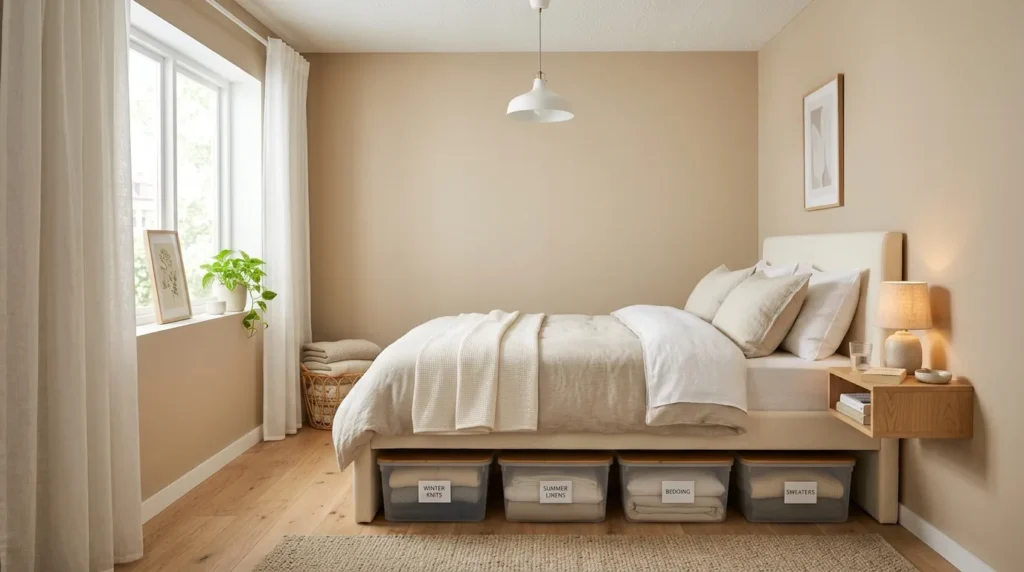
The area underneath your bed is often one of the largest unused spaces in a small bedroom.
Instead of allowing dust and random objects to accumulate underneath, turn the area into intentional storage.
How To Style It
Use low-profile storage containers that fit comfortably beneath the bed.
Store items you don’t need every day, such as seasonal clothing, extra bedding, luggage, or special-occasion accessories.
Label containers so you don’t have to pull everything out when searching for one item.
Keep frequently used belongings somewhere easier to reach.
3. Use the Closet Door
Quick Benefits
- Adds hidden organization
- Uses overlooked space
- Keeps surfaces clear
- Works for accessories
- Doesn’t require floor space
Why It Works
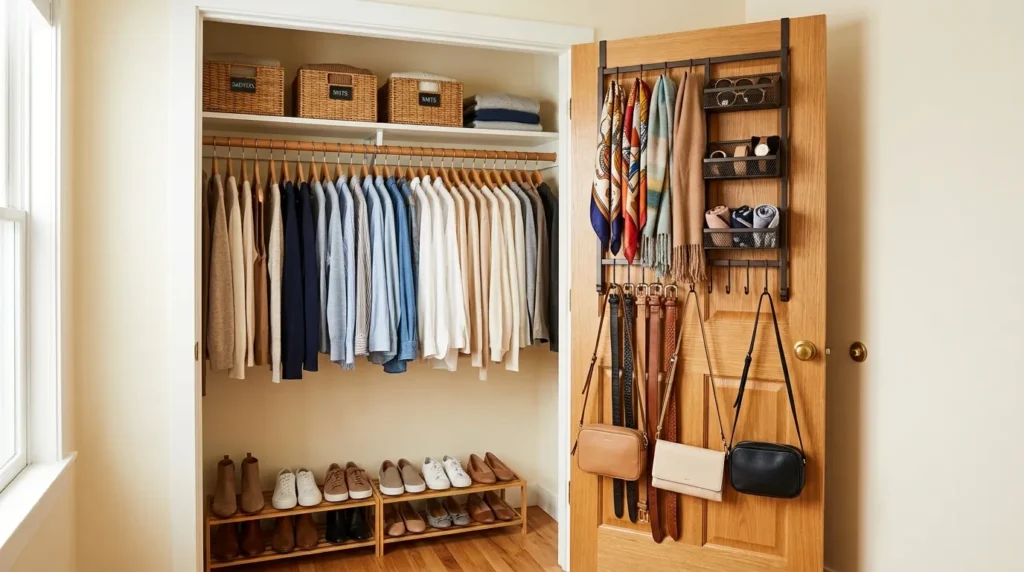
The inside of a closet door is valuable vertical real estate.
It can hold smaller items that otherwise end up scattered across dressers or nightstands.
How To Style It
Depending on the door and your rental restrictions, consider an over-door organizer or suitable removable hooks.
Use it for scarves, belts, handbags, small accessories, or other lightweight belongings.
Avoid overloading the door.
Keep frequently used items toward the easiest-to-reach areas.
4. Organize the Nightstand
Quick Benefits
- Reduces visual clutter
- Makes bedtime routines easier
- Creates more usable space
- Keeps essentials accessible
- Costs nothing
Why It Works
Nightstands tend to become accidental storage zones.
Chargers, books, glasses, skincare products, receipts, and random objects can quickly cover the surface.
A small bedroom looks much cleaner when this one area stays controlled.
How To Style It
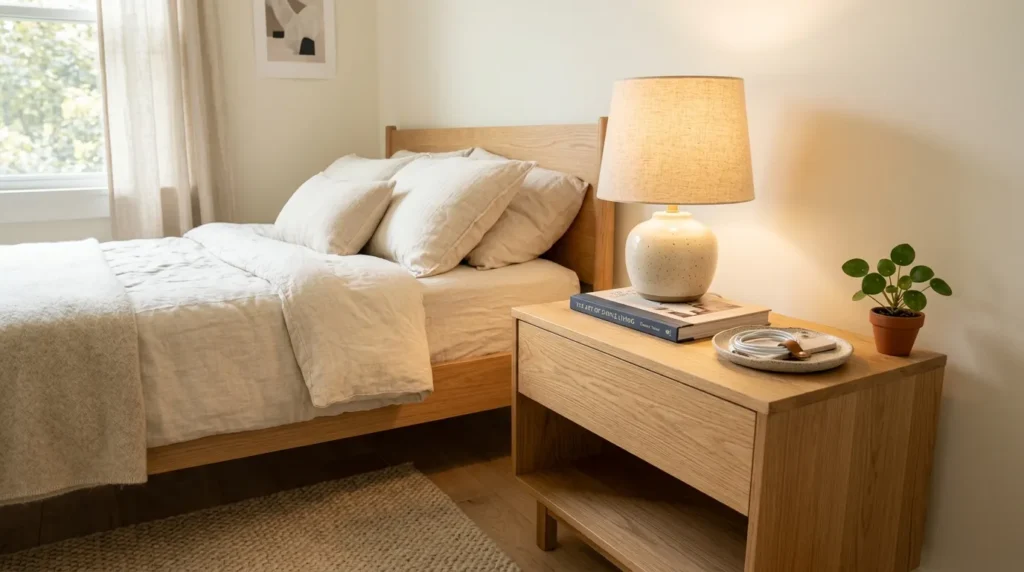
Keep only your everyday essentials on top.
A practical combination might include a lamp, one book, and a small decorative object.
Use the drawer for smaller necessities.
Bundle charging cables neatly.
Move everything unrelated to bedtime into its proper location.
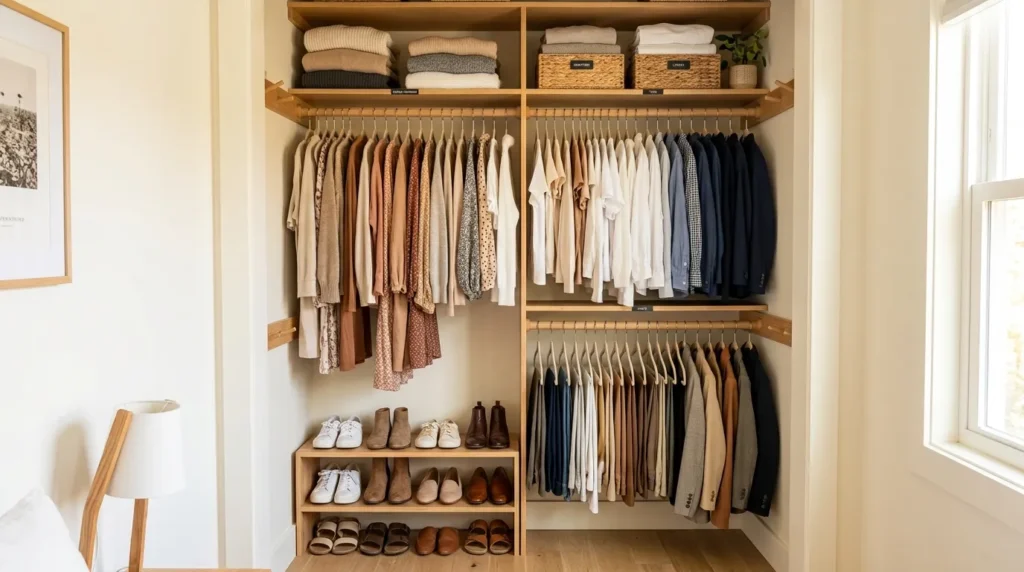
5. Double Up Closet Space
Quick Benefits
- Creates more hanging capacity
- Makes clothing easier to see
- Uses existing storage
- Reduces closet congestion
- Improves accessibility
Why It Works
Many closets contain unused vertical space between the hanging rod and the floor.
Using that space more efficiently can significantly increase storage without adding furniture.
How To Style It
Group clothing by category.
Use appropriate slim hangers where practical.
Consider a second hanging level if your closet setup allows it.
Keep longer garments in an area where they can hang freely.
Use the lower portion for shoes or folded items.
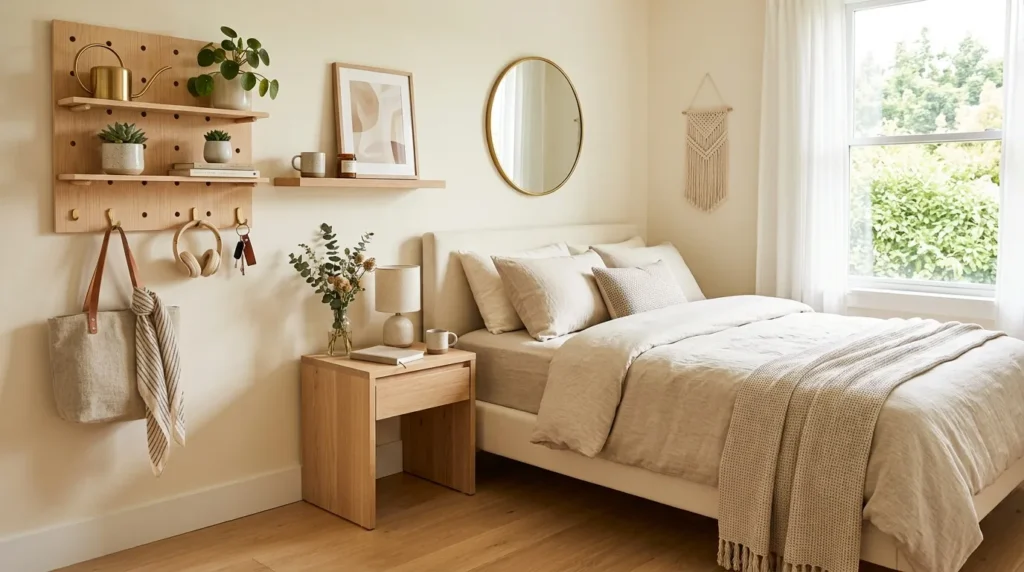
6. Use Wall Space
Quick Benefits
- Saves floor area
- Adds accessible storage
- Creates visual structure
- Keeps belongings off surfaces
- Works in tiny bedrooms
Why It Works
Walls provide storage opportunities without taking up valuable floor space.
Even a small section of wall can become useful for accessories, artwork, books, or everyday items.
How To Style It
Use suitable wall-mounted hooks, organizers, pegboards, or shelves where permitted.
Keep wall storage visually simple.
Group similar items together rather than scattering small objects across multiple walls.
If you’re renting, consider removable solutions that are appropriate for your walls.
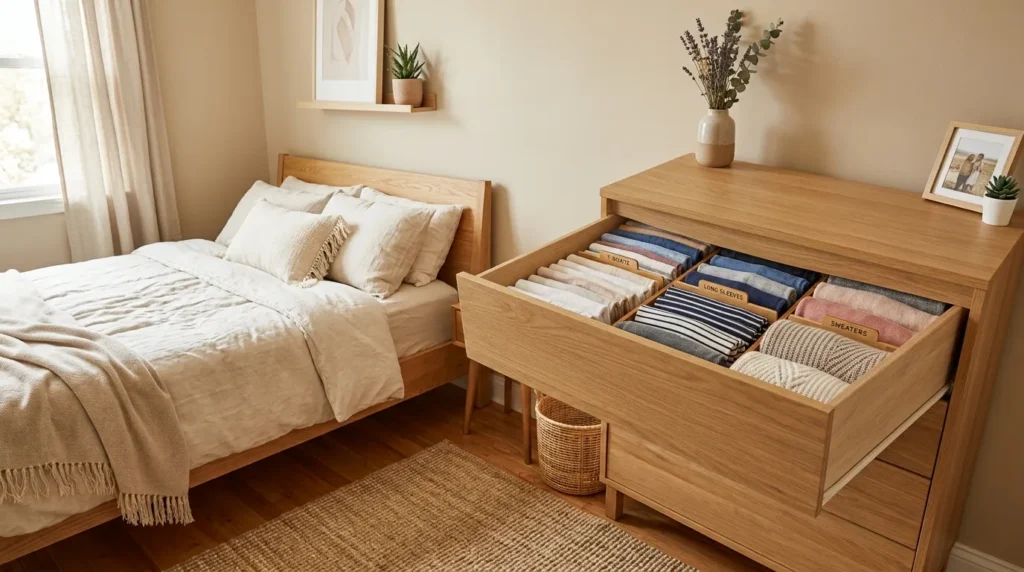
7. Fold Clothes Vertically
Quick Benefits
- Makes drawers easier to use
- Improves visibility
- Prevents messy piles
- Uses drawer space efficiently
- Makes clothing selection faster
Why It Works
Traditional horizontal stacks can hide the clothes underneath.
Vertical folding allows you to see more items at once and reduces the temptation to pull apart an entire drawer.
How To Style It
Fold similar clothing into consistent shapes.
Arrange items upright when your drawer dimensions allow.
Group categories together.
Avoid stuffing drawers so tightly that clothing becomes difficult to remove.
Leave enough space for items to move comfortably.
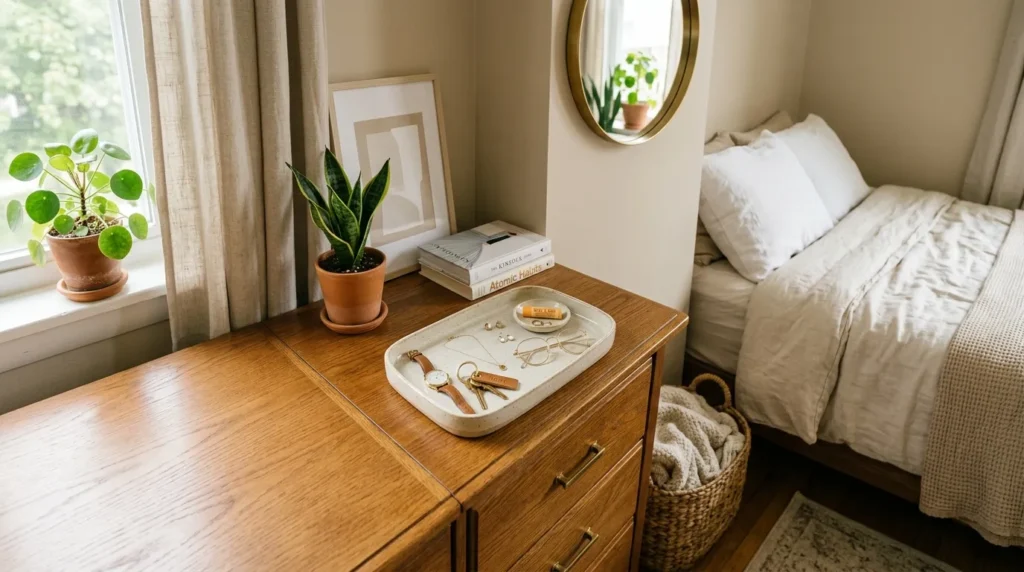
8. Create a Daily Drop Zone
Quick Benefits
- Prevents random piles
- Makes routines easier
- Controls everyday clutter
- Uses existing surfaces
- Keeps the room tidy
Why It Works
Everyday belongings need somewhere convenient to land.
Without a designated location, keys, jewelry, bags, glasses, clothing, and other small items tend to accumulate wherever you happen to put them down.
How To Style It
Choose one existing surface or small section of your room.
Use a tray, bowl, basket, or container you already own.
Place only frequently used items there.
Empty the zone regularly so it doesn’t become another clutter collection.
9. Simplify the Dresser
Quick Benefits
- Creates visual calm
- Makes cleaning easier
- Improves accessibility
- Reduces surface clutter
- Makes the bedroom feel larger
Why It Works
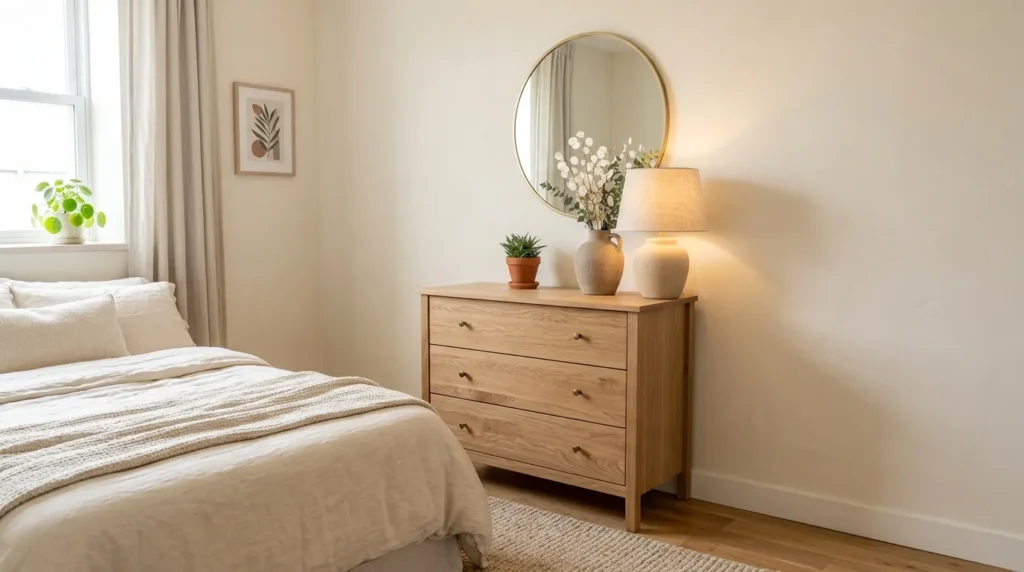
A crowded dresser can make an entire bedroom feel messy.
The top of the dresser should support the room rather than become overflow storage.
How To Style It
Remove everything from the surface.
Return only the items you use or genuinely want displayed.
Try a simple arrangement such as a mirror, small tray, lamp, or plant.
Keep clothing inside drawers instead of allowing piles to accumulate on top.
10. Keep the Floor Clear
Quick Benefits
- Makes the room feel larger
- Improves movement
- Makes cleaning easier
- Reduces visual clutter
- Creates a calmer atmosphere
Why It Works
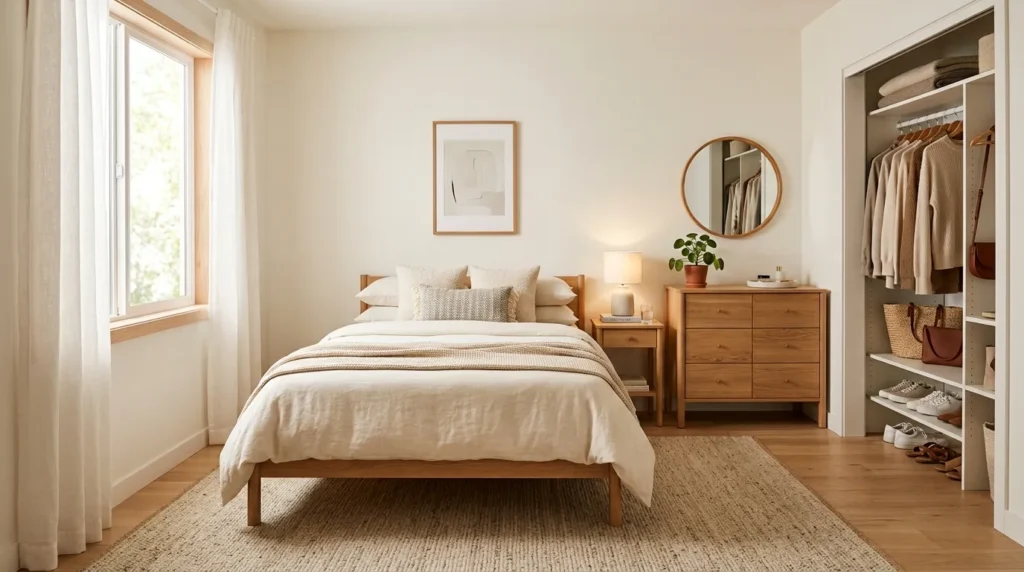
Visible floor space is especially valuable in a small bedroom.
When clothing, shoes, bags, and miscellaneous belongings cover the floor, the room immediately feels smaller.
How To Style It
Give shoes a defined closet location.
Hang bags rather than leaving them on the floor.
Place laundry in an existing hamper.
Return clothing to the closet or drawers promptly.
Keep pathways open around the bed.
Small Bedroom Organization Zones
Instead of thinking about the entire room as one storage problem, divide belongings into zones.
Clothing Zone
Closet and dresser.
Bedside Zone
Nightstand and nearby wall space.
Accessory Zone
Closet door or small organizer.
Seasonal Zone
Under-bed storage.
Daily Essentials Zone
One tray or designated surface.
Laundry Zone
Existing hamper or closet area.
This makes it much easier to know where things belong.
How To Make a Small Bedroom Feel More Organized
Organization isn’t only about where you put things.
Visual simplicity matters too.
Try keeping similar colors together.
Use matching or coordinated hangers where practical.
Avoid displaying dozens of small objects.
Keep surfaces mostly clear.
Choose one or two decorative focal points instead of filling every available space.
The fewer visual interruptions the room has, the more spacious and peaceful it can feel.
What Not To Add to a Small Bedroom
Before purchasing new storage furniture, ask whether you can solve the problem using what you already have.
You may not need:
- Another dresser
- A large bookshelf
- A bulky storage bench
- Multiple freestanding organizers
- Several decorative baskets
- A large shelving unit
Sometimes the better solution is simply removing excess belongings and reorganizing existing storage.
Common Small Bedroom Organization Mistakes
Buying Storage Too Quickly
More storage can encourage you to keep more things.
Ignoring Vertical Space
Walls and closet doors can be extremely useful.
Overfilling Drawers
Stuffed drawers make organization difficult to maintain.
Keeping Everything on Display
Visible belongings can quickly create visual clutter.
Organizing Without Decluttering
Sorting unnecessary items doesn’t solve the underlying problem.
FAQ
How do I organize a small bedroom without buying furniture?
Start by decluttering, then maximize existing drawers, closet space, under-bed storage, doors, walls, and surfaces. You can often create significantly more usable space without adding another piece of furniture.
What should I store under my bed?
Under-bed storage is useful for seasonal clothing, spare bedding, luggage, shoes, and other belongings you don’t need every day. Use suitable low-profile containers to keep everything protected and organized.
How can I make my small bedroom look less cluttered?
Keep floors clear, reduce visible belongings, organize surfaces, use a cohesive color palette, and store everyday items in designated locations.
How can I organize a small closet?
Group clothing by category, use space efficiently, reduce unnecessary pieces, and consider suitable ways to use vertical space within the closet.
Where should I put accessories in a small bedroom?
Use existing drawers, closet-door organizers, suitable hooks, or a small tray for everyday accessories. Group similar items together so they’re easy to find.
Should I buy more storage for a small bedroom?
Not necessarily. First determine whether the problem is insufficient storage or simply too many belongings. Decluttering and reorganizing existing storage should come first.
How do I keep a small bedroom organized?
Make organization easy enough to maintain. Return items to their designated homes, keep surfaces relatively clear, and perform a quick reset regularly.
Conclusion
Organizing a small bedroom doesn’t require filling it with more furniture.
Often, the biggest improvement comes from using the space you already have more intelligently.
Declutter first.
Maximize the area under the bed.
Use closet doors and vertical wall space.
Improve the way clothes are stored.
Keep nightstands and dressers under control.
And most importantly, keep the floor clear.
A small bedroom doesn’t need to hold everything you own.
When each remaining item has a practical place, the room becomes easier to clean, easier to maintain, and much more relaxing to live in.
The goal isn’t to squeeze more belongings into a tiny space.
It’s to make the space you already have work beautifully.