
How to Declutter Your Home Before Moving Day
Moving is the perfect opportunity to stop carrying things you no longer need into your next home.
Instead of packing everything and sorting it later, decluttering before moving day can make the entire process feel lighter, more organized, and much less stressful.
The biggest mistake is waiting until the final few days. By then, you’re tired, surrounded by boxes, and more likely to pack something simply because deciding what to do with it feels like too much work.
A better approach is to declutter in stages.
Start with the areas that contain the most unused items, then work through everyday belongings, storage spaces, paperwork, and sentimental pieces. You don’t have to throw everything away. Items can be donated, sold, recycled, gifted, or responsibly discarded.
In my experience, the easiest way to make progress is to avoid thinking about the entire house at once. Focus on one category or one area at a time.
Your goal isn’t to create an empty home.
It’s to move only the things that are useful, meaningful, beautiful, or genuinely worth the space they will occupy in your new home.
These practical ideas can help you reduce clutter before moving day and start your next chapter with a cleaner, more intentional home.
Table of Contents
- Start With a Moving Deadline
- Declutter Room by Room
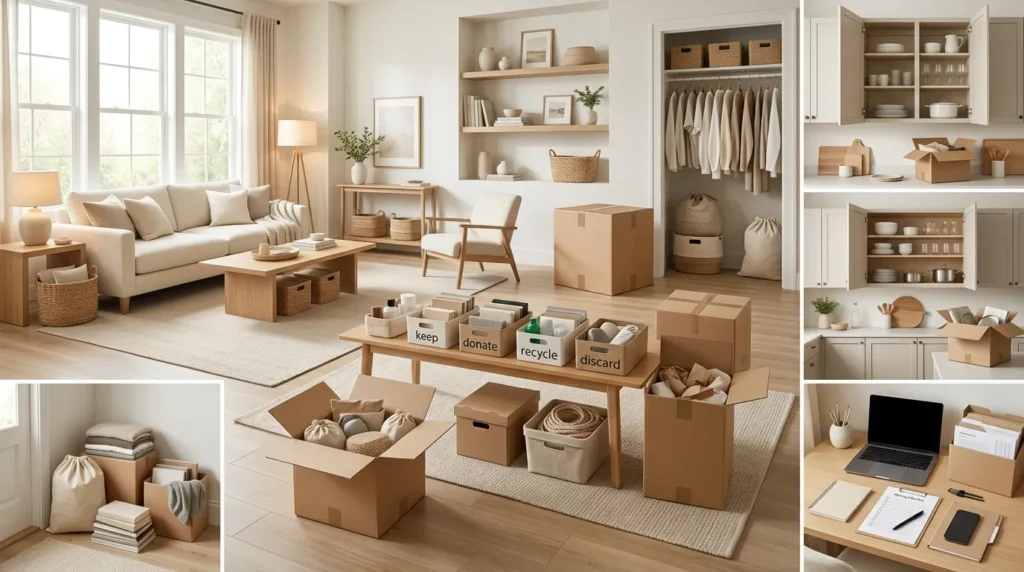
- Use Four Sorting Categories
- Clear the Kitchen
- Reduce Closet Clutter
- Tackle Storage Areas
- Sort Paperwork
- Edit Sentimental Items
- Create a Donation Zone
- Pack Only What Remains
1. Start With a Moving Deadline
Quick Benefits
- Creates urgency
- Prevents procrastination
- Makes the process manageable
- Gives you a clear schedule
- Reduces last-minute decisions
Why It Works
Decluttering without a deadline can easily turn into an endless project.
A moving date gives you a natural finish line.
Instead of saying, “I’ll sort this later,” assign specific decluttering sessions before packing begins.
How To Style It
Write down your moving date.
Then work backward.
Give yourself separate sessions for clothing, kitchen items, storage, paperwork, bathrooms, decor, and miscellaneous belongings.
Keep the final days focused on packing rather than major decluttering decisions.
2. Declutter Room by Room
Quick Benefits
- Prevents overwhelm
- Makes progress visible
- Keeps decisions organized
- Reduces repeated sorting
- Creates clear stopping points
Why It Works
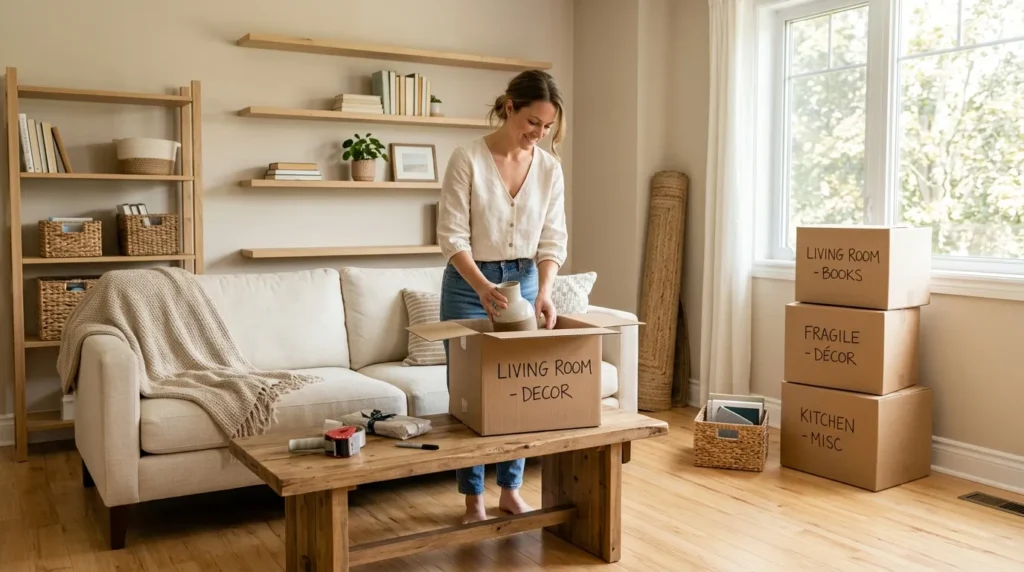
Trying to declutter an entire house simultaneously creates unnecessary chaos.
Working room by room gives you a defined boundary.
Once one room is finished, you can move on without constantly reopening completed areas.
How To Style It
Choose one room.
Empty one manageable section at a time.
Evaluate everything before putting anything back.
Don’t move unwanted items into another room.
Once the room is finished, immediately place donations, recycling, or trash in their designated locations.
3. Use Four Sorting Categories
Quick Benefits
- Simplifies decisions
- Speeds up sorting
- Prevents piles from becoming confusing
- Makes donations easier
- Creates clear next steps
Why It Works
Decluttering becomes easier when every item has a destination.
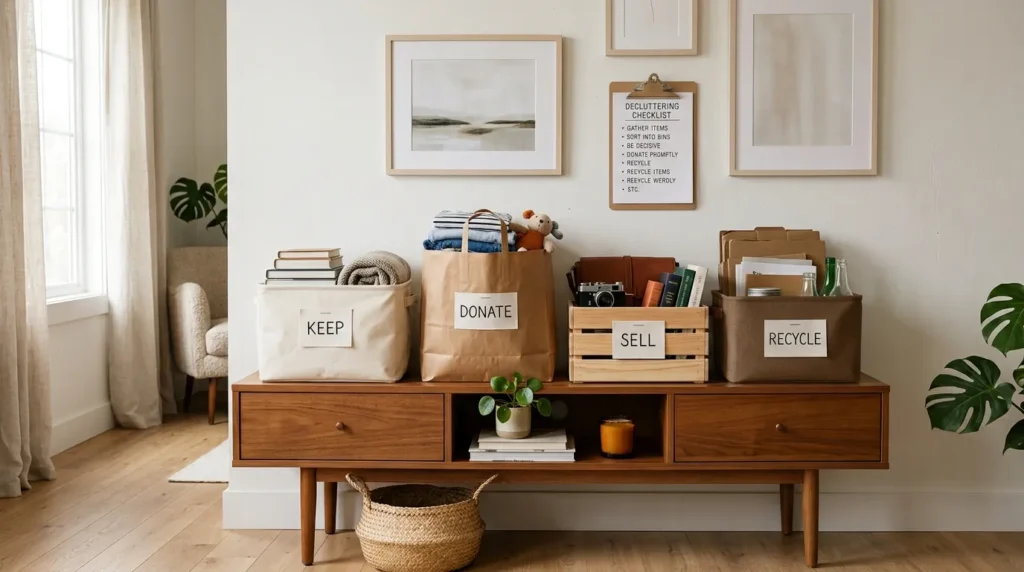
A simple four-category system can prevent the classic problem of creating one giant “maybe” pile.
How To Style It
Create four categories:
Keep
Donate
Sell
Discard or Recycle
If you’re genuinely uncertain about an item, create a small temporary review box rather than allowing uncertainty to spread across the entire room.
4. Clear the Kitchen
Quick Benefits
- Reduces packing volume
- Removes duplicate items
- Makes unpacking easier
- Creates immediate progress
- Prevents unnecessary weight
Why It Works
Kitchens often contain duplicates, rarely used appliances, excess containers, old utensils, and dishes that have accumulated over time.
Moving is an excellent opportunity to evaluate what you actually use.
How To Style It
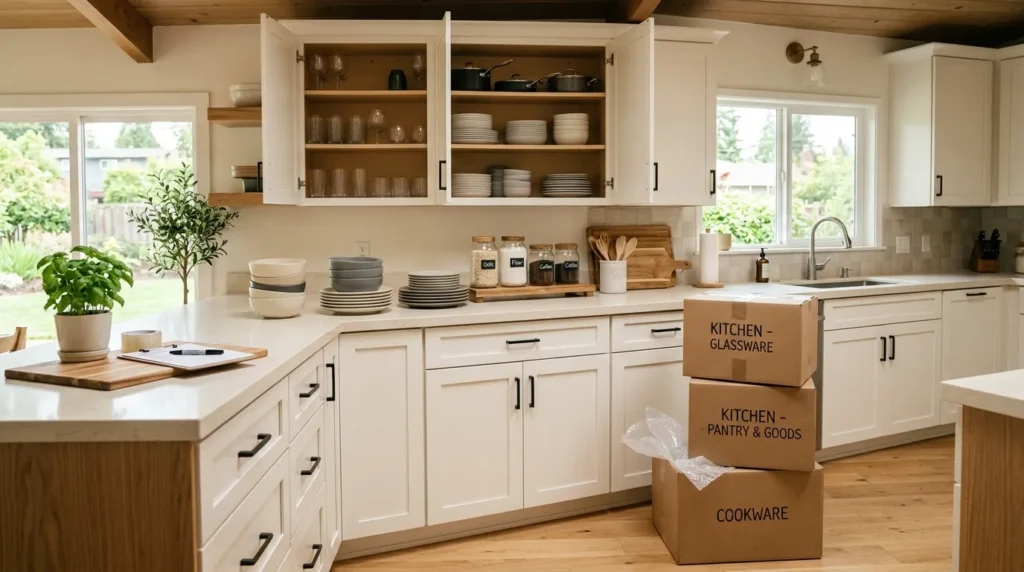
Open every cabinet and drawer.
Group similar items together.
Look for duplicate tools, mismatched containers, unused gadgets, expired products, and things you haven’t reached for in a long time.
Keep the items that genuinely serve your household.
5. Reduce Closet Clutter
Quick Benefits
- Reduces boxes
- Makes packing faster
- Simplifies the new closet
- Reveals what you actually wear
- Creates easier organization
Why It Works
Clothing is one of the easiest categories to overpack.
Moving everything you own doesn’t solve the underlying problem of having too many clothes you rarely wear.
How To Style It
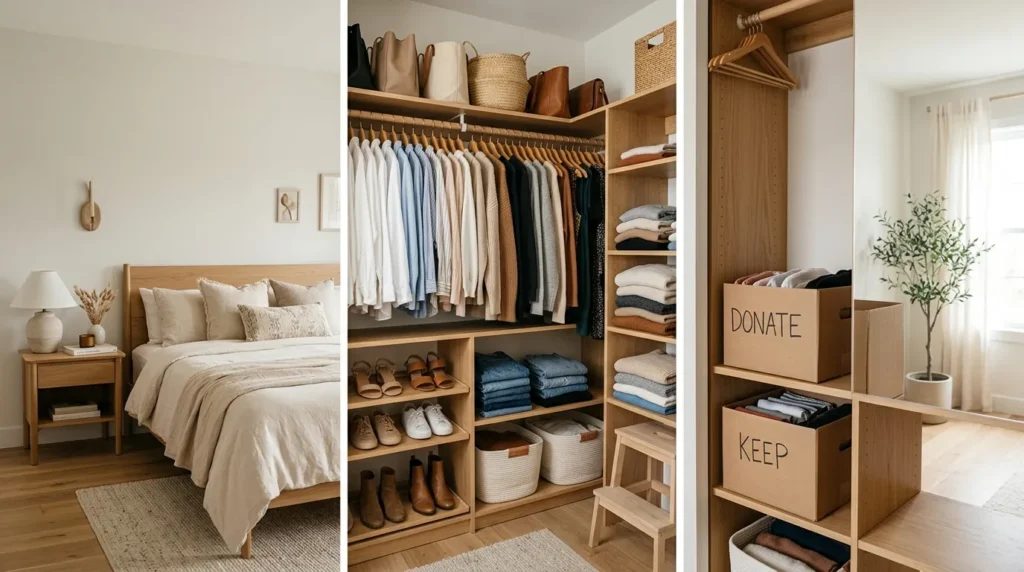
Remove clothing that no longer fits your lifestyle.
Look for duplicates.
Set aside pieces that are damaged beyond reasonable repair.
Consider whether you realistically expect to wear items in the future.
Use the same decision process for shoes, bags, accessories, and outerwear.
6. Tackle Storage Areas
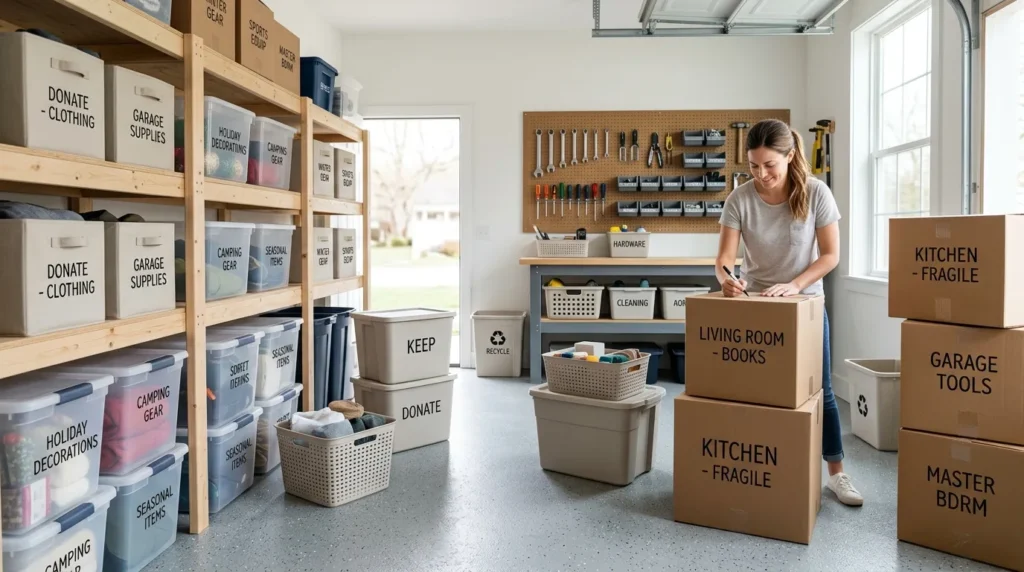
Quick Benefits
- Removes hidden clutter
- Reduces unnecessary boxes
- Creates a cleaner move
- Prevents forgotten belongings
- Makes unpacking easier
Why It Works
Garages, basements, attics, closets, and storage cabinets often contain things that haven’t been touched in years.
Because these spaces are hidden, they’re easy to ignore.
How To Style It
Start with one storage zone.
Pull everything into view.
Group similar items.
Ask whether each item is still useful, functional, or meaningful.
Be especially careful with damaged items that have been kept simply because they might be useful someday.
7. Sort Paperwork
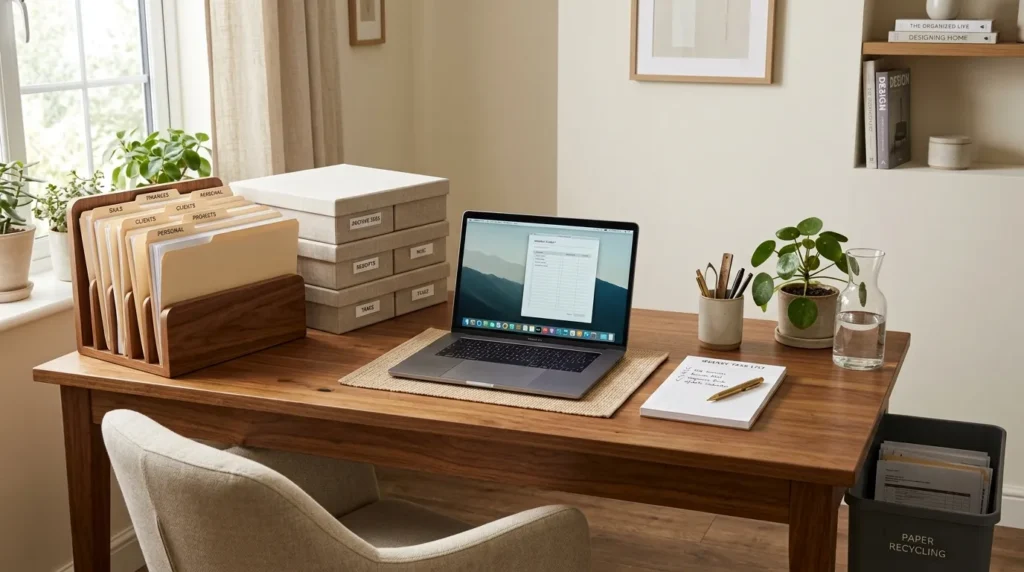
Quick Benefits
- Reduces paper clutter
- Protects important documents
- Makes moving easier
- Creates a more organized system
- Prevents unnecessary boxes
Why It Works
Paper can accumulate quietly.
Old receipts, outdated paperwork, duplicate documents, manuals, and junk mail can take up surprisingly large amounts of space.
How To Style It
Create separate categories for important documents, items requiring action, records you need to retain, and recyclable paper.
Use appropriate secure storage for sensitive documents.
Digitize information when practical and permitted.
Avoid keeping duplicate copies without a reason.
8. Edit Sentimental Items
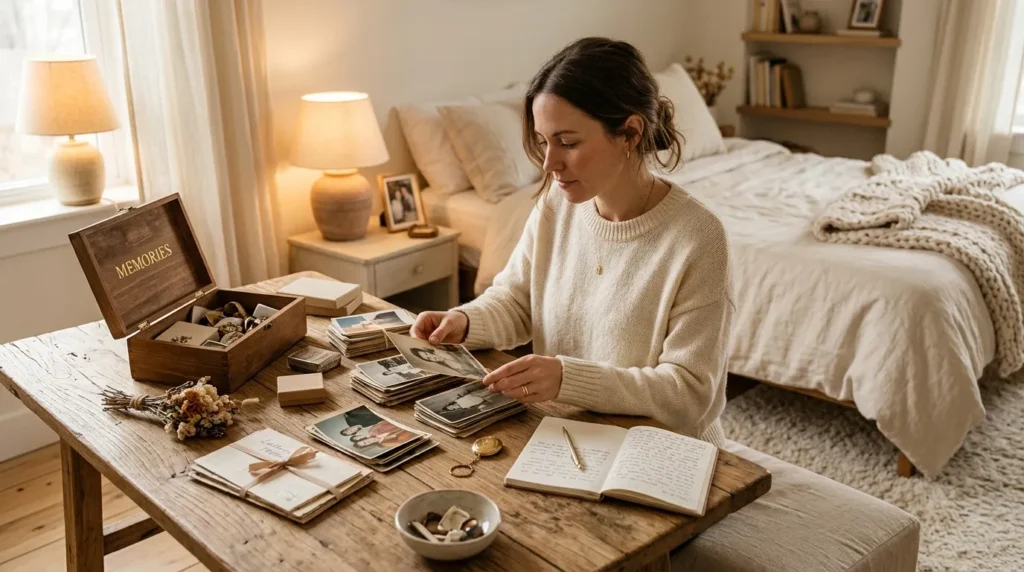
Quick Benefits
- Reduces emotional clutter
- Makes storage easier
- Preserves meaningful memories
- Prevents unnecessary boxes
- Creates intentional collections
Why It Works
Sentimental belongings are often the hardest items to declutter because the decision isn’t really about usefulness.
You don’t need to discard meaningful memories.
Instead, focus on keeping the items that genuinely represent those memories.
How To Style It
Gather sentimental items together.
Group related pieces.
Choose favorites rather than keeping every variation.
Consider photographing bulky objects you don’t have room to keep.
Create one dedicated memory box or container when appropriate.
9. Create a Donation Zone
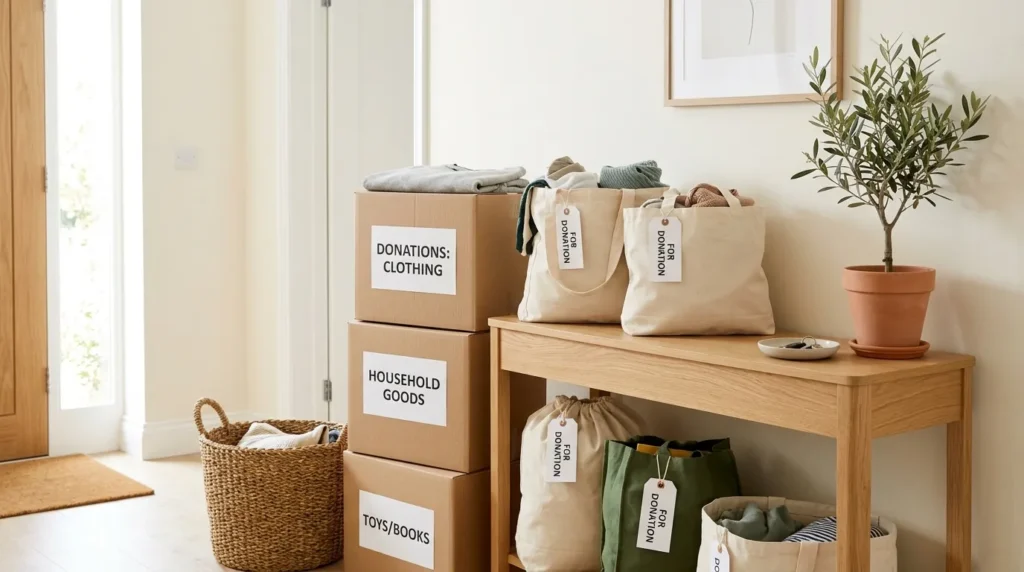
Quick Benefits
- Keeps unwanted items organized
- Prevents re-sorting
- Encourages faster decisions
- Makes donations easier
- Keeps packing areas clear
Why It Works
A donation pile sitting in the middle of the house can become clutter itself.
Giving unwanted items a defined destination keeps the process moving.
How To Style It
Choose one designated location.
Use sturdy bags or boxes.
As soon as a container is full, arrange an appropriate donation pickup or drop-off.
Don’t let finished donations remain mixed with belongings you plan to move.
10. Pack Only What Remains
Quick Benefits
- Reduces moving volume
- Makes unpacking easier
- Saves time
- Creates a cleaner start
- Prevents unnecessary clutter
Why It Works
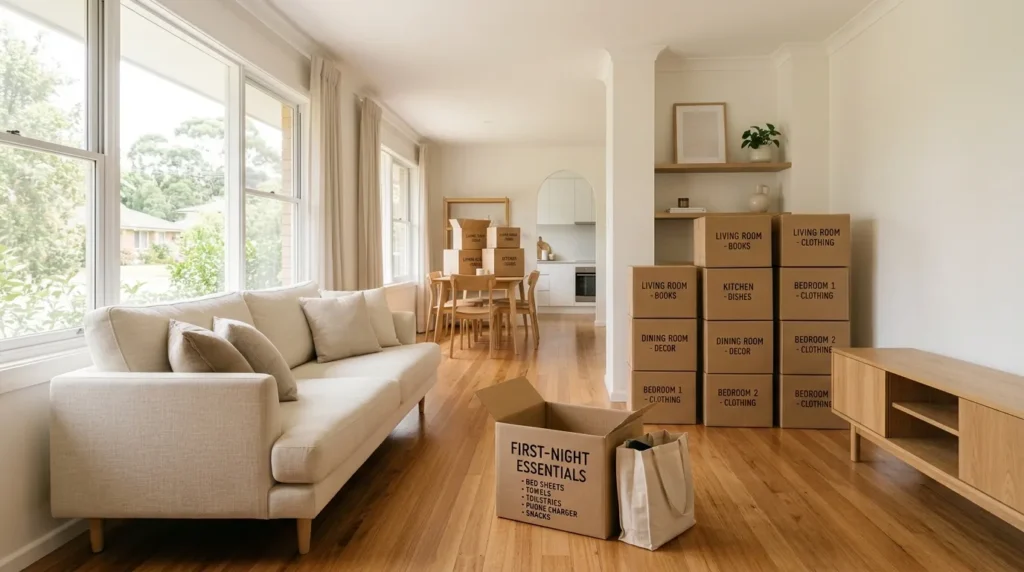
The most effective packing strategy begins after decluttering.
Once unwanted belongings have left the house, everything remaining is much easier to categorize and box.
How To Style It
Pack similar items together.
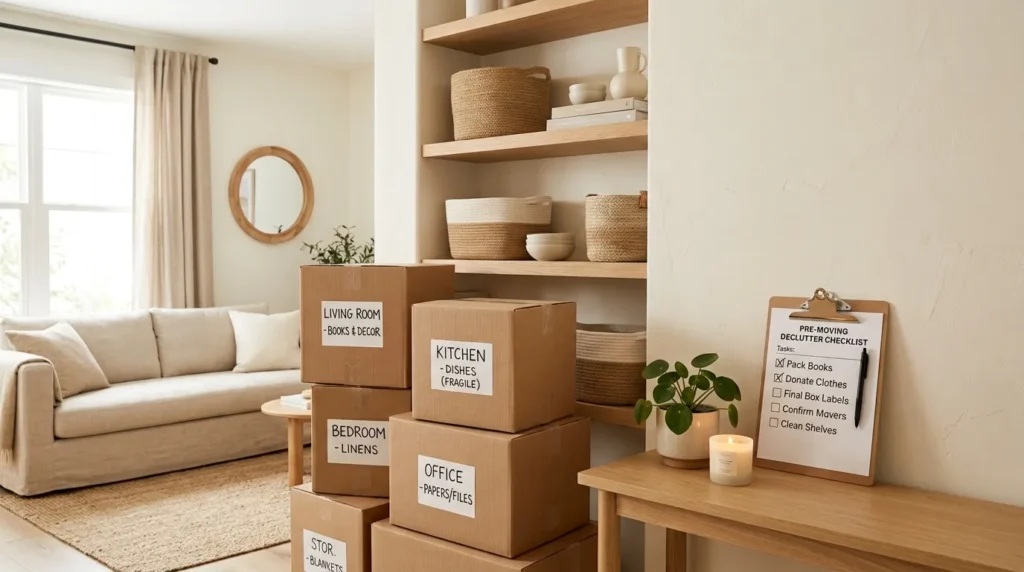
Label boxes clearly.
Keep essential items separate.
Create a first-night box containing basic toiletries, clothing, chargers, medications, important documents, and other necessities appropriate to your household.
A Simple Moving Declutter Checklist
Before Packing
- Walk through every room
- Remove obvious trash
- Gather donations
- Separate items for sale
- Sort closets
- Edit kitchen supplies
- Review storage areas
- Organize paperwork
- Reduce duplicate items
- Review sentimental belongings
Before the Moving Truck Arrives
- Finish donation drop-offs
- Remove discarded items
- Label remaining boxes
- Keep essentials accessible
- Check drawers and cabinets
- Check closets
- Check outdoor storage
- Check the garage
- Look behind doors and furniture
- Complete a final walkthrough
What Not To Declutter Too Quickly
Some belongings deserve more careful consideration.
These may include:
- Important documents
- Family photographs
- Legal records
- Financial records
- Sentimental heirlooms
- Specialized tools
- Seasonal equipment
- Items needed for work
- Essential household supplies
When in doubt, pause rather than making an irreversible decision under moving pressure.
How To Avoid Clutter in the New Home
Decluttering before moving is only half the process.
Once you arrive, give everything a designated home.
Avoid immediately filling empty cabinets.
Don’t buy storage containers until you understand what you’re actually keeping.
Unpack by priority rather than trying to unpack everything simultaneously.
A little empty space is useful.
You don’t need to fill every shelf simply because it’s available.
Common Moving Decluttering Mistakes
Waiting Until Moving Week
Start as early as practical.
Packing First and Sorting Later
This simply transfers the clutter problem to your new home.
Keeping Everything for Resale
If an item has little resale value and requires substantial effort to sell, consider whether selling it is worth the time.
Creating Huge Maybe Piles
Use a limited review category.
Moving Things Because They Might Be Useful
Be honest about how often you actually use them.
FAQ
When should I start decluttering before moving?
Ideally, begin as soon as you know you’re moving. Starting early gives you time to make thoughtful decisions without the pressure of packing deadlines.
What should I declutter first?
Start with categories that are easy to evaluate and likely to produce significant volume, such as clothing, kitchen duplicates, unused decor, and storage areas.
Should I sell or donate unwanted items?
It depends on the item’s value and how much time you’re willing to spend selling it. High-value items may be worth selling, while lower-value belongings may be easier to donate.
How do I declutter sentimental items before moving?
Gather sentimental belongings together, identify the most meaningful pieces, and consider keeping a smaller intentional collection rather than every item associated with a memory.
How can I avoid packing things I don’t need?
Declutter before packing and make a rule that items must earn their place in the moving boxes. Don’t use packing as a reason to postpone decisions.
What should go in a first-night box?
Include essentials such as basic toiletries, comfortable clothing, chargers, important documents, household necessities, and anything your household will need immediately.
Is it better to declutter before or after moving?
Before moving is usually much more efficient because you’re not spending time, money, and energy transporting items you don’t want.
Conclusion
Moving gives you a rare opportunity to reset the way your home works.
Instead of automatically packing everything, use the move as a chance to decide what deserves a place in your next home.
Work room by room.
Use clear sorting categories.
Reduce duplicate belongings.
Edit closets and storage areas.
Handle sentimental items thoughtfully.
And remove unwanted things before they reach the moving truck.
The goal isn’t minimalism for the sake of minimalism.
It’s creating a home filled with things you actually use, love, and value.
When you arrive at your new home with less clutter, unpacking becomes easier, organizing becomes simpler, and the entire space can feel more intentional from the beginning.