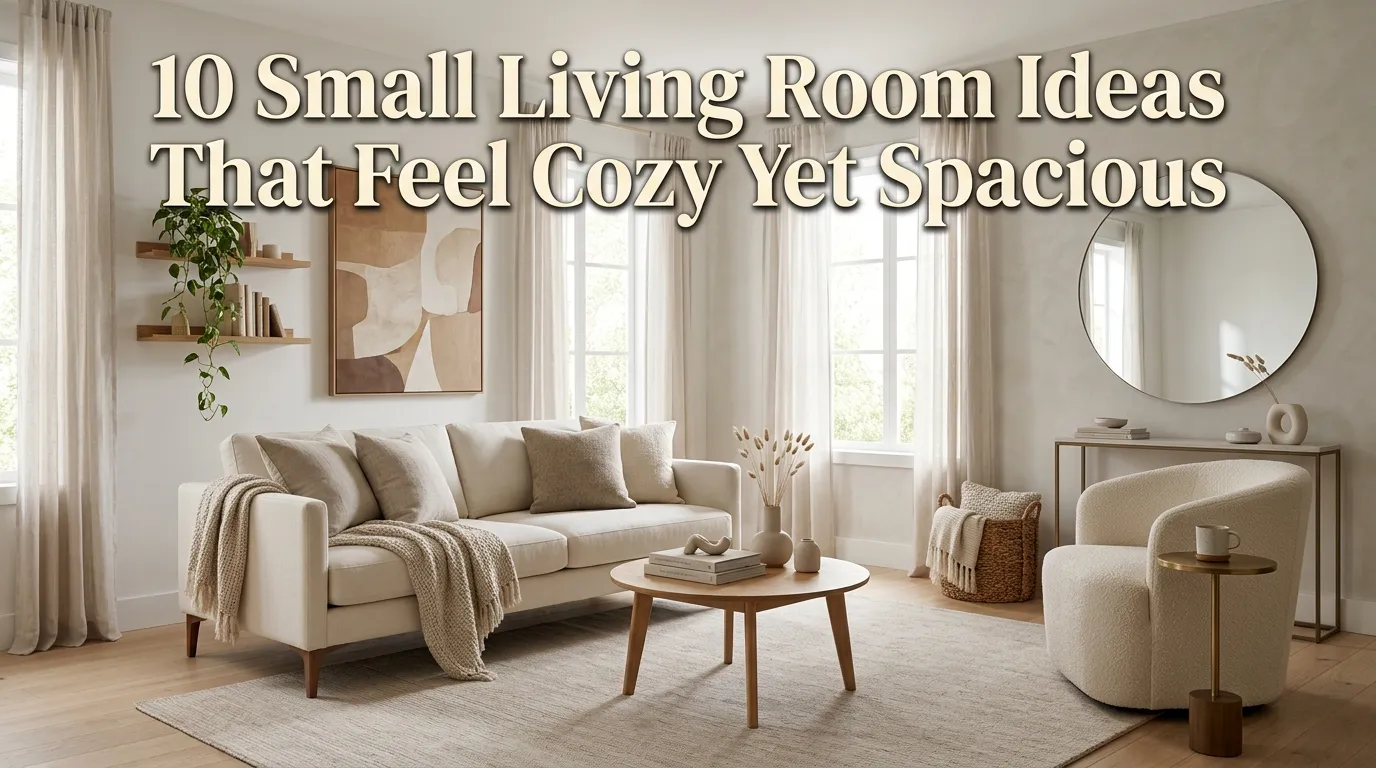
10 Small Living Room Ideas That Feel Cozy Yet Spacious
If you’ve ever stood in the middle of your living room wondering how a space this small can feel this cluttered, you’re not alone. I’ve walked into countless small living rooms over the years, and the complaint is almost always the same: it’s not that the room is too small, it’s that it feels smaller than it actually is. The good news? That’s completely fixable.
A mistake many homeowners make is trying to solve a small space problem by removing furniture until the room feels empty and cold. That’s not the answer. The real solution is smarter styling — the kind that plays with light, scale, texture, and flow so a compact room feels open, breathable, and genuinely inviting.
In my experience, the difference between a small living room that feels cramped and one that feels cozy-yet-spacious usually comes down to a handful of intentional choices. None of them require knocking down walls or spending a fortune. They’re simple, layered decisions that work together.
This guide walks through ten of those ideas — the ones I’ve seen transform awkward, tight living rooms into spaces people actually want to relax in. Whether you’re working with a studio apartment, a narrow rental living room, or a small home with an open floor plan, you’ll find something here you can start on this weekend.
Table of Contents
- Light Neutral Walls — Using color strategically to visually expand your walls.
- Multi-Functional Furniture — Choosing pieces that do more than one job.
- Vertical Storage Solutions — Drawing the eye upward to free up floor space.
- Mirrored Accent Pieces — Bouncing light and creating the illusion of depth.
- Layered Textural Rugs — Grounding the room without visually shrinking it.
- Slim Profile Seating — Selecting furniture silhouettes that breathe.
- Natural Light Maximization — Letting daylight do the heavy lifting.
- Cohesive Color Palette — Creating flow so the eye never stops short.
- Floating Shelf Displays — Adding storage and personality without bulk.
- Curtain Height Trick — A designer secret for taller-feeling ceilings.
1. Light Neutral Walls
Quick Benefits
- Instantly brightens a dim, boxed-in room
- Creates a soft, expansive backdrop for furniture
- Works with nearly any decor style
- Reflects natural and artificial light more effectively
- Makes ceilings feel higher by reducing visual weight
Why It Works
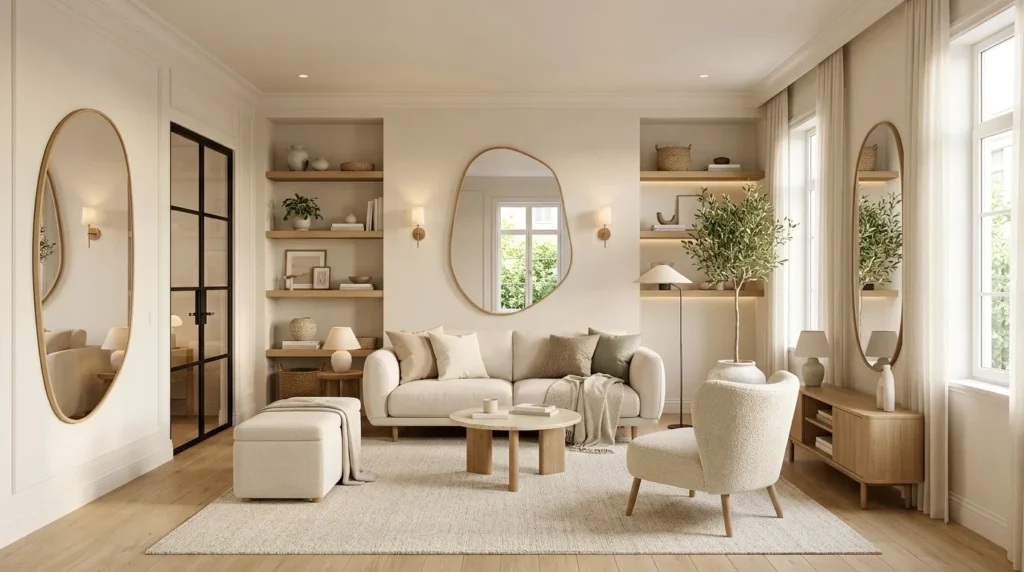
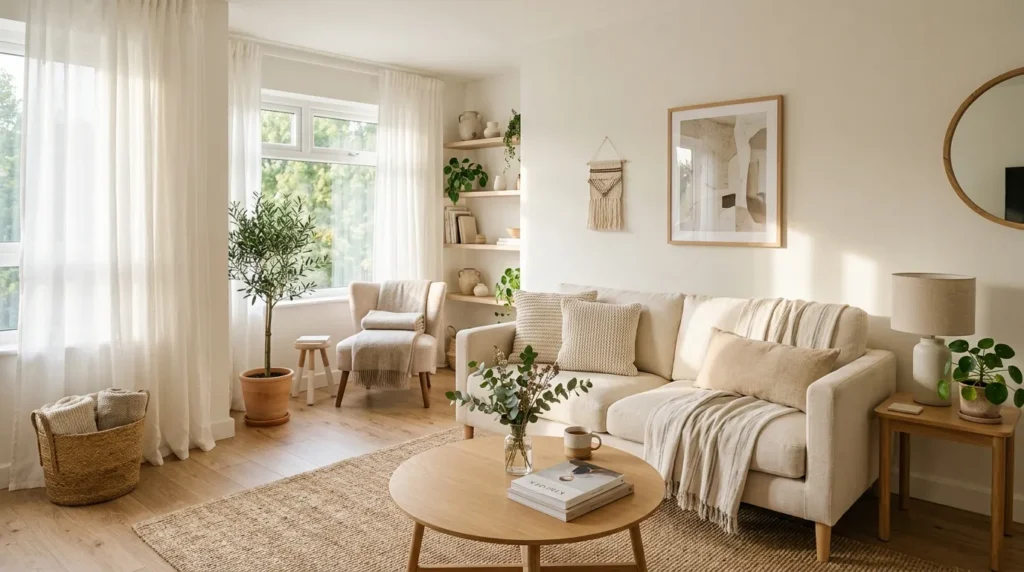
Dark or heavily saturated walls absorb light, which makes a small room feel like its boundaries are closing in. Light neutrals — think soft white, warm greige, or pale oatmeal — do the opposite. They reflect available light back into the room, softening shadows and blurring the edges where wall meets ceiling. I’ve noticed that clients who switch from a deep accent color to a light neutral are often shocked at how much larger the same square footage suddenly feels. It’s one of the lowest-cost, highest-impact changes you can make.
How To Style It
Choose a warm off-white or light greige rather than a stark, cool white, which can feel clinical. Use the same tone (or a very close variation) on trim and ceiling to eliminate harsh contrast lines that visually chop up the room. If you want personality, add it through textiles, art, and accessories instead of wall color. A single soft accent wall behind a sofa can work, but keep it in the same tonal family so it doesn’t fight the rest of the space.
2. Multi-Functional Furniture
Quick Benefits
- Reduces the total number of pieces needed
- Adds hidden storage without extra furniture
- Adapts the room for guests, work, or relaxing
- Keeps floor space open and walkable
- Solves common small-space pain points like clutter
Why It Works
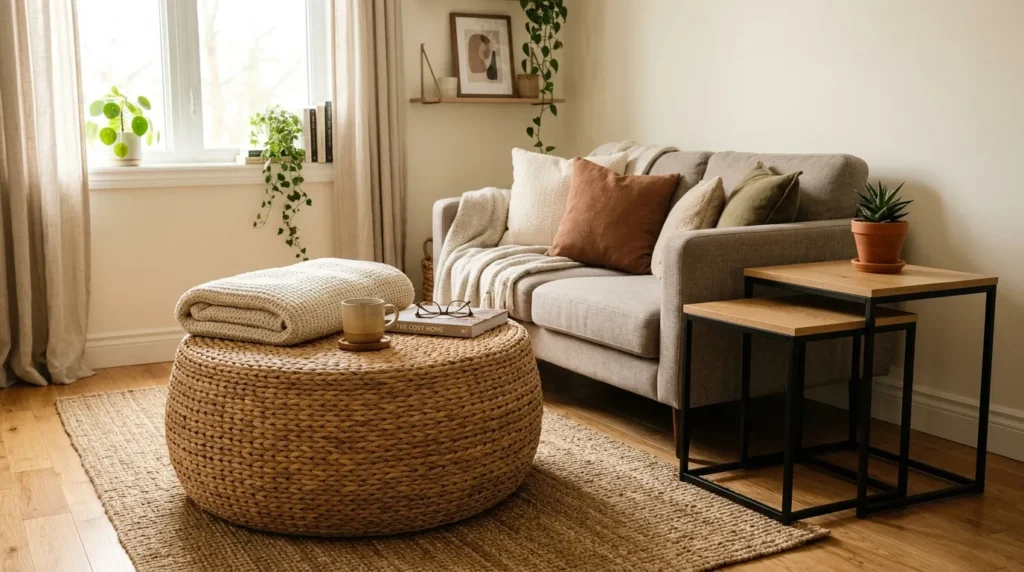
One simple trick I always suggest to clients furnishing a small living room is to ask, “Can this piece do two jobs instead of one?” A storage ottoman replaces both a coffee table and an extra seat. A daybed replaces a sofa and a guest bed. Every multi-functional piece you bring in is one less separate item competing for floor space, which keeps sightlines clear and the room feeling open rather than crowded with single-purpose furniture.
How To Style It
Start with your coffee table — swap it for a storage ottoman or a lift-top table that hides blankets, remotes, and books. Consider a console table behind the sofa that doubles as a laptop desk. Nesting tables are another favorite; they tuck away when not needed and pull out for extra surface space during movie nights or gatherings. Choose pieces with slim legs so they still read as light, even while doing double duty.
3. Vertical Storage Solutions
Quick Benefits
- Frees up valuable floor space
- Draws the eye upward for a taller feel
- Adds storage without widening the footprint
- Creates opportunities for display and personality
- Keeps clutter off tables and floors
Why It Works
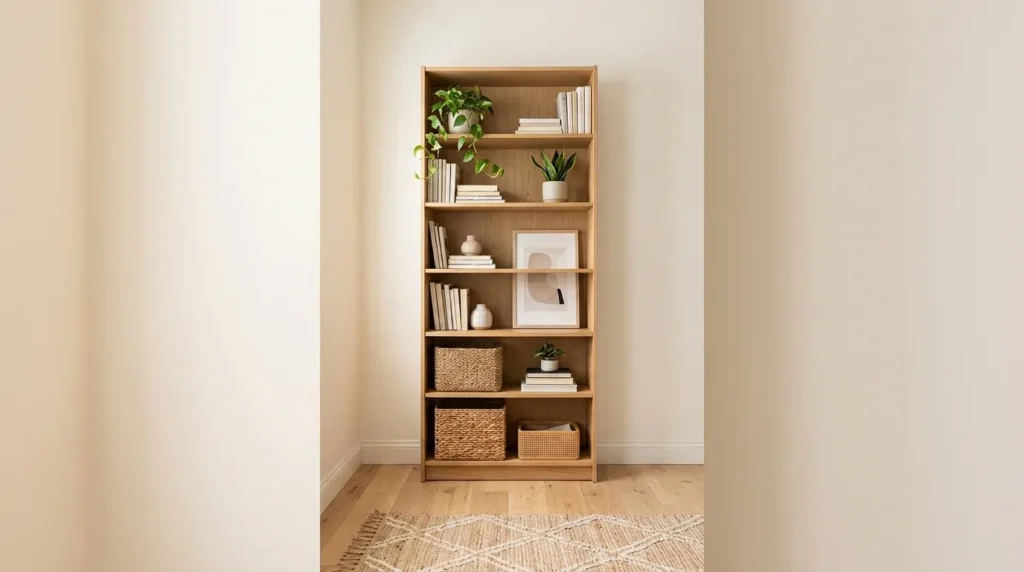
When floor space is limited, the walls become your best friend. Tall, narrow storage — bookshelves, ladder shelves, or wall-mounted cabinets — uses vertical square footage that would otherwise go completely unused. I’ve seen this idea transform spaces where floor-level clutter was the real problem, not the room’s actual size. Moving storage upward also naturally pulls the eye toward the ceiling, which makes the whole room register as taller and more open.
How To Style It
Look for bookshelves and cabinets that are taller than they are wide, and place them flush against a wall rather than floating in the room. Leave the top third relatively open or styled sparsely so the piece doesn’t feel top-heavy. Wall-mounted shelving above a console or sofa is another great option — it adds display space for books, plants, or art without ever touching the floor.
4. Mirrored Accent Pieces
Quick Benefits
- Bounces natural light around the room
- Creates the illusion of a second window or doorway
- Adds depth without adding bulk
- Works as both function and decor
- Pairs well with nearly any furniture style
Why It Works
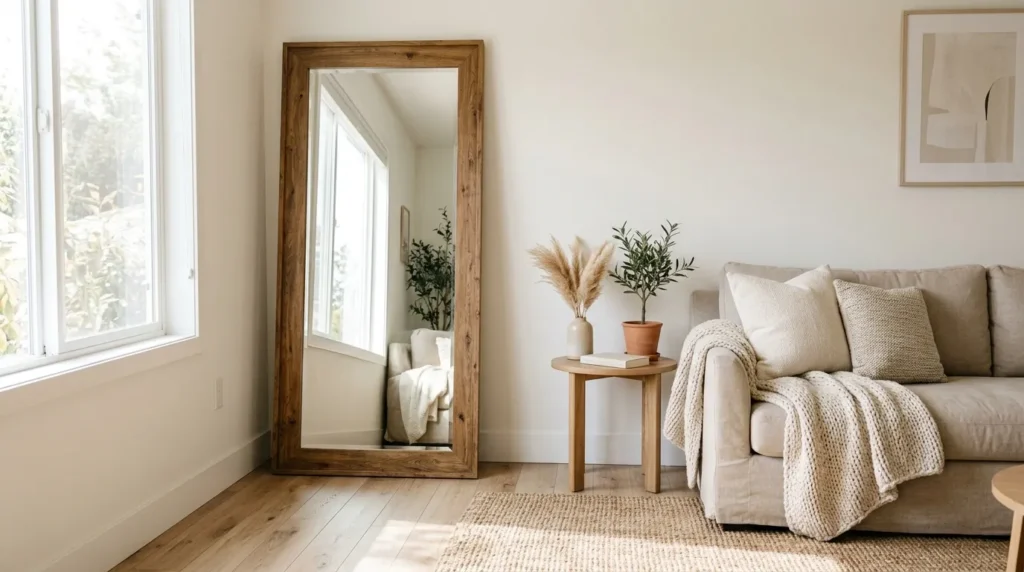
That’s why many designers recommend a well-placed mirror as one of the first things you add to a small room — it’s one of the only decor choices that actually tricks the eye into perceiving more space. A mirror positioned across from a window doubles the amount of light bouncing around the room, and a large mirror leaning against a wall can visually extend a room’s depth by several feet.
How To Style It
Choose one statement mirror rather than several small ones, and place it directly across from your primary light source — usually a window. A leaning floor mirror works beautifully in a small living room because it adds height without requiring wall-mounting. Mirrored coffee tables or side tables are another subtle way to bring in reflective surfaces without overwhelming the room with a single large piece.
5. Layered Textural Rugs
Quick Benefits
- Defines the seating area without visual bulk
- Adds warmth and comfort underfoot
- Introduces texture without introducing clutter
- Anchors furniture groupings in open layouts
- Softens hard flooring in rentals
Why It Works
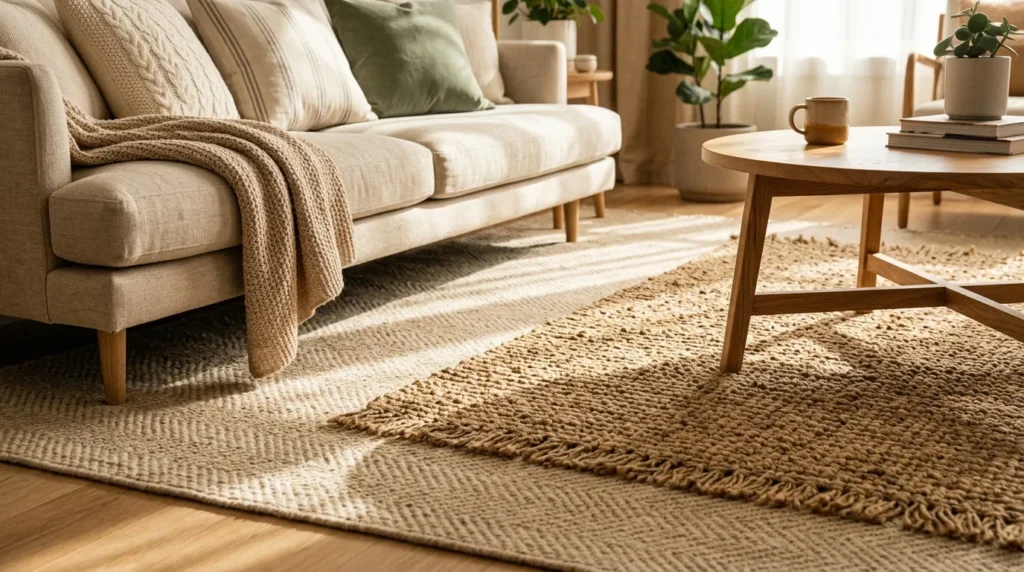
A common misconception is that rugs in small rooms should be small too — but the opposite is usually true. An undersized rug actually makes a room feel choppy and disconnected, while a properly sized rug creates one continuous visual plane that reads as more spacious. Layering in texture, rather than pattern, adds richness without adding visual noise, which keeps the room feeling calm instead of busy.
How To Style It
As a general rule, at least the front legs of your furniture should rest on the rug to unify the seating area. Choose a low-pile or flatweave rug in a neutral tone, then layer a smaller textured rug — like a soft shag or a woven jute — on top for warmth. This layered approach adds coziness without the visual weight of a large, heavily patterned single rug.
6. Slim Profile Seating
Quick Benefits
- Maximizes seating without overwhelming the room
- Creates open sightlines across the space
- Feels lighter and more contemporary
- Leaves room to walk and move freely
- Works well in narrow or oddly shaped layouts
Why It Works
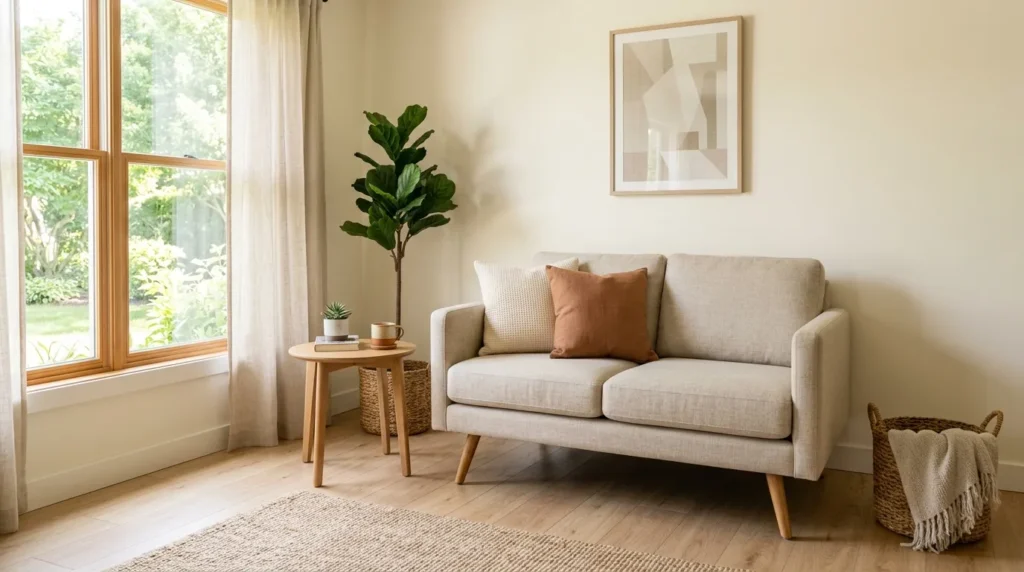
Bulky, overstuffed sofas might look inviting in a showroom, but in a small living room they eat up floor space fast and block natural sightlines. Furniture with slimmer arms, tapered or exposed legs, and a lower profile allows light and eye movement to travel underneath and around it, which makes the entire room feel more open even though the seating capacity hasn’t changed.
How To Style It
Look for sofas and chairs with visible legs rather than skirted bases — the visible floor space beneath the furniture is what tricks the eye into perceiving more room. Choose armless or slim-arm designs where possible, and consider a loveseat paired with one or two accent chairs instead of one oversized sectional. Position furniture to leave at least 18–24 inches of clear walking path wherever you can.
7. Natural Light Maximization
Quick Benefits
- Instantly opens up the entire room
- Reduces reliance on artificial lighting
- Improves mood and daily comfort
- Highlights other design choices, like color and texture
- Costs little to nothing to implement
Why It Works
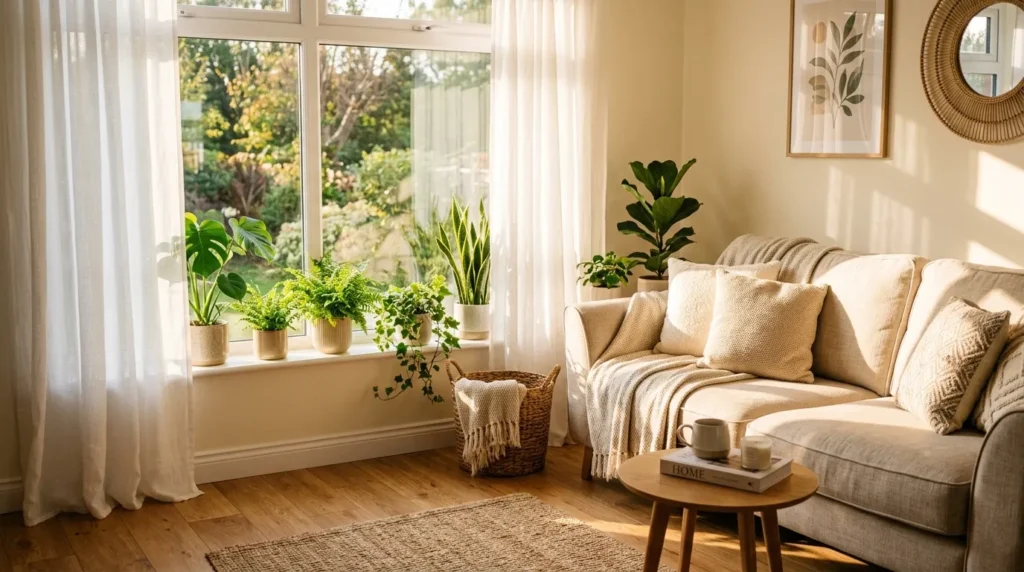
If you’re anything like me, you’ve probably underestimated just how much window treatments and furniture placement affect how much light actually reaches a room. Blocked or heavily curtained windows are one of the most common culprits behind a small room feeling dark and closed-in. Maximizing natural light is one of the fastest ways to make any small space feel bigger, brighter, and more welcoming.
How To Style It
Avoid placing tall furniture directly in front of windows, and choose sheer or light-filtering curtains instead of heavy blackout fabric where privacy allows. Keep windowsills clear of clutter so light has an unobstructed path into the room. If privacy is a concern, consider frosted window film or café-style curtains that cover only the lower half of the window while letting light flood in above.
8. Cohesive Color Palette
Quick Benefits
- Creates visual flow between furniture and walls
- Prevents the eye from stopping abruptly
- Makes mismatched furniture feel intentional
- Simplifies decorating decisions going forward
- Gives the room a calm, curated feel
Why It Works
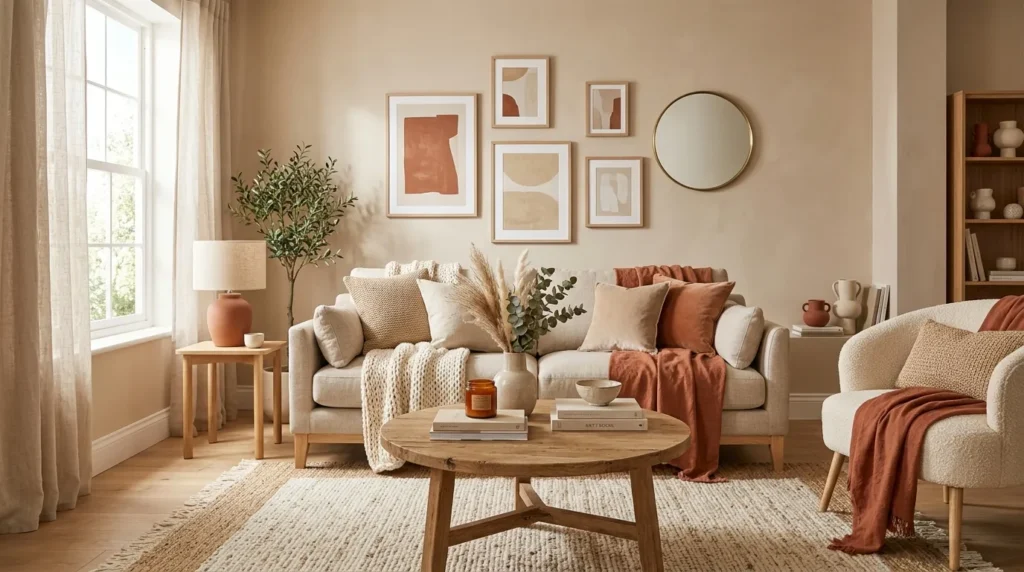
One thing that works especially well in small rooms is limiting your palette to two or three core tones plus one accent color. When furniture, walls, and textiles share a cohesive color story, the eye moves smoothly through the room instead of jumping between competing colors — and that smooth visual flow is a major factor in how spacious a room feels, regardless of its actual dimensions.
How To Style It
Pick a neutral base (wall color and largest furniture piece), a secondary tone for mid-sized pieces like rugs or curtains, and one accent color used sparingly in pillows, art, or accessories. Resist the urge to introduce a new color with every new item you buy. This restraint is what gives professionally designed small rooms their polished, larger-than-life feel.
9. Floating Shelf Displays
Quick Benefits
- Adds personality without using floor space
- Provides display room for books and decor
- Keeps surfaces below clear and open
- Easy and affordable to install
- Works in rentals with removable options
Why It Works
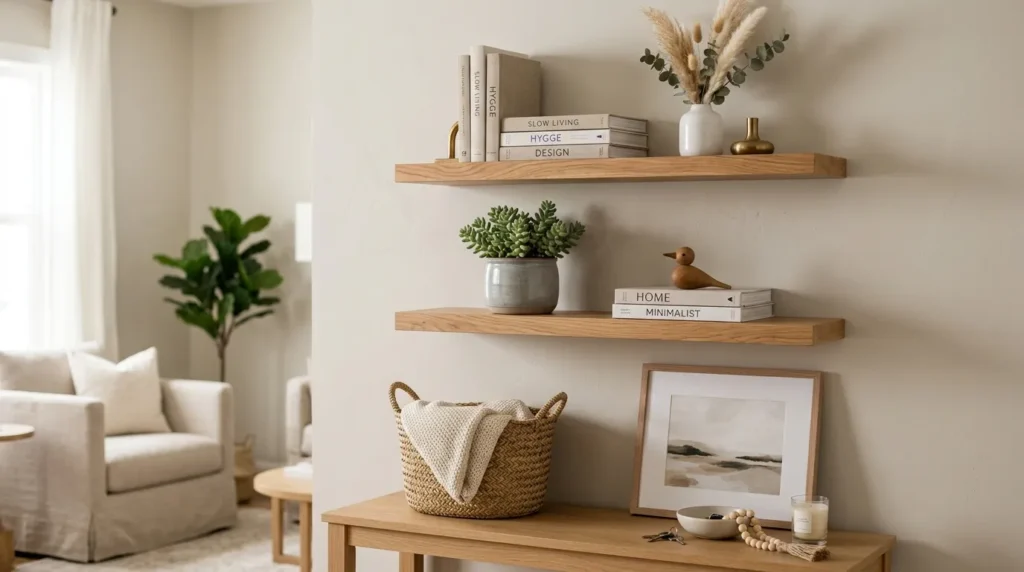
Floating shelves give you the styling opportunities of a bookshelf without the visual bulk of a full cabinet sitting on the floor. Because they appear to hover on the wall, they read as light and airy rather than heavy — a small but meaningful distinction when every inch of visual weight matters in a compact room.
How To Style It
Install shelves in odd corners, above a console, or flanking a TV to add function to otherwise wasted wall space. Style them with a mix of books, a small plant, and one or two personal objects — leaving visible negative space between items so the display doesn’t feel crowded. In rentals, look for removable, damage-free shelving options that still offer a built-in look.
10. Curtain Height Trick
Quick Benefits
- Makes ceilings appear significantly taller
- Draws the eye upward and outward
- An easy weekend fix with big visual payoff
- Works with any window size or shape
- Elevates the overall room proportions
Why It Works
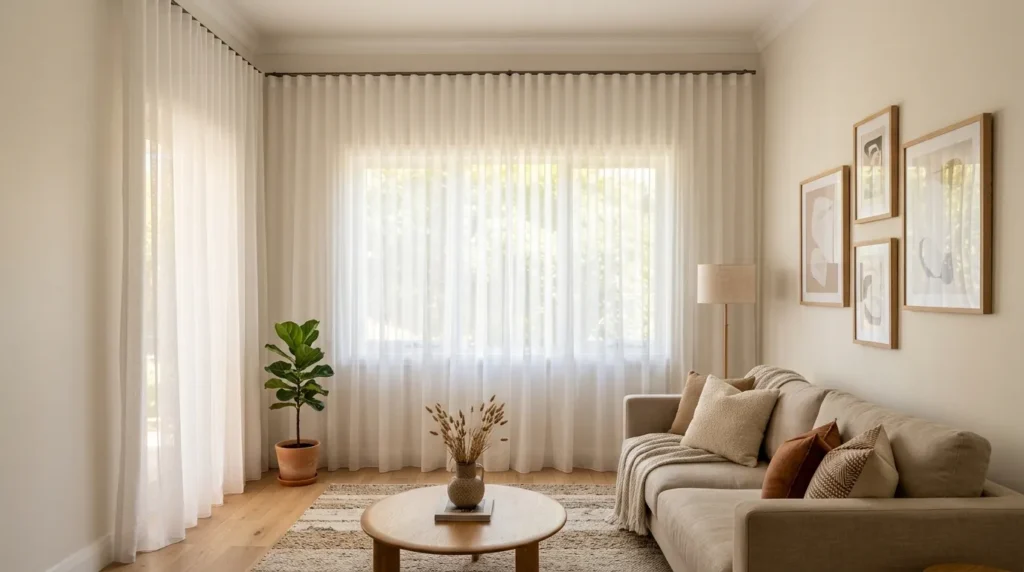
A mistake many homeowners make is hanging curtains directly above the window frame, which visually shortens the wall and, by extension, the whole room. Professional stagers and designers almost always hang curtains as close to the ceiling as possible, regardless of the window’s actual height. This single adjustment elongates the wall and tricks the eye into perceiving a taller, more spacious room.
How To Style It
Mount curtain rods 4–6 inches below the ceiling line (or as high as your wall allows), extending several inches beyond the window frame on each side. Choose floor-length curtains that just skim or lightly pool on the floor — curtains that stop short of the floor have the opposite effect and make ceilings feel lower. This is one of the most cost-effective changes on this entire list.
Frequently Asked Questions
How do I make a small living room feel bigger without renovating? Focus on light, color, and furniture scale before considering any structural changes. Light neutral walls, slim-profile furniture, strategic mirror placement, and maximizing natural light can dramatically change how spacious a room feels — all without moving a single wall.
What color makes a small living room look bigger? Light, warm neutrals like soft white, greige, and pale oatmeal tend to work best because they reflect light and create a seamless backdrop. Cooler whites can work too, but warmer tones often feel less stark and more inviting in everyday living spaces.
Should I use a small rug or a large rug in a small room? A properly sized rug that fits at least the front legs of your furniture almost always looks better than an undersized rug. Small rugs tend to make a room feel choppy, while a larger rug unifies the space and makes it read as more open.
Is a sectional a bad idea in a small living room? Not necessarily, but it depends on the shape of the room. A slim-profile sectional with visible legs can work well in an L-shaped layout, while a bulky, deep sectional in a narrow room often blocks walkways and makes the space feel tighter.
How high should I hang curtains in a small room? As close to the ceiling as your wall allows — ideally within 4 to 6 inches of the ceiling line. This elongates the wall visually and makes the entire room feel taller, even if the actual window size hasn’t changed.
Do mirrors really make a room look bigger? Yes. A well-placed mirror, especially one positioned across from a window, reflects natural light and creates the illusion of added depth. It’s one of the simplest and most affordable small-space tricks available.
What’s the biggest mistake people make in small living rooms? Overcrowding the floor with too much single-purpose furniture. Choosing multi-functional pieces, using vertical storage, and leaving clear walking paths almost always has a bigger impact than removing furniture altogether.
Conclusion
A small living room doesn’t have to feel small — it just needs the right combination of light, scale, and intentional styling. Start with one or two ideas from this list, whether that’s raising your curtains, swapping in a slimmer sofa, or simply repainting in a lighter neutral, and build from there. Small, consistent changes tend to add up to a much bigger transformation than trying to overhaul the entire room at once.
The goal isn’t to strip the room down until it feels empty — it’s to create a space that feels open, comfortable, and genuinely reflects how you want to live in it. Start with one or two ideas and gradually build a space that reflects your style and supports everyday comfort.
Related Articles
- Cozy Bedroom Ideas on a Budget
- Small Apartment Layout Solutions
- Modern Farmhouse Living Room Decor
- Neutral Home Styling Guide
- DIY Accent Wall Ideas for Renters