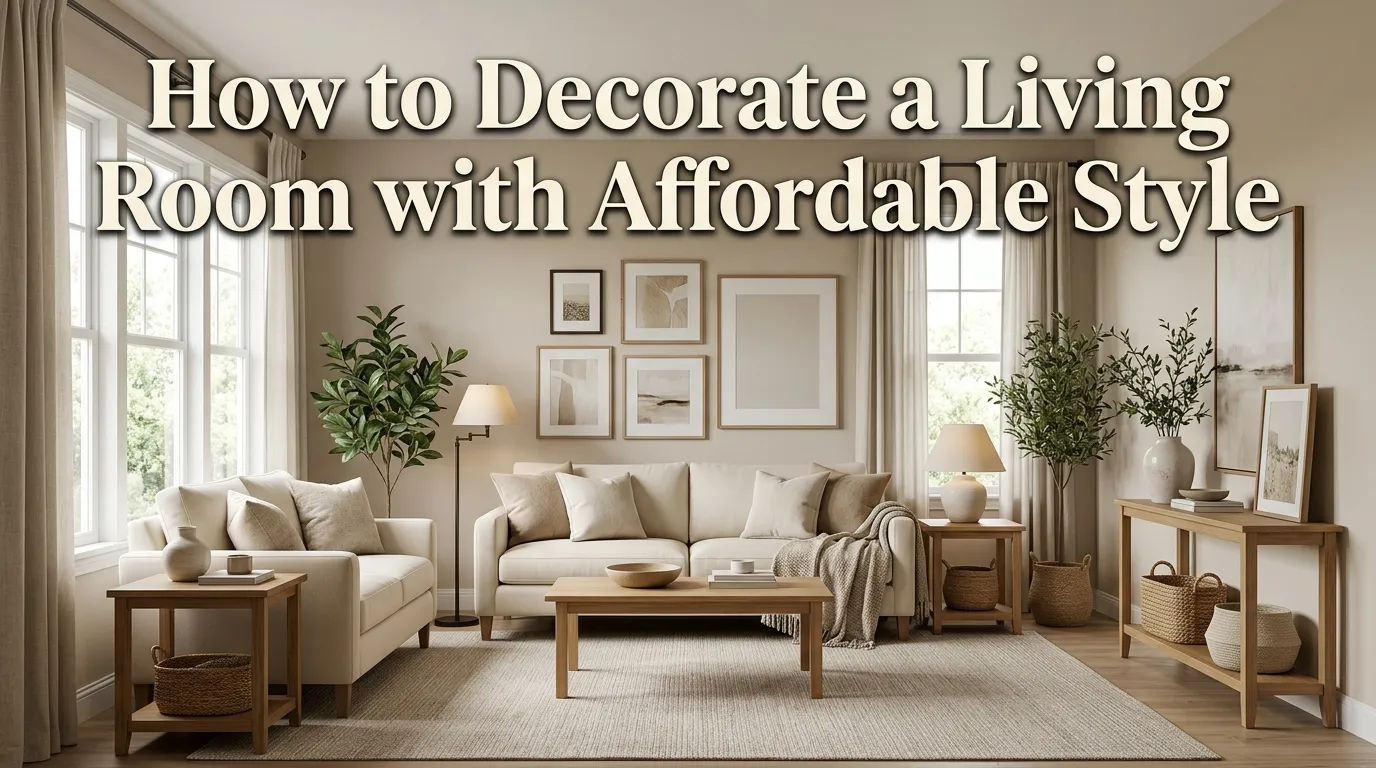
How to Decorate a Living Room with Affordable Style
A beautiful living room doesn’t have to come with a designer-sized budget.
The rooms that feel the most polished are often not the ones filled with expensive furniture. Instead, they usually have a thoughtful combination of proportion, texture, lighting, color, and personal details.
If you’re decorating a living room on a budget, the goal isn’t to make everything look inexpensive. It’s to spend strategically on the things that create the biggest visual impact while using affordable pieces everywhere else.
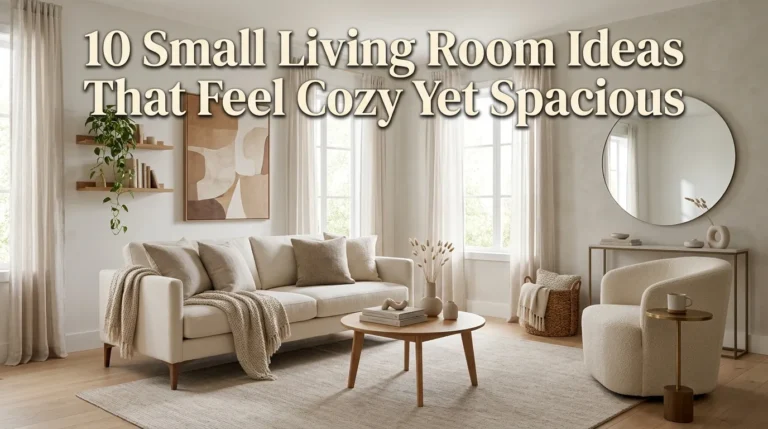
In my experience, changing the arrangement of furniture can sometimes make a bigger difference than buying anything new. Moving a sofa away from the wall, creating a stronger conversation area, or adding a properly sized rug can instantly make the room feel more intentional.
Color is another powerful tool. A simple palette of warm neutrals can make affordable furniture feel cohesive, while repeated wood, woven, or metal finishes can create a designer-like sense of continuity.
You also don’t need to decorate every corner. Leaving some breathing room can actually make a room look more sophisticated.
These ideas focus on practical ways to create a stylish living room without overspending, whether you’re starting from scratch or simply refreshing the room you already have.
Table of Contents
- Rearrange Your Furniture
- Choose a Cohesive Palette
- Layer Affordable Textures
- Use Oversized Art
- Upgrade the Lighting
- Style With Thrifted Finds
- Add Large Greenery
- Create a Layered Rug Look
- Decorate With Books
- Finish With Simple Details
1. Rearrange Your Furniture
Quick Benefits
- Costs nothing
- Changes the room immediately
- Improves conversation areas
- Can make the room feel larger
- Helps identify what you actually need
Why It Works
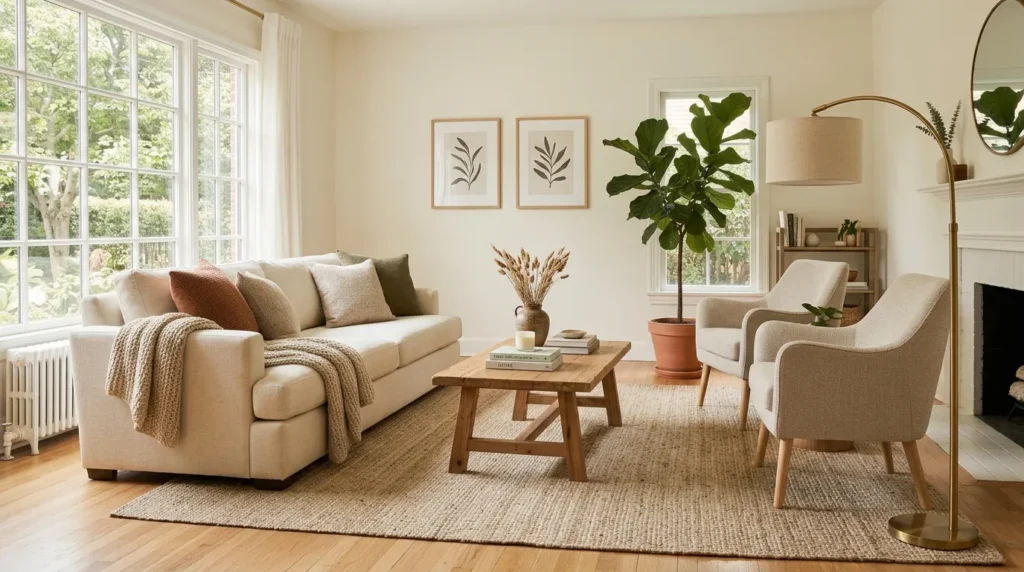
Furniture placement determines how a room functions and often influences how spacious it feels.
Many living rooms have furniture pushed against every available wall because it seems like the logical arrangement. But pulling key pieces slightly away from the walls can create a more intentional seating area.
The goal is to make the furniture feel connected rather than scattered.
How To Style It
Start by identifying the room’s focal point.
It might be a fireplace, television, large window, artwork, or architectural feature.
Arrange seating around that feature.
Leave clear pathways between furniture pieces and avoid blocking natural movement through the room.
2. Choose a Cohesive Palette
Quick Benefits
- Makes affordable pieces look coordinated
- Creates visual calm
- Simplifies shopping
- Makes decorating easier
- Gives the room a polished appearance
Why It Works
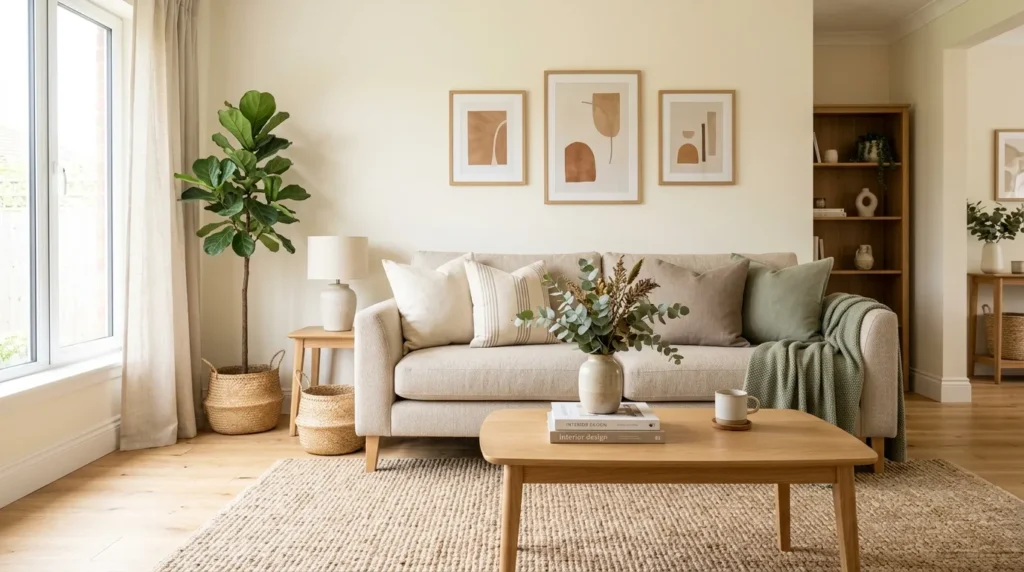
A cohesive color palette can make furniture from different sources look like it belongs together.
You don’t need every item to match.
Instead, repeat a few colors throughout the room.
How To Style It
Choose one primary neutral such as warm white, beige, or soft gray.
Add one or two secondary colors.
Then repeat those shades through cushions, artwork, rugs, curtains, and accessories.
Natural wood can act as a connecting element.
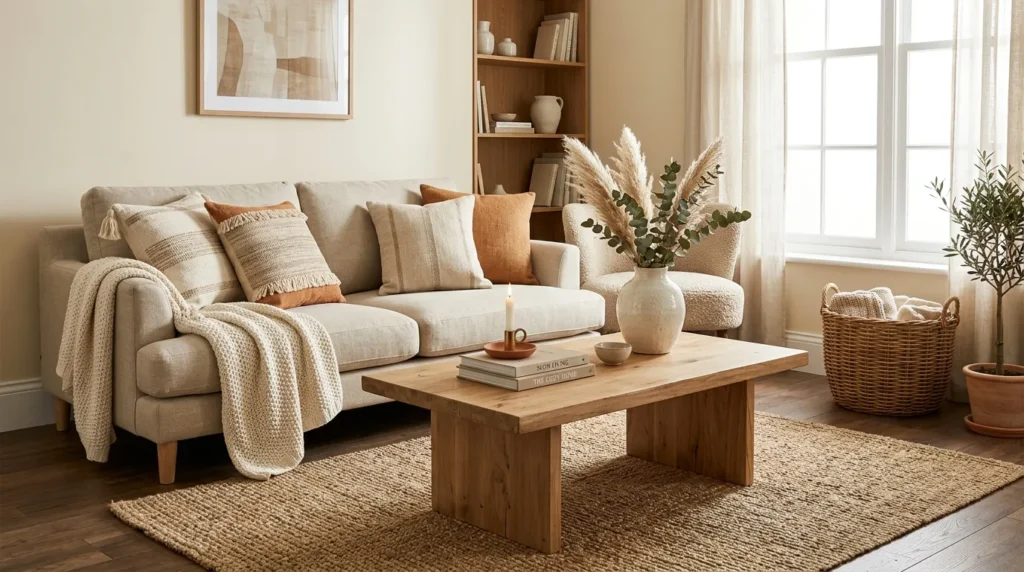
3. Layer Affordable Textures
Quick Benefits
- Adds depth
- Makes the room feel cozy
- Creates visual interest
- Doesn’t require expensive furniture
- Works with neutral colors
Why It Works
Texture can make a simple room feel much richer.
Linen, cotton, woven materials, wood, ceramic, and soft upholstery create differences that the eye can notice even when the colors are similar.
How To Style It
Combine several textures rather than several competing patterns.
Try a soft sofa with a woven rug, linen cushions, a wooden coffee table, and a ceramic vase.
Keep the colors related.
The result can feel layered without feeling busy.
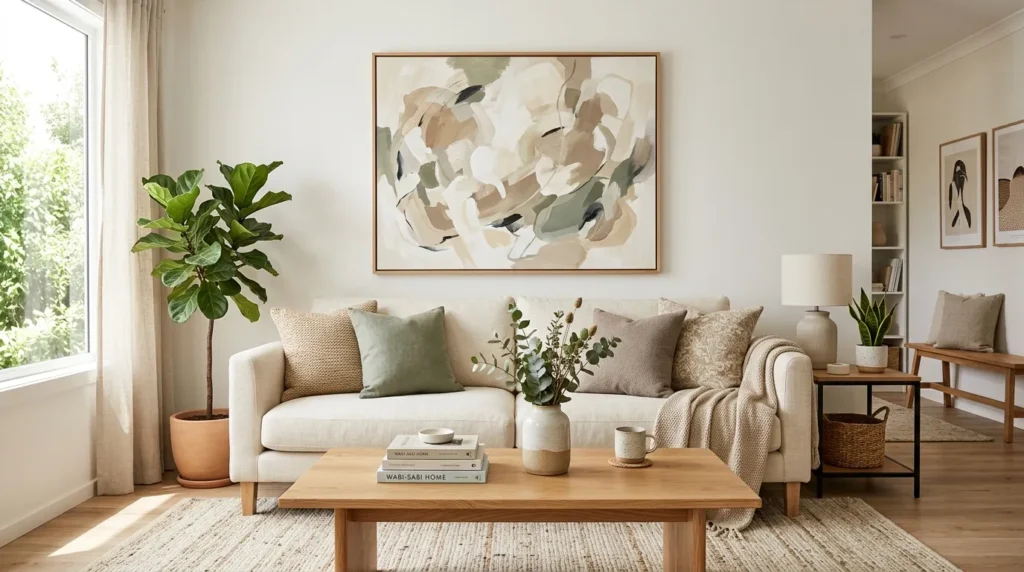
4. Use Oversized Art
Quick Benefits
- Creates an instant focal point
- Makes walls feel intentional
- Can be inexpensive
- Works in small collections
- Adds personality
Why It Works
Large artwork often has more impact than many tiny pieces scattered across a wall.
You can create an oversized appearance using a large affordable print, a DIY canvas, fabric art, or a carefully assembled gallery arrangement.
How To Style It
Choose artwork that connects with your existing color palette.
Hang it at a comfortable viewing height.
If placing it above a sofa, make sure the artwork is appropriately scaled to the furniture.
Avoid filling every wall.
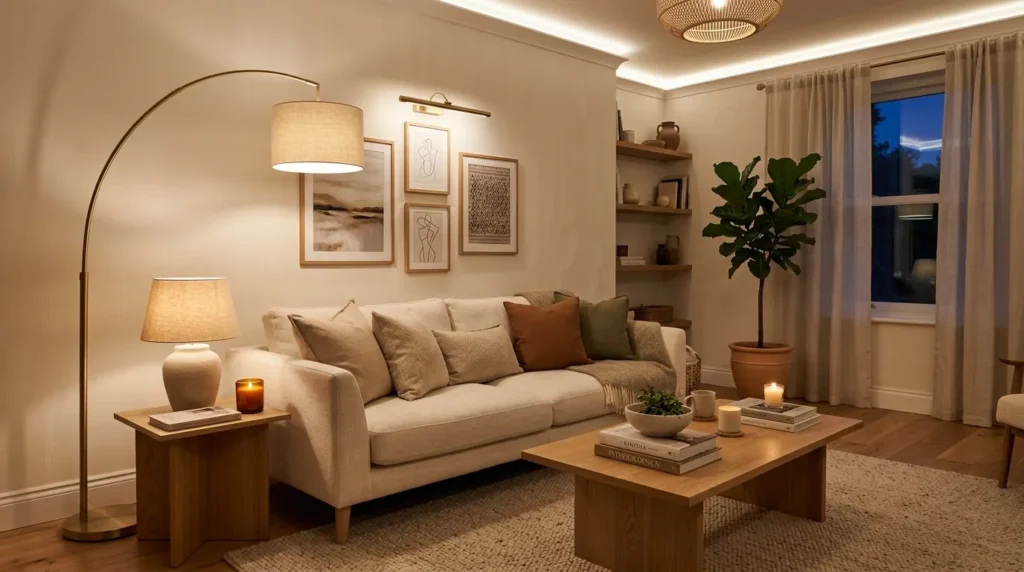
5. Upgrade the Lighting
Quick Benefits
- Changes the atmosphere
- Highlights decor
- Makes the room feel warmer
- Adds layers
- Can be done inexpensively
Why It Works
Lighting is one of the most overlooked elements in budget decorating.
A single ceiling light can make even a beautifully decorated room feel flat.
Multiple light sources create depth and warmth.
How To Style It
Use a combination of ceiling lighting, floor lamps, table lamps, and suitable accent lighting.
Choose warm-toned bulbs where appropriate.
Place lighting near seating areas, artwork, and reading corners.
The goal is to create several gentle pools of light rather than one harsh source.
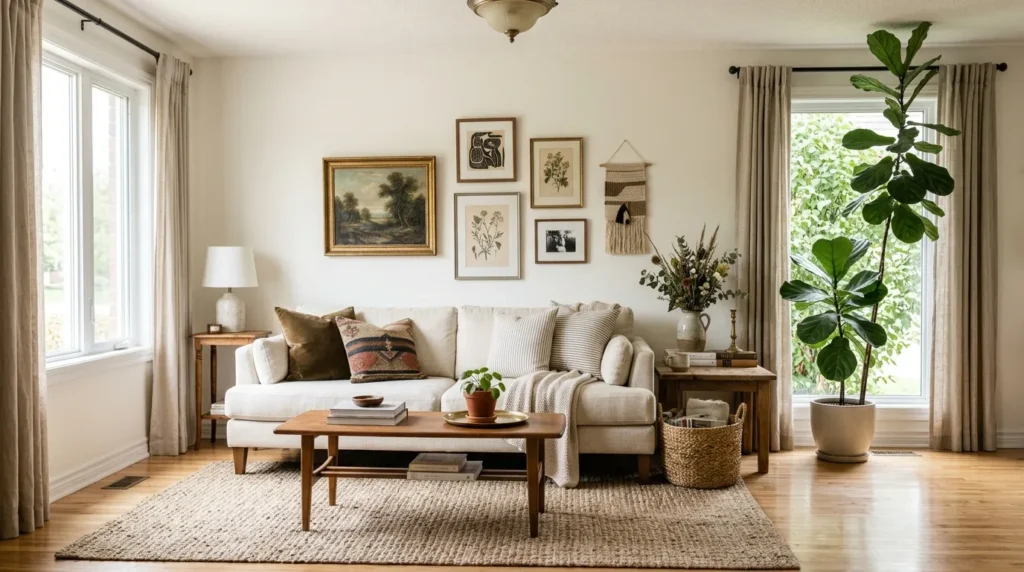
6. Style With Thrifted Finds
Quick Benefits
- Saves money
- Adds character
- Creates individuality
- Reduces dependence on matching sets
- Can produce unique focal points
Why It Works
A room filled entirely with new furniture can sometimes feel generic.
Secondhand and thrifted pieces can introduce age, texture, and personality.
The key is choosing pieces that fit the room rather than buying something simply because it is inexpensive.
How To Style It
Look for wooden stools, ceramic vessels, framed artwork, mirrors, small tables, and decorative objects.
Don’t worry if everything comes from different places.
Unify the pieces through color, material, or scale.
7. Add Large Greenery
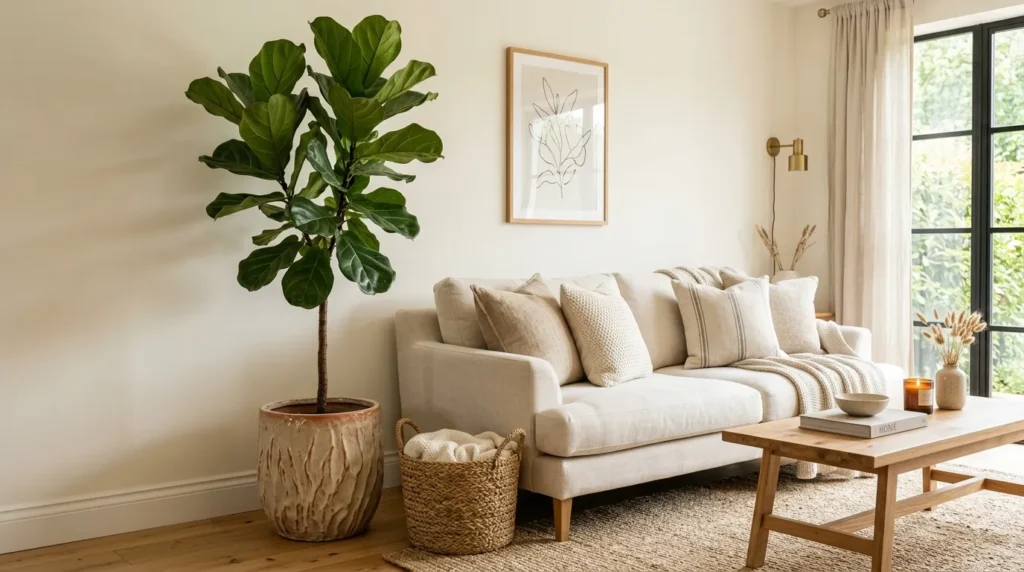
Quick Benefits
- Adds life
- Fills awkward corners
- Creates height
- Softens furniture
- Works with many styles
Why It Works
Plants add organic shapes and natural color.
One large plant can sometimes have more impact than several small decorative objects.
How To Style It
Place a suitable plant in an empty corner beside a sofa, chair, or console.
Choose a planter that complements the room.
If natural plants aren’t practical, high-quality artificial options can provide a similar visual effect.
Keep the surrounding area relatively simple.
8. Create a Layered Rug Look
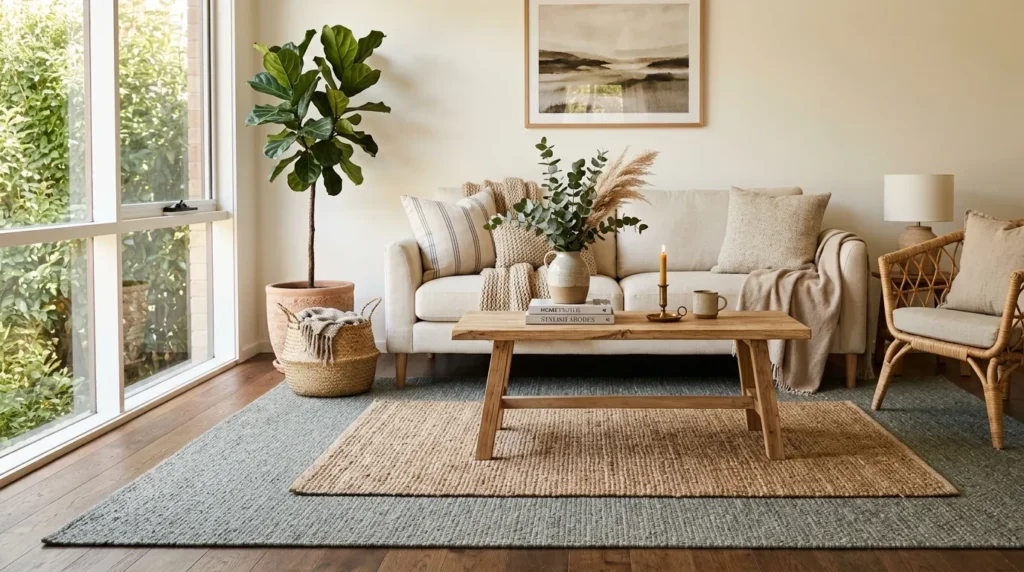
Quick Benefits
- Defines seating areas
- Adds texture
- Creates visual depth
- Can make affordable furniture feel more polished
- Helps large rooms feel cohesive
Why It Works
A rug visually anchors the furniture.
If one affordable rug feels too small, layering it with a larger neutral base can sometimes create a more substantial appearance.
How To Style It
Use a larger neutral foundation rug.
Place a smaller textured or patterned rug over it.
Keep the colors complementary.
Make sure the arrangement doesn’t create tripping hazards and that the rugs lie securely.
9. Decorate With Books
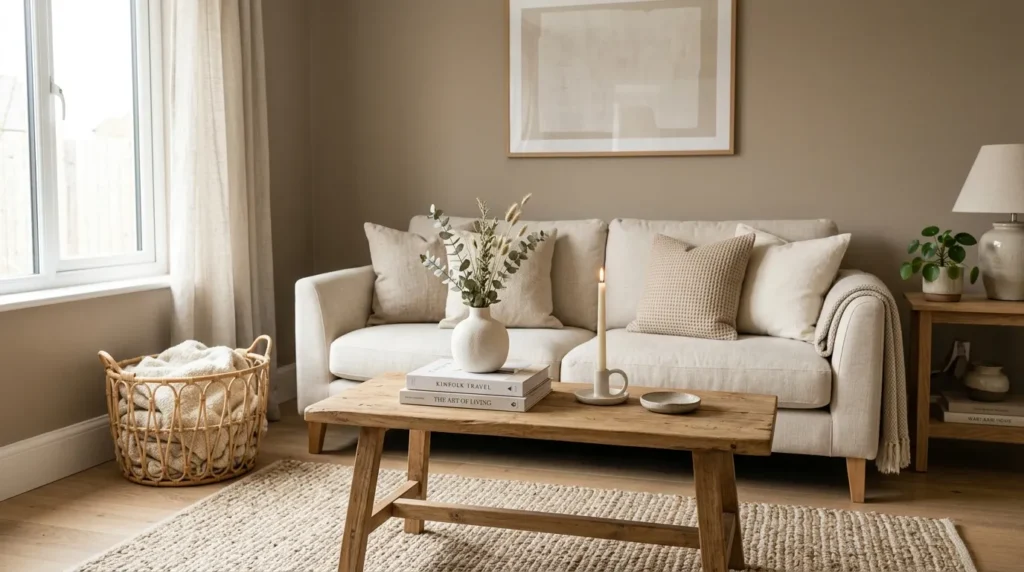
Quick Benefits
- Adds personality
- Creates height
- Costs little if sourced secondhand
- Works on coffee tables and shelves
- Makes rooms feel lived-in
Why It Works
Books can add color, texture, and visual weight without looking like conventional decor.
They also help create natural height variations when styling tables and shelves.
How To Style It
Stack a few books horizontally.
Place a small ceramic object or plant on top.
Use books with colors that complement the room.
Avoid creating stacks that are too tall or unstable.
10. Finish With Simple Details
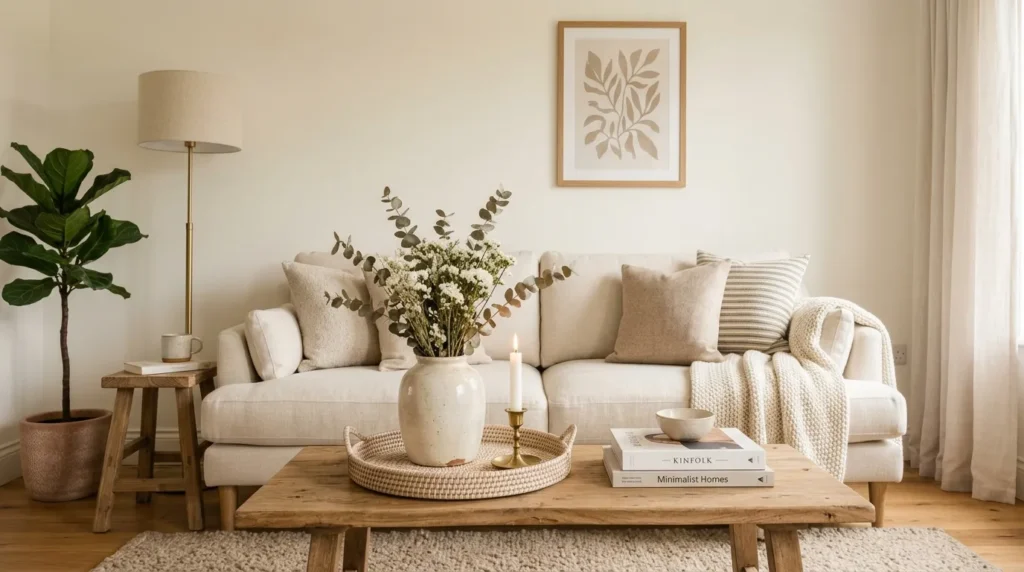
Quick Benefits
- Creates a finished appearance
- Personalizes the space
- Requires minimal spending
- Helps balance the room
- Makes styling feel intentional
Why It Works
Small details often bring the entire room together.
A tray on the coffee table, a vase on a console, a few cushions, or a carefully positioned throw can make the space feel complete.
How To Style It
Choose only a few accessories.
Repeat materials throughout the room.
For example, if you use brass on a lamp, repeat a small brass accent elsewhere.
If you use wood, carry that material into another part of the room.
Repetition creates cohesion.
How To Make a Budget Living Room Look Expensive
The biggest secret is not buying expensive things.
It’s editing.
Avoid filling every surface.
Choose furniture that fits the room.
Use larger artwork instead of lots of tiny decorations.
Repeat colors and materials.
Keep cords hidden where possible.
Use warm lighting.
Add texture through inexpensive textiles.
And make sure the room has enough empty space to breathe.
A carefully edited room often looks more sophisticated than an expensive room packed with furniture and accessories.
Where To Spend More
If you have a little extra money, prioritize items you use every day.
Good places to invest include:
- Comfortable seating
- A quality mattress-like cushion insert for frequently used chairs
- A durable area rug
- Functional lighting
- Window treatments
- A well-made coffee table
You don’t need to upgrade everything at once.
Where To Save
Budget-friendly areas include:
- Decorative accessories
- Small side tables
- Throw pillows
- DIY artwork
- Vases
- Baskets
- Frames
- Coffee-table styling
- Seasonal decor
Mixing investment pieces with affordable finds creates balance.
Common Budget Decorating Mistakes
Buying Everything at Once
Give yourself time to find pieces you actually love.
Choosing Furniture That Is Too Small
Small furniture can make a room feel oddly proportioned.
Matching Everything
A coordinated room doesn’t need to be a matching set.
Overdecorating
Leave breathing room.
Ignoring Lighting
Good lighting can transform inexpensive furniture.
FAQ
How can I make my living room look expensive on a budget?
Focus on proportion, cohesive colors, layered textures, good lighting, appropriately sized artwork, and thoughtful furniture placement. These often have more impact than expensive accessories.
What should I buy first when decorating a living room?
Start with functional essentials such as seating and a suitable rug, then build the room around them.
How can I decorate a living room without buying new furniture?
Rearrange the existing furniture, change the artwork, update textiles, improve lighting, add greenery, and remove unnecessary clutter.
What colors make a living room look expensive?
Warm whites, cream, beige, taupe, soft gray, natural wood, and restrained darker accents can create a sophisticated appearance.
Does a large rug make a living room look better?
A properly sized rug can help anchor the seating area and create a more cohesive arrangement. The important factor is choosing the right scale for the room.
How many decorative items should I use?
There is no exact number. Use enough to create visual interest without making every surface feel occupied. Editing is usually more effective than adding more.
Can thrifted furniture look expensive?
Absolutely. Well-proportioned vintage or secondhand pieces can add character and often look more distinctive than inexpensive mass-produced furniture.
Conclusion
Creating a stylish living room on a budget is less about spending less and more about spending intentionally.
Start with the layout.
Choose a simple color palette.
Layer affordable textures.
Add appropriately sized artwork.
Improve the lighting.
Bring in greenery.
Then finish the room with a few personal details.
You don’t need a house full of expensive furniture to create a polished space.
A thoughtfully arranged sofa, a well-sized rug, warm lighting, a beautiful piece of artwork, and a handful of carefully chosen accessories can completely change the way your living room feels.
The most important thing is to avoid rushing.
Let the room develop gradually, shop selectively, and focus on pieces that improve both the appearance and function of the space.
That approach can make a budget-friendly living room feel comfortable, personal, and beautifully put together.