10 Modern Living Room Ideas with Luxury Decor
If you’ve ever walked into a living room and immediately felt that quiet sense of “wow,” you already know what luxury decor does to a space. It isn’t about how much money you spend — it’s about how intentional every choice feels. In my experience working with dozens of home refreshes over the years, the living rooms that feel truly elevated almost never rely on expensive furniture alone. They rely on layering: light, texture, scale, and a handful of standout pieces that anchor the whole room.
A mistake many homeowners make is assuming luxury means matching furniture sets and a showroom-perfect look. In reality, the most magazine-worthy modern living rooms feel a little imperfect — a mix of old and new, soft and hard, warm and cool. That contrast is what makes a space feel curated instead of purchased all at once.
This guide walks through ten modern living room ideas with luxury decor that actually work in real homes, not just styled photoshoots. Whether you’re renting an apartment, updating a starter home, or planning a full renovation, you’ll find ideas here that scale to your budget and your space. I’ve noticed that even one or two of these changes — a new lighting fixture, a better rug, a reworked coffee table — can shift how an entire room feels.
By the end of this article, you’ll have a clear roadmap for bringing warmth, texture, and quiet sophistication into your living room, along with practical styling tips, material suggestions, and layout advice you can start using today. Let’s get into it.
Table of Contents
- Statement Lighting Fixtures — How the right light source instantly elevates a room’s mood.
- Neutral Luxe Palette — Building a sophisticated color foundation that never feels dated.
- Plush Velvet Seating — Why texture-rich upholstery reads as high-end.
- Marble Accent Tables — Using stone surfaces to add polish without overwhelming a space.
- Layered Textural Rugs — Grounding a room with depth and comfort underfoot.
- Gallery Wall Art — Turning empty walls into a personal, curated focal point.
- Metallic Accent Details — Small hardware and decor choices that add unmistakable shine.
- Oversized Mirror Focal Point — Expanding light and space with one dramatic piece.
- Curated Coffee Table Styling — The art of arranging objects so they look effortless.
- Statement Fireplace Design — Making the fireplace the heart of a modern luxury room.
1. Statement Lighting Fixtures
Quick Benefits
- Instantly upgrades the perceived value of a room
- Creates ambiance for both daytime and evening use
- Draws the eye upward, making ceilings feel taller
- Works as a focal point even in a minimally decorated space
- Available at a wide range of price points
Why It Works
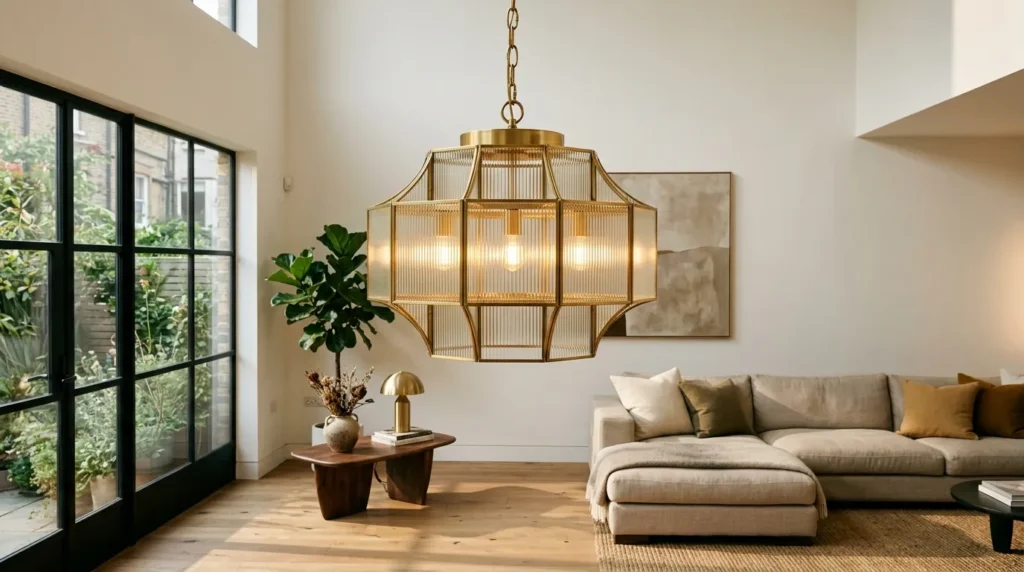
Lighting is one of the fastest ways to transform a living room, and it’s often the most overlooked. A builder-grade flush mount ceiling light can make even a beautifully furnished room feel unfinished, while a sculptural chandelier or an oversized pendant does the opposite — it signals intention. In my experience, statement lighting works because it operates on two levels at once: functionally, it controls how warm or dramatic a room feels after dark, and visually, it acts almost like a piece of art suspended in the room. That’s why many designers recommend choosing the lighting fixture before finalizing furniture placement, since it often becomes the anchor the rest of the room is arranged around.
How To Style It
Look for fixtures with mixed materials — think brass frames with fluted glass, or matte black paired with warm wood accents — since these tend to feel current rather than trendy. For a standard living room, hang the fixture so the bottom sits roughly seven feet from the floor if it’s centered over a seating area. If you’re renting, plug-in pendant lights or a dramatic floor lamp can achieve a similar effect without any electrical work. Layer this main fixture with a few smaller lamps at varying heights so the room never relies on one light source alone.
2. Neutral Luxe Palette
Quick Benefits
- Creates a timeless backdrop that won’t feel dated in a few years
- Makes high-end materials like marble and brass stand out more
- Pairs easily with seasonal decor changes
- Feels calming and expansive rather than busy
- Works across nearly any architectural style
Why It Works
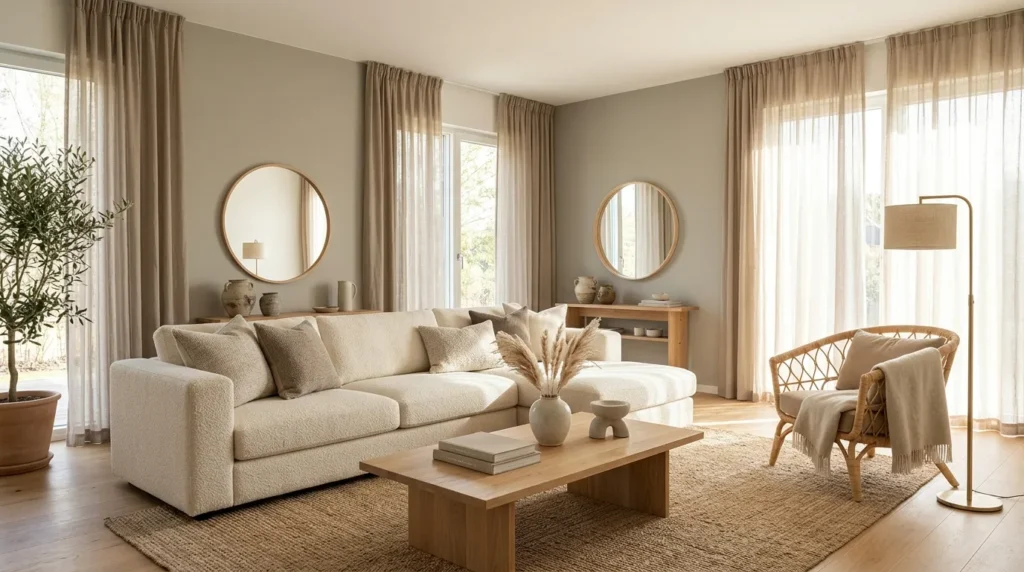
A neutral luxe palette leans on warm whites, soft greiges, taupe, and deep espresso tones rather than stark white or heavy color. One thing that works especially well is treating neutral as a spectrum rather than a single shade — layering three or four tonal variations keeps a room from feeling flat. This approach is popular in high-end interior design because it allows texture and material choices to become the real stars of the room, rather than competing with a bold wall color. It also photographs beautifully, which is part of why it’s become such a Pinterest favorite for modern living spaces.
How To Style It
Start with your largest surfaces — walls, sofa, and rug — in the lightest tones of your palette, then add depth through mid-tone wood furniture and darker accent pieces like a black metal side table or espresso-stained bookshelf. Avoid using more than one true white, since undertones can clash. If you’re anything like me, you’ll find it helpful to gather physical paint and fabric swatches under both natural and evening light before committing, since neutrals shift dramatically depending on the light source in the room.
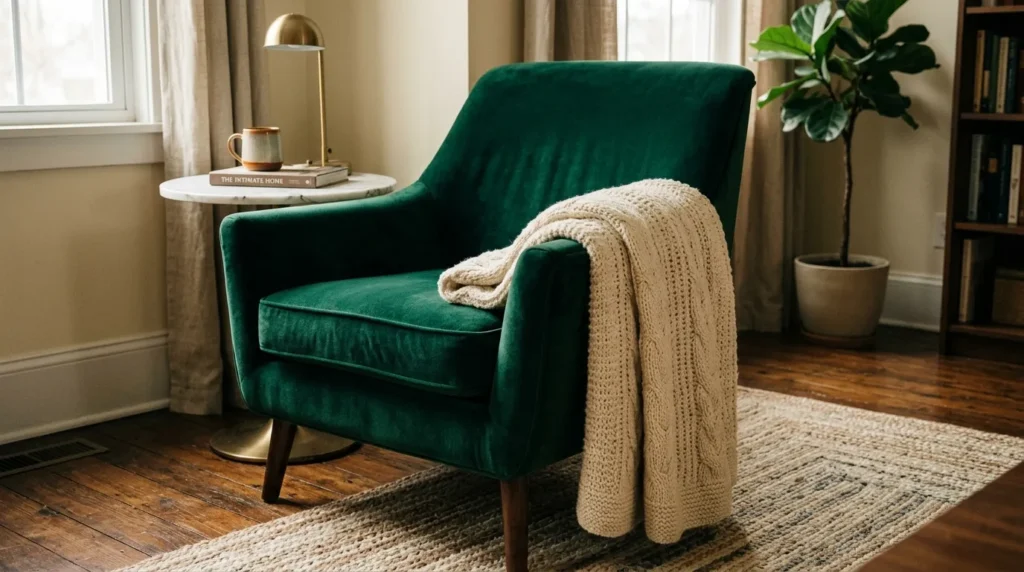
3. Plush Velvet Seating
Quick Benefits
- Adds visible and touchable texture to the room
- Reflects light in a way that feels rich rather than flat
- Available in durable, family-friendly performance fabrics
- Softens rooms with a lot of hard surfaces
- Works well as either a full sofa or an accent chair
Why It Works
Velvet has a way of making a room feel finished the moment it’s introduced. Unlike flat cotton or linen upholstery, velvet catches light differently depending on the angle you’re viewing it from, which gives even a simple sofa silhouette a sense of movement and depth. I’ve seen this idea transform spaces that otherwise had beautiful furniture but still felt a little stiff — one velvet accent chair can soften an entire seating arrangement. It also tends to read as more expensive than its actual price point, which makes it a smart place to invest if you’re working with a moderate budget.
How To Style It
If a full velvet sofa feels like too big a commitment, start with one or two accent chairs in a rich jewel tone — emerald, deep navy, or burgundy pair especially well with a neutral luxe palette. Modern performance velvets are now stain-resistant and pet-friendly, so don’t rule this fabric out for a busy household. Balance the softness of velvet with a few hard-edged pieces nearby, like a glass or marble side table, so the seating area doesn’t feel overly plush or one-note.
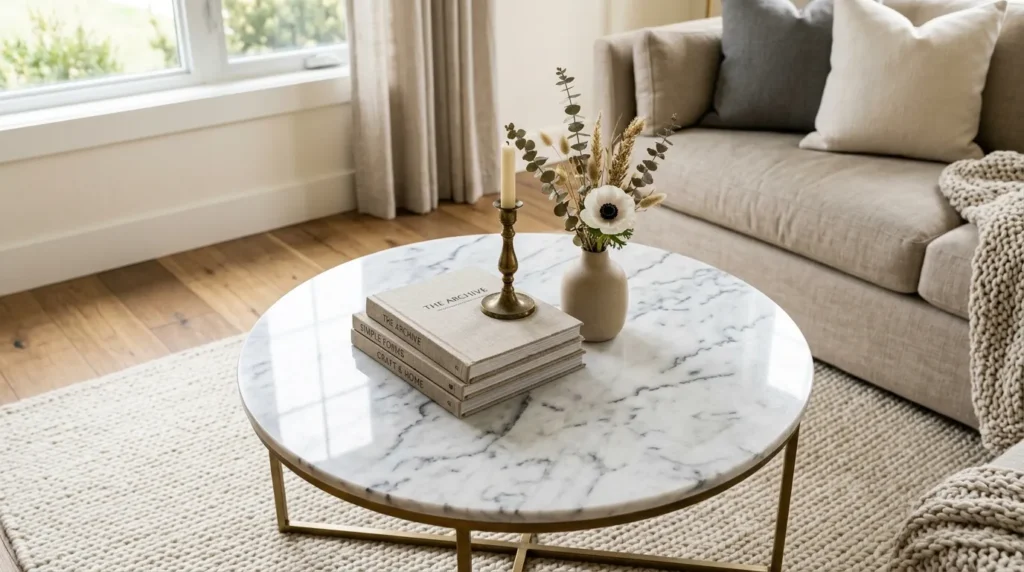
4. Marble Accent Tables
Quick Benefits
- Adds a natural, high-end material without a full renovation
- Introduces subtle veining and movement to flat surfaces
- Pairs well with both warm and cool metal finishes
- Available in real stone or budget-friendly composite versions
- Elevates simple furniture arrangements instantly
Why It Works
There’s a reason marble shows up again and again in luxury interiors: no two slabs look exactly alike, which gives a room an organic, one-of-a-kind quality that’s hard to replicate with manufactured materials. A marble coffee table or side table introduces cool tones and soft veining that contrast beautifully against warm wood floors or textured rugs. In my experience, even a single marble accent piece can shift a room from “nicely furnished” to “designed,” simply because of how the material reflects light compared to laminate or painted wood.
How To Style It
A marble-top coffee table works as the centerpiece of most modern living rooms, but if your budget is tighter, a small marble side table or a marble tray on an existing table delivers a similar visual effect. White marble with grey veining pairs beautifully with brass or gold hardware, while black or green marble suits a darker, more dramatic room. Keep the base of the table simple — a slim metal or wood frame — so the stone itself remains the visual focus.
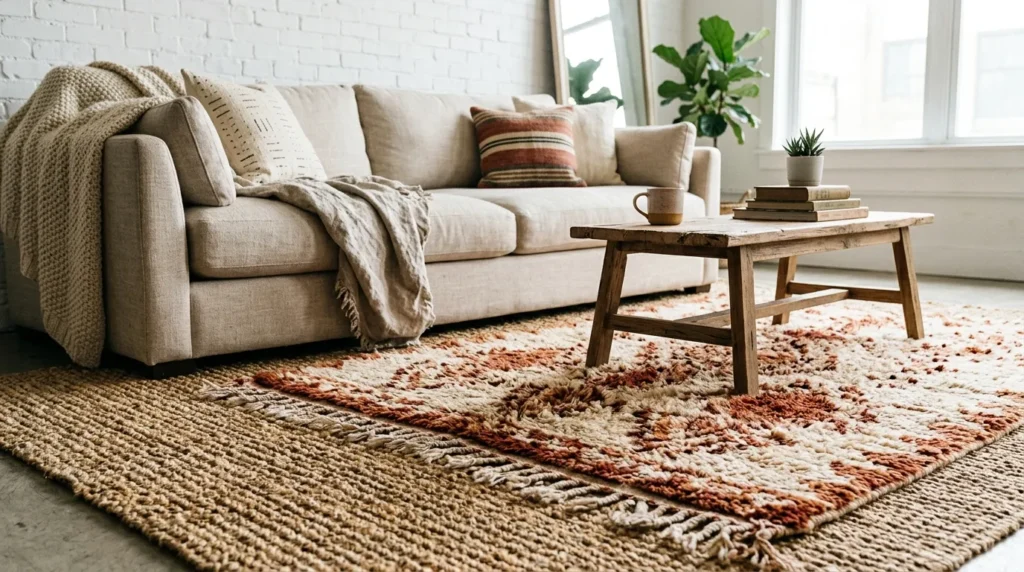
5. Layered Textural Rugs
Quick Benefits
- Grounds the entire seating arrangement visually
- Adds warmth and comfort underfoot
- Helps define a living area within an open floor plan
- Introduces pattern or texture without overwhelming walls
- Comes in countless price points and material options
Why It Works
A rug does more heavy lifting in a living room than most people realize. It defines the boundaries of your seating area, absorbs sound, and adds a layer of texture that hard flooring simply can’t provide on its own. One simple trick I always suggest is layering two rugs — a larger jute or flatweave base topped with a smaller, softer patterned rug — because it creates depth in a way that a single rug rarely achieves. This layered approach is especially popular in Pinterest-favorite living rooms because it photographs with obvious texture and dimension.
How To Style It
As a general layout rule, your rug should be large enough that at least the front legs of every seating piece rest on it, which visually ties the furniture together rather than making it look like it’s floating in the corners of the room. Choose a low-pile, high-durability material like wool or a wool blend for the main rug, then add a smaller vintage-style or Moroccan-pattern rug on top for contrast. Stick to two, at most three, patterns total in the room so the layered rugs don’t compete with pillows or artwork.
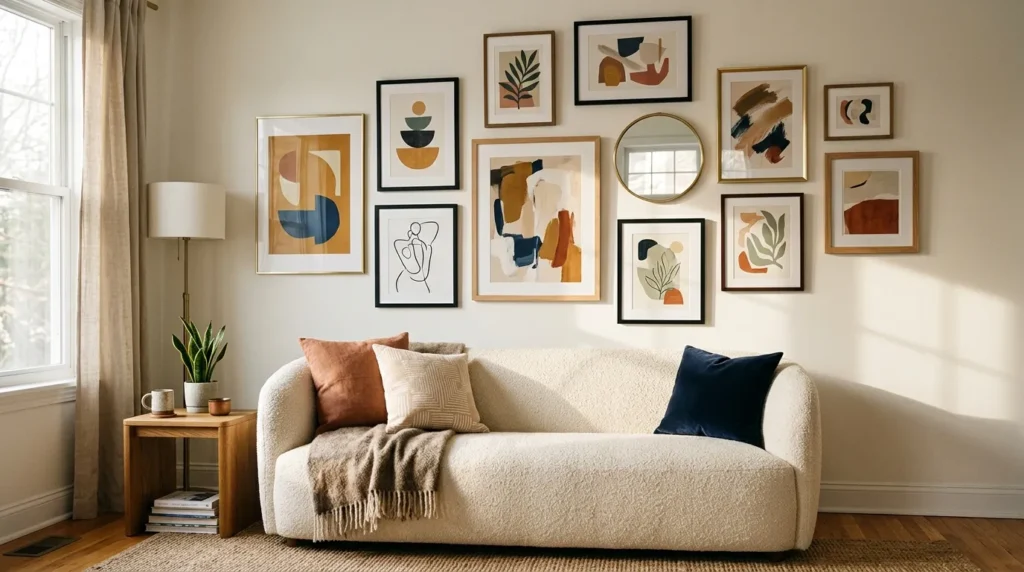
6. Gallery Wall Art
Quick Benefits
- Personalizes the space in a way store-bought decor can’t
- Fills large wall space without needing oversized furniture
- Creates a natural conversation piece
- Works with almost any budget through print or original art mixes
- Adds color, texture, and visual interest to plain walls
Why It Works
A well-curated gallery wall does something a single large painting often can’t — it tells a story. Mixing frame styles, art sizes, and even a few objects like woven wall hangings or small mirrors creates a layered, collected-over-time look that feels distinctly luxurious rather than staged. That’s why many designers recommend building a gallery wall gradually, adding pieces as you find them, rather than buying an entire matching set at once. The imperfection of a slightly asymmetrical arrangement is often what makes it feel authentic and high-end.
How To Style It
Start by laying your art pieces out on the floor before hanging anything, arranging and rearranging until the spacing feels balanced. A mix of two or three frame finishes — such as matte black, warm wood, and thin brass — keeps the wall cohesive without feeling too matched. Leave two to three inches between frames for a clean gallery look, and anchor the arrangement above a key piece of furniture, like a sofa or console table, so it reads as intentional rather than scattered.
7. Metallic Accent Details
Quick Benefits
- Adds shine and contrast against neutral or matte surfaces
- Works in small doses across lighting, hardware, and decor
- Ties disparate design elements together visually
- Available in warm tones like brass and gold or cool tones like chrome and nickel
- Inexpensive way to refresh a room without new furniture
Why It Works
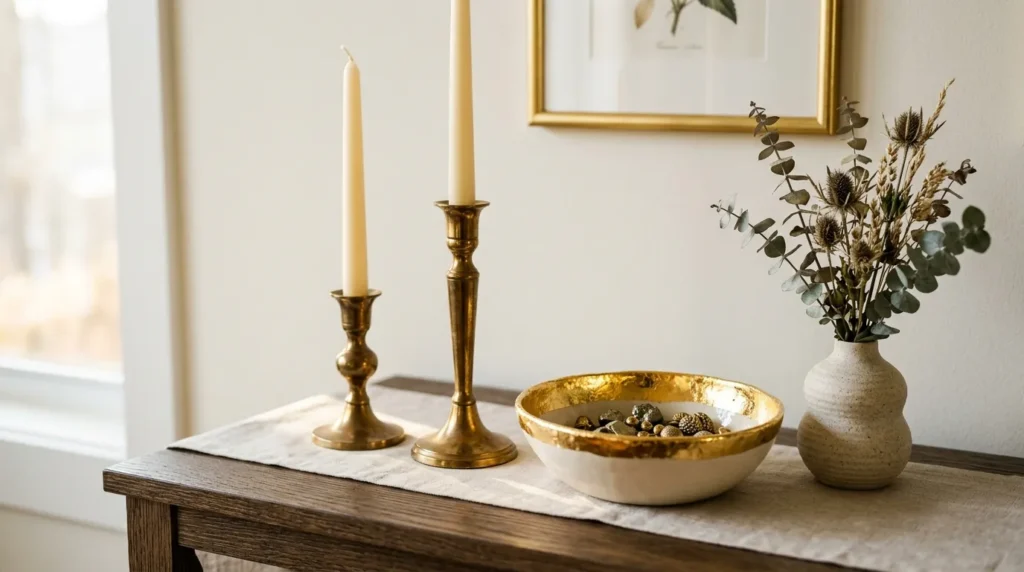
Metallic finishes act almost like jewelry for a room — a little goes a long way. Brass picture frames, a gold-rimmed mirror, or nickel drawer pulls catch and reflect light in a way that flat, matte surfaces simply don’t, adding a subtle sense of movement throughout the space. I’ve noticed that rooms with zero metallic elements often feel a bit flat or unfinished, even when every other design choice is right. Choosing one dominant metal tone and repeating it in three or four places throughout the room creates a cohesive, polished thread that ties everything together.
How To Style It
Pick one primary metal finish — warm brass or gold tends to suit cozier, traditional-modern spaces, while chrome or brushed nickel suits a sleeker, more contemporary room — and repeat it across lighting, hardware, and small decor objects like trays or vases. Avoid mixing more than two metal tones in a single room, as this can start to feel cluttered rather than curated. Candlesticks, picture frames, and a decorative bowl on the coffee table are all easy, low-cost ways to introduce this detail.
8. Oversized Mirror Focal Point
Quick Benefits
- Reflects natural light and makes rooms feel larger
- Serves as an affordable alternative to a large art piece
- Adds depth and dimension to a flat wall
- Works in nearly any design style, from modern to traditional
- Creates visual balance opposite windows or seating
Why It Works
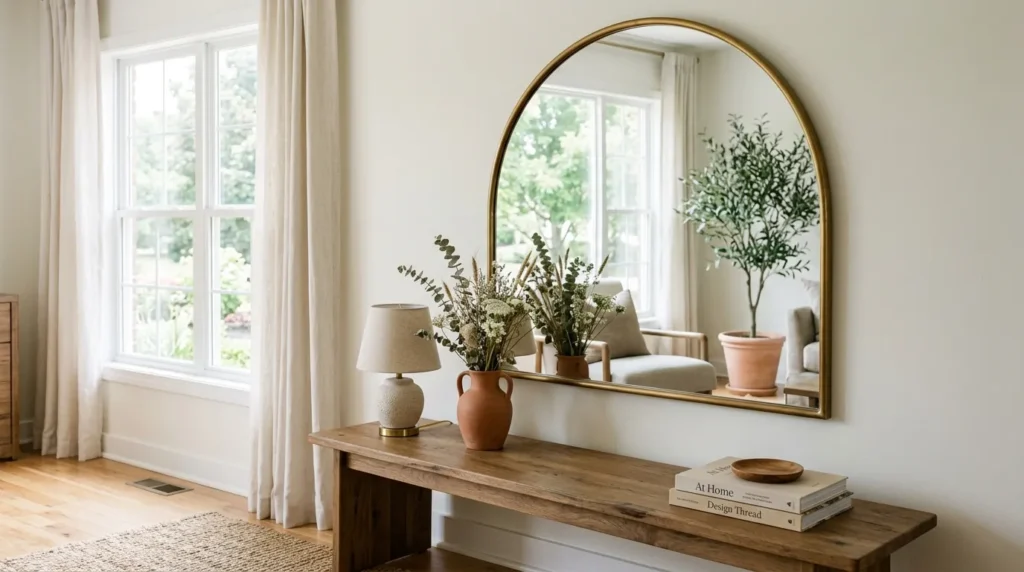
An oversized mirror is one of the simplest, most effective tricks for making a living room feel brighter and more spacious, especially in rooms with limited natural light. Positioned correctly, it bounces daylight deeper into the room and creates the illusion of an additional window. In my experience, a large mirror placed above a console table, sofa, or fireplace mantel does double duty — it’s both a functional light-enhancer and a striking decorative statement, which is part of why it shows up so often in luxury living room designs.
How To Style It
Choose a mirror that’s roughly two-thirds the width of the furniture piece it hangs above, whether that’s a console table, sofa, or fireplace mantel. Position it across from or adjacent to a window whenever possible to maximize the amount of light it reflects into the room. An arched or organically shaped frame in a warm metal tone softens the geometry of a room full of straight lines, while a slim black frame suits a more streamlined, contemporary look.
9. Curated Coffee Table Styling
Quick Benefits
- Turns a functional surface into a design moment
- Easy and inexpensive to refresh seasonally
- Adds height variation and visual interest to the seating area
- Reflects personal taste and collected style
- Works as a quick styling project with existing decor
Why It Works
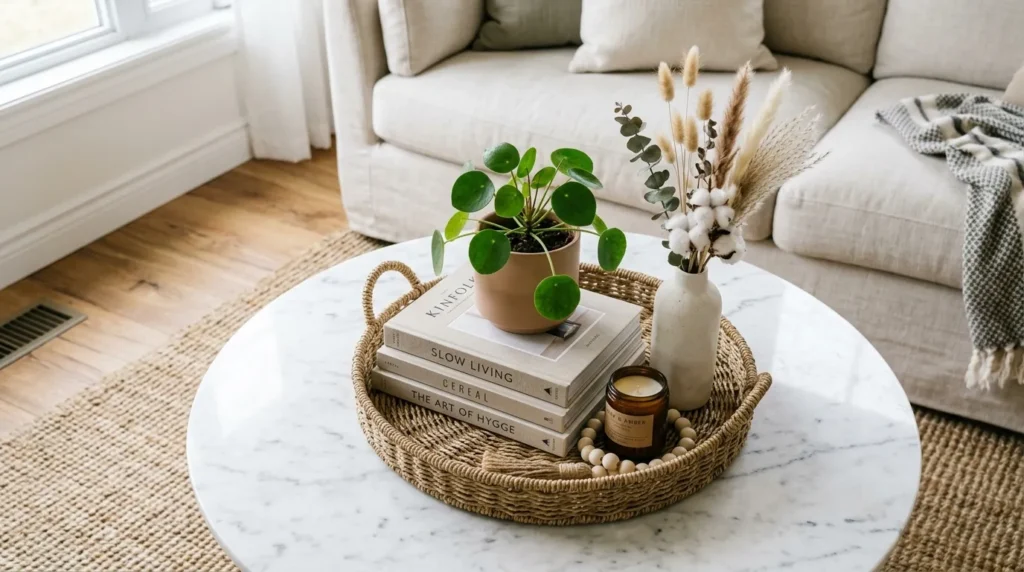
Coffee table styling is a small detail that has an outsized effect on how “done” a living room feels. A cluttered or completely bare coffee table both send the wrong message — one feels chaotic, the other feels unfinished. A mistake many homeowners make is treating the coffee table as pure storage rather than a styling opportunity. In my experience, a thoughtfully arranged table with varied heights, textures, and a mix of functional and decorative objects instantly makes a room feel more considered, even if nothing else in the space has changed.
How To Style It
Follow a simple formula: one stack of two or three books, one tray to corral smaller items, one organic element like a small plant or a bowl of dried florals, and one piece with height, such as a candlestick or small sculpture. Group items in odd numbers and vary their heights so the eye naturally moves across the arrangement. Rotate a few pieces seasonally — swapping in a textured pumpkin in fall or a bowl of citrus in summer — to keep the styling feeling fresh without starting from scratch.
10. Statement Fireplace Design
Quick Benefits
- Creates a natural focal point for furniture to gather around
- Adds architectural interest even in homes without one originally
- Works with both traditional and electric fireplace inserts
- Elevates the entire room’s sense of craftsmanship
- Offers a strong backdrop for seasonal styling and decor
Why It Works
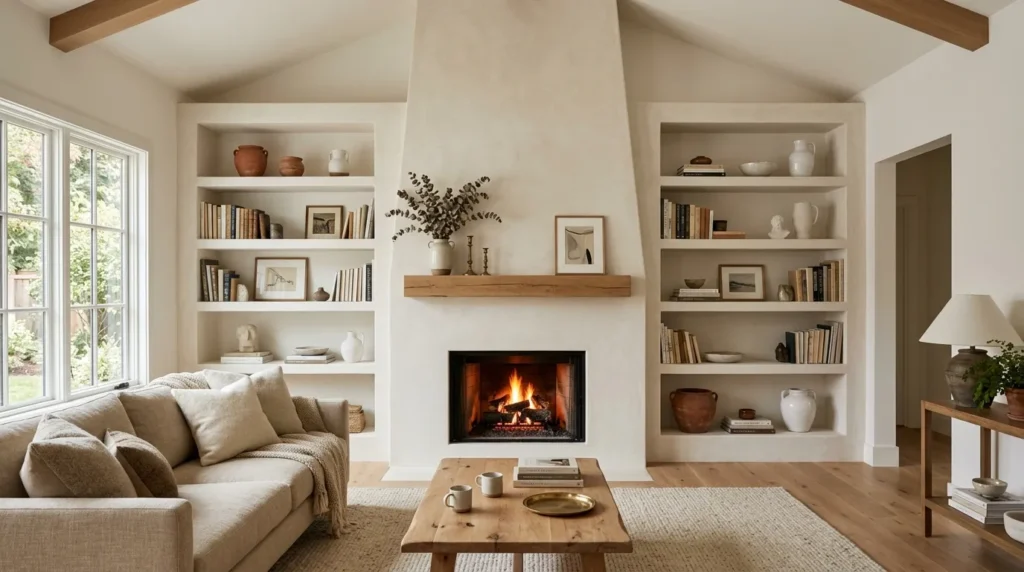
A fireplace has always been the emotional center of a living room, and modern luxury design leans into that by treating the surround as a genuine design feature rather than an afterthought. Floor-to-ceiling stone, a plaster finish, or a wide wood mantel all signal craftsmanship in a way that a small, builder-standard fireplace surround rarely does. One thing that works especially well is extending the fireplace material — whether stone, tile, or millwork — all the way to the ceiling, which draws the eye upward and makes the entire room feel more substantial.
How To Style It
If a full renovation isn’t in the budget, a fresh coat of limewash or plaster-effect paint on an existing brick fireplace can achieve a similarly elevated look for a fraction of the cost. Frame the fireplace with built-in shelving or symmetrical furniture placement to reinforce it as the room’s anchor point. Style the mantel the same way you would a coffee table — varied heights, a piece of art leaned rather than hung, and one or two organic textures like a woven basket or a small plant.
Frequently Asked Questions
What makes a living room feel luxurious without a full renovation? Lighting, texture, and a neutral color palette do most of the work. A statement light fixture, a plush textured rug, and a few high-quality accent pieces like a marble tray or velvet throw pillow can shift the entire feel of a room without touching walls or flooring.
Is luxury decor expensive to achieve? Not necessarily. Many of the ideas in this guide, like layering rugs, styling a coffee table, or adding metallic accents, cost relatively little. The key is being intentional with a few standout pieces rather than trying to upgrade everything at once.
What colors work best for a modern luxury living room? Warm neutrals such as soft white, greige, taupe, and espresso tend to feel the most timeless. These tones create a calm backdrop that allows textures and materials, like marble or velvet, to stand out as the real focal points.
How do I make a small living room feel luxurious? Oversized mirrors, lighter neutral tones, and a single large area rug help a small room feel more expansive. Avoid overcrowding the space with too many small decor pieces, and instead choose a few larger, well-placed statement items.
Do I need matching furniture for a cohesive look? No — in fact, perfectly matched furniture sets often feel less luxurious. A collected, slightly eclectic mix of pieces in a consistent color palette and one or two repeated materials or metal tones tends to look more designed and personal.
How often should I update my living room decor? Larger pieces like sofas, rugs, and lighting can stay for years if chosen well. Smaller decor elements, such as coffee table styling, throw pillows, and accent pieces, can be refreshed seasonally to keep the room feeling current without a full overhaul.
What’s the easiest first step to start elevating a living room? Start with lighting or a new rug, since both have an immediate, noticeable impact on how the room feels. From there, layer in texture through pillows, throws, and a few curated accent pieces.
Conclusion
A modern living room with luxury decor doesn’t happen all at once, and it doesn’t require replacing everything you own. It comes together gradually, through intentional choices: a lighting fixture that draws the eye, a rug that grounds the room, a coffee table styled with care, and a palette that lets natural materials like marble and velvet shine. Start with one or two ideas from this list — maybe a new pendant light or a freshly styled coffee table — and build from there as your space, and your style, continue to evolve. The goal isn’t perfection; it’s a living room that feels warm, considered, and genuinely yours, while still supporting everyday comfort and real life.
Related Articles
- Cozy Bedroom Ideas for a Relaxing Retreat
- Small Living Room Layouts That Actually Work
- Modern Farmhouse Decor Essentials
- Neutral Home Styling Tips for Every Room
- DIY Accent Wall Ideas on a Budget