10 DIY Wall Art Ideas for Cozy Homes
Wall art can completely change the atmosphere of a room without requiring a major decorating budget.
Blank walls often make a home feel unfinished, but filling every available surface with store-bought artwork isn’t always the answer. DIY wall art gives you the opportunity to create pieces that match your home’s colors, textures, and personality while keeping the overall look intentional.
The best DIY projects don’t have to look overly crafty.
With natural materials, simple shapes, textured fabrics, wood, paint, and carefully chosen neutral colors, you can create artwork that feels sophisticated enough for a modern living room, bedroom, entryway, or dining area.
In my experience, texture is especially useful when decorating with neutral colors. A cream wall with another flat cream print can sometimes feel underwhelming, while woven fibers, plaster-like finishes, layered paper, or natural wood can add depth without introducing a busy color scheme.
Before starting a project, consider the room’s existing palette. Pull one or two colors from your furniture, rug, curtains, or accessories and repeat them in the artwork.
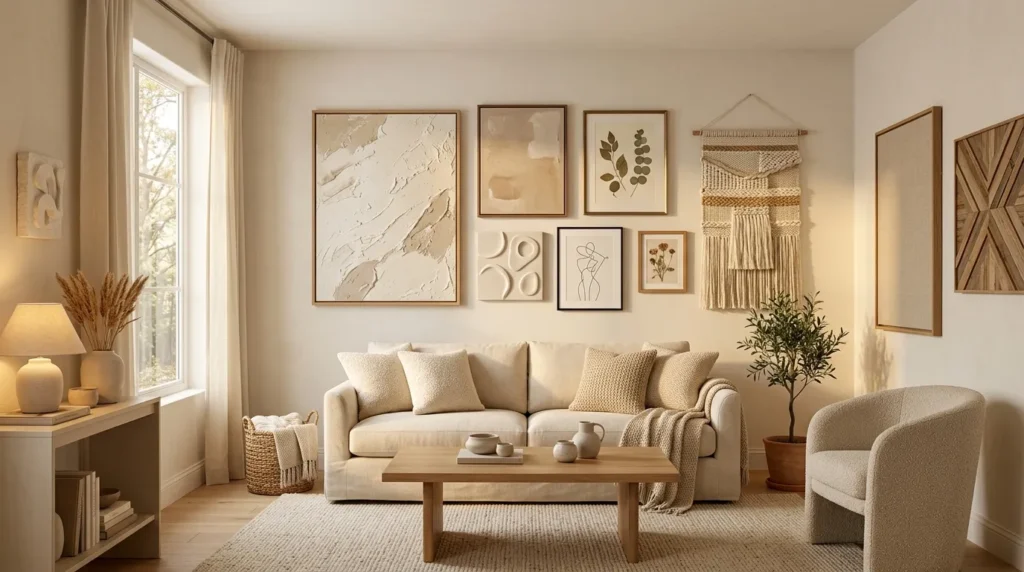
These ten DIY wall art ideas are designed to feel warm, stylish, and achievable while giving your home that finished Pinterest-worthy look.
Table of Contents
- Textured Canvas Art
- Framed Fabric Art
- DIY Abstract Painting
- Natural Wood Wall Art
- Layered Paper Art
- Botanical Wall Art
- DIY Plaster Art
- Woven Wall Hanging
- Minimal Line Art
- Gallery Wall Collection
1. Textured Canvas Art
Quick Benefits
- Adds dimension
- Works with neutral interiors
- Easy to customize
- Looks sophisticated
- Creates a soft focal point
Why It Works
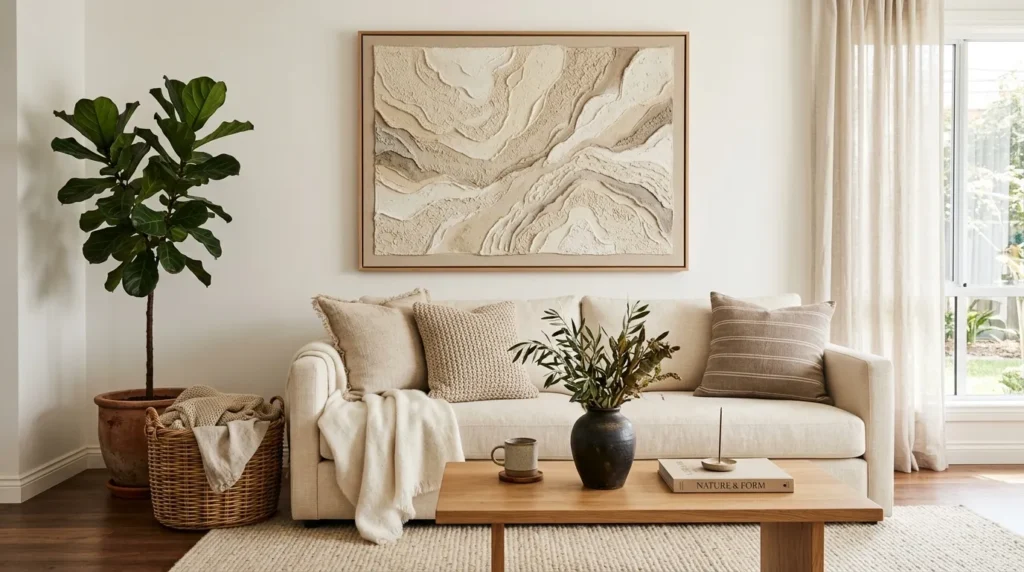
Textured artwork can add visual interest without overwhelming a cozy room.
Instead of relying on bold colors, the texture itself becomes the feature.
A simple canvas can be transformed with dimensional materials and neutral tones to create a piece that resembles contemporary gallery artwork.
How To Style It
Choose a canvas size appropriate for the wall.
Use warm white, cream, beige, or soft taupe as the base.
Create subtle raised patterns using suitable art materials.
Keep the texture organic rather than perfectly symmetrical.
Hang the finished piece above a sofa, bed, console, or dining area where it can act as a focal point.
2. Framed Fabric Art
Quick Benefits
- Adds softness
- Affordable
- Easy to customize
- Introduces pattern subtly
- Works beautifully in bedrooms
Why It Works
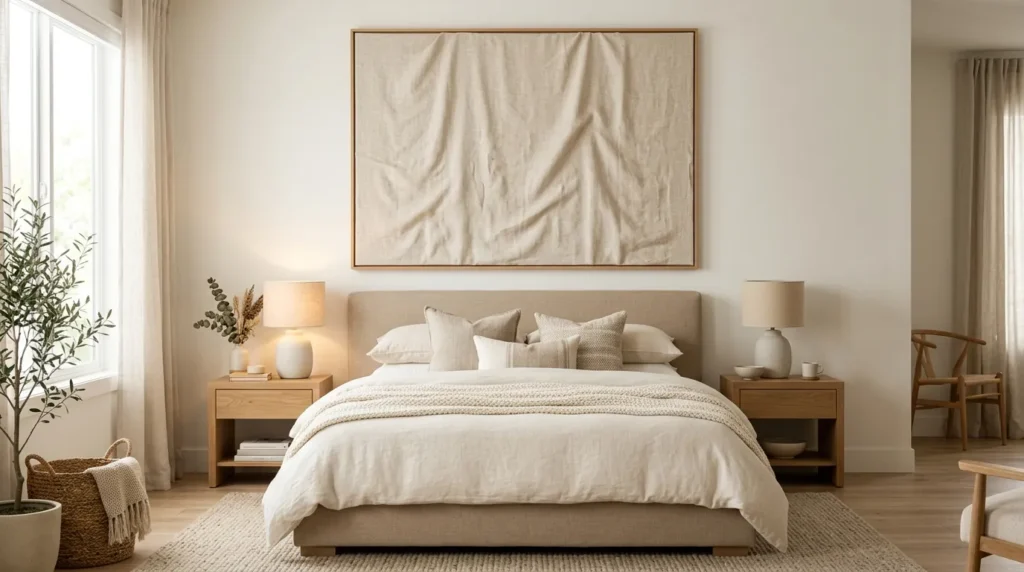
Fabric brings a tactile quality that traditional framed prints don’t always provide.
Linen, cotton, woven textiles, and other suitable fabrics can create artwork with warmth and softness.
It’s especially effective in rooms with hard surfaces such as wood, metal, or glass.
How To Style It
Choose fabric that complements your existing color palette.
Mount it inside a simple wooden or neutral frame.
For a more relaxed appearance, allow subtle texture or natural wrinkles to remain visible.
Use a large piece above a bed or sofa, or create a pair of smaller coordinated pieces.
3. DIY Abstract Painting
Quick Benefits
- Completely customizable
- Fits your color palette
- Inexpensive
- Creates a personal touch
- Works with modern interiors
Why It Works
Abstract art doesn’t require advanced painting skills.
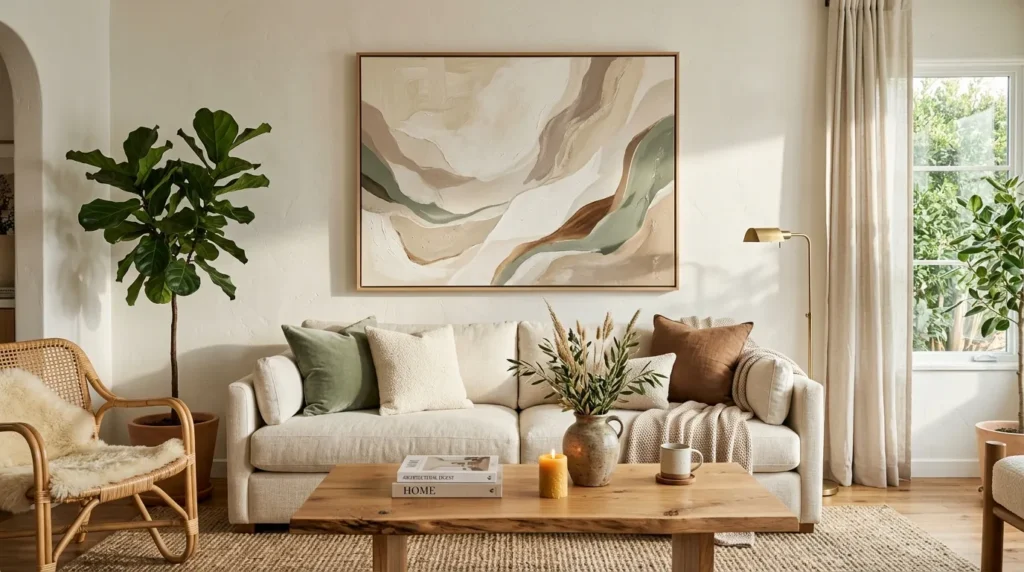
Simple blocks, organic shapes, lines, and tonal layers can create an interesting composition.
The secret is restraint.
How To Style It
Start with three or four colors already present in your room.
Try cream, beige, warm gray, muted brown, or soft sage.
Use large organic shapes rather than filling every part of the canvas.
Allow sections of the background to remain visible.
The finished piece should complement the room rather than compete with it.
4. Natural Wood Wall Art
Quick Benefits
- Adds warmth
- Introduces natural texture
- Works with neutral rooms
- Creates an organic feeling
- Easy to coordinate
Why It Works
Wood immediately adds warmth to a room.
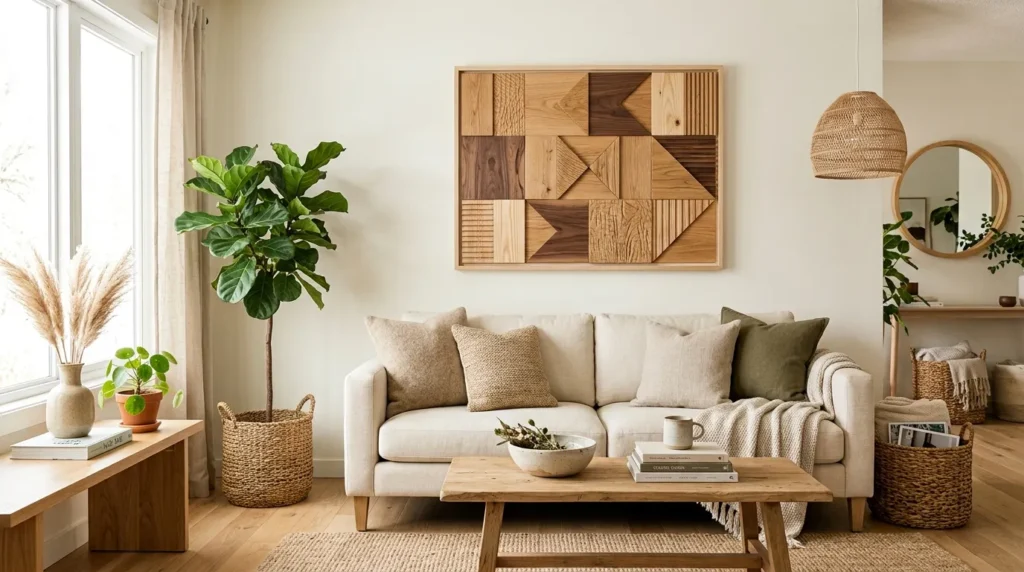
If your walls and furniture are mostly neutral, a wooden wall piece can provide subtle contrast without introducing a strong color.
Different wood grains also create natural variation.
How To Style It
Use small wooden boards, thin wood pieces, or suitable reclaimed materials.
Create a simple geometric arrangement.
Keep the finish natural or lightly stained.
Pair wood artwork with linen, woven baskets, ceramic accessories, and greenery for an organic modern look.
5. Layered Paper Art
Quick Benefits
- Extremely customizable
- Lightweight
- Budget-friendly
- Creates dimensionality
- Works in modern rooms
Why It Works
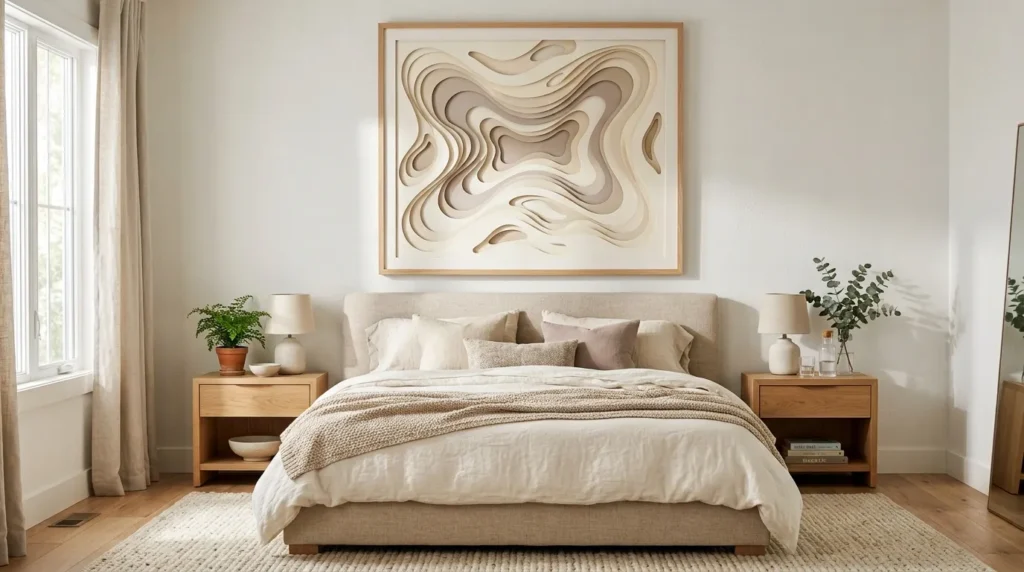
Layering paper creates depth while keeping the artwork visually light.
Simple geometric or organic forms can look surprisingly sophisticated when arranged carefully.
How To Style It
Choose heavyweight paper in complementary shades.
Layer shapes gradually to create depth.
Try cream, ivory, tan, muted gray, and soft brown.
Place the finished composition inside a deep frame.
The shadow created between layers becomes part of the artwork.
6. Botanical Wall Art
Quick Benefits
- Brings nature indoors
- Works with many decorating styles
- Adds color gently
- Creates a calming atmosphere
- Easy to personalize
Why It Works
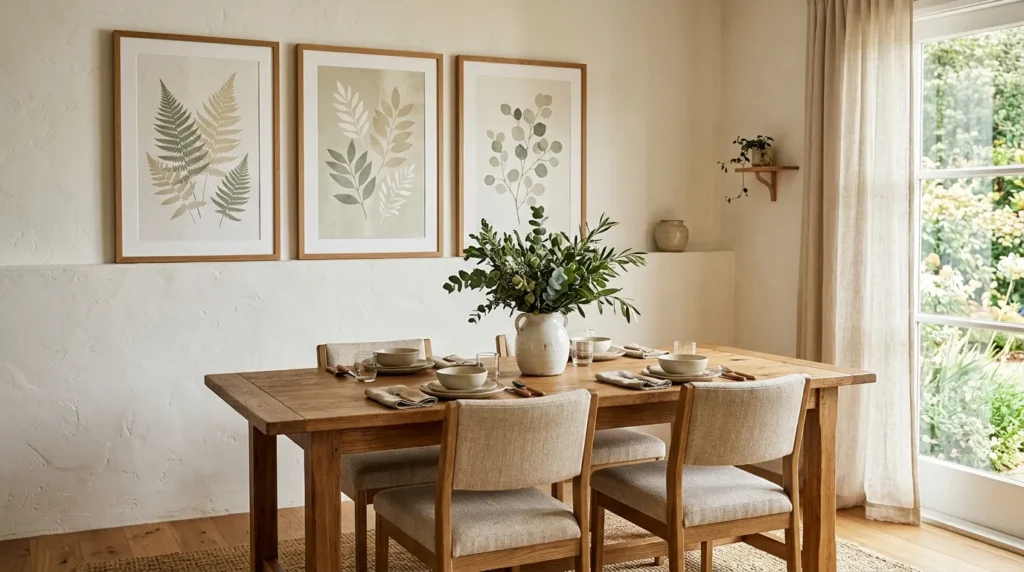
Botanical artwork introduces organic shapes that naturally soften interiors.
You can create botanical-inspired pieces without filling the room with bright colors.
Pressed leaves, simple illustrations, silhouettes, or botanical prints can all work.
How To Style It
Choose plants or foliage that complement the room.
Use matching frames for a coordinated appearance.
Create a pair or trio rather than scattering individual pieces throughout the room.
For a modern look, use simple backgrounds and restrained colors.
7. DIY Plaster Art
Quick Benefits
- Creates designer-inspired texture
- Adds depth
- Works with neutral palettes
- Makes a strong focal point
- Looks handmade but refined
Why It Works
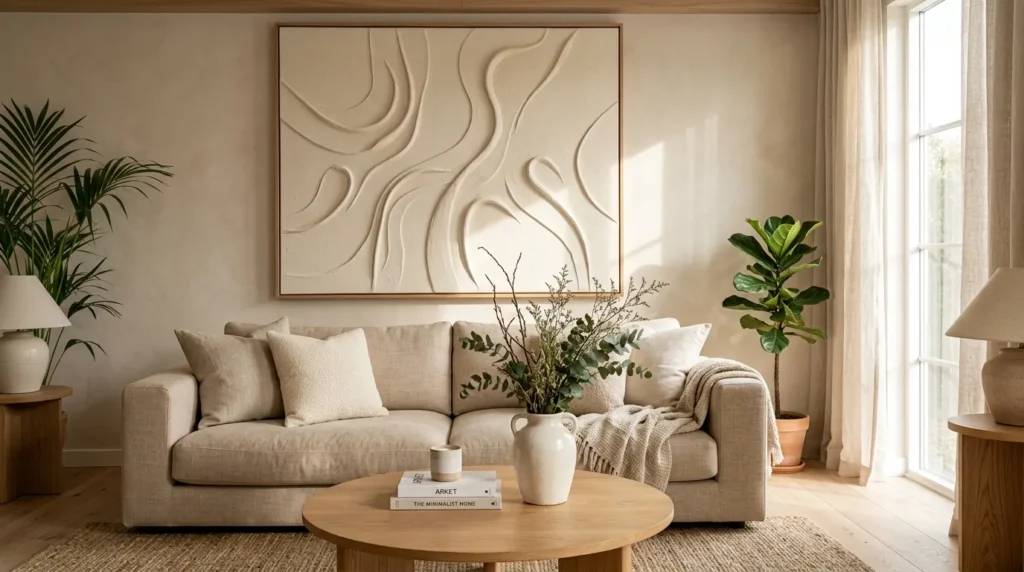
Plaster-style artwork has become popular because it combines simplicity with texture.
The raised surface catches light differently throughout the day, creating subtle variation.
How To Style It
Use an appropriate art surface and suitable texture medium.
Create simple arches, curves, abstract lines, or organic shapes.
Keep the color close to the background for a monochromatic appearance.
A large textured piece can work beautifully above a sofa or bed.
8. Woven Wall Hanging
Quick Benefits
- Adds softness
- Introduces texture
- Works in cozy spaces
- Creates a relaxed atmosphere
- Complements natural materials
Why It Works
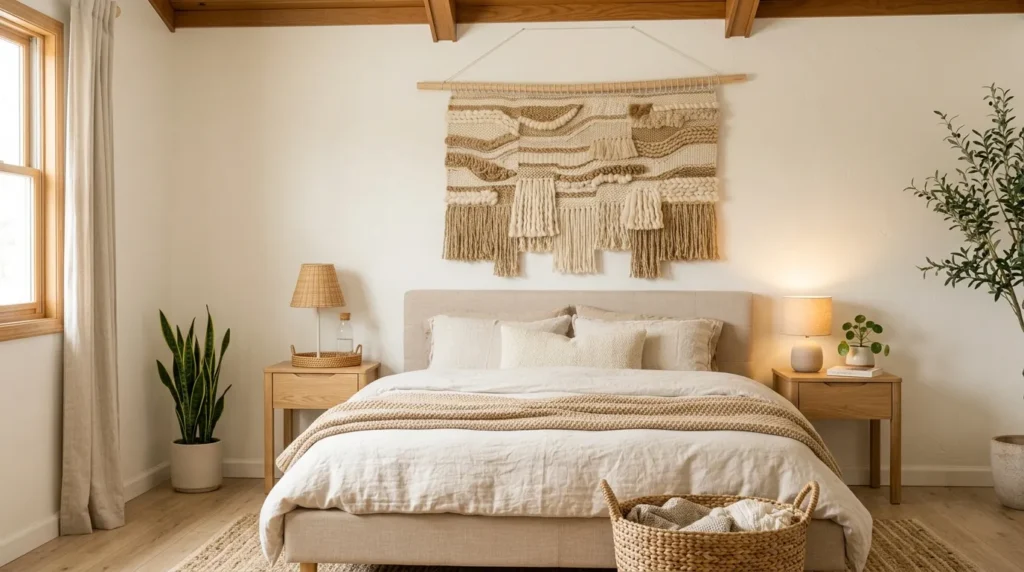
Woven wall art brings movement and tactile texture to a room.
It’s particularly effective in bedrooms, reading corners, and relaxed living spaces.
How To Style It
Choose neutral fibers such as cream, oatmeal, beige, or natural tan.
Keep the design relatively simple.
Hang it above a bed, console, or accent chair.
Pair it with wood, linen, rattan, and soft lighting for a cozy organic atmosphere.
9. Minimal Line Art
Quick Benefits
- Very simple
- Inexpensive
- Works with modern decor
- Adds visual interest
- Easy to frame
Why It Works
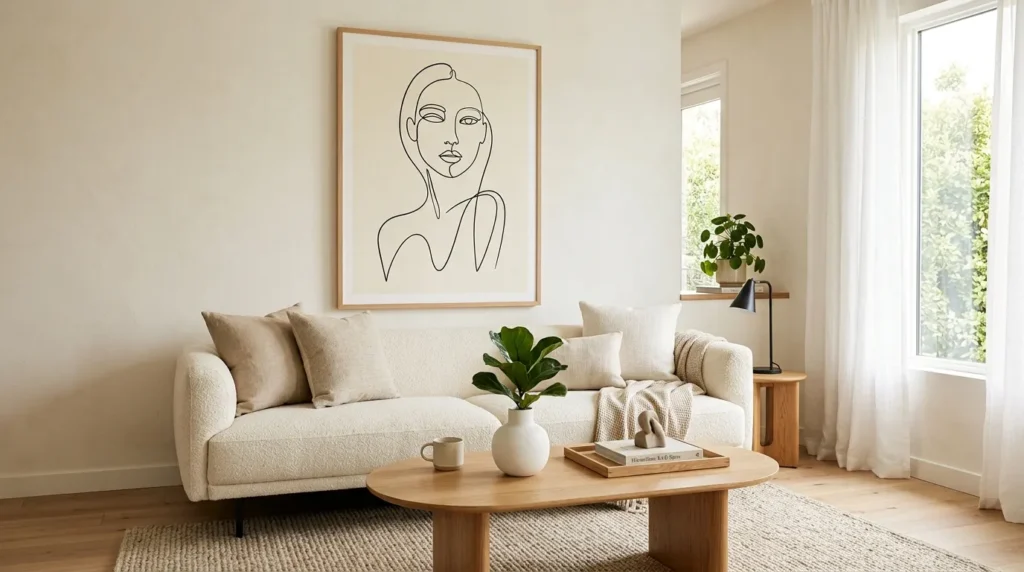
Minimal line art can add personality without making a wall feel crowded.
Simple continuous lines or abstract figures work particularly well in modern and minimalist homes.
How To Style It
Use a neutral background and dark charcoal or black lines.
Choose thin frames in black, natural wood, or warm metallic finishes.
Hang one oversized piece or create a small symmetrical pair.
Keep surrounding decor minimal so the artwork remains visually clean.
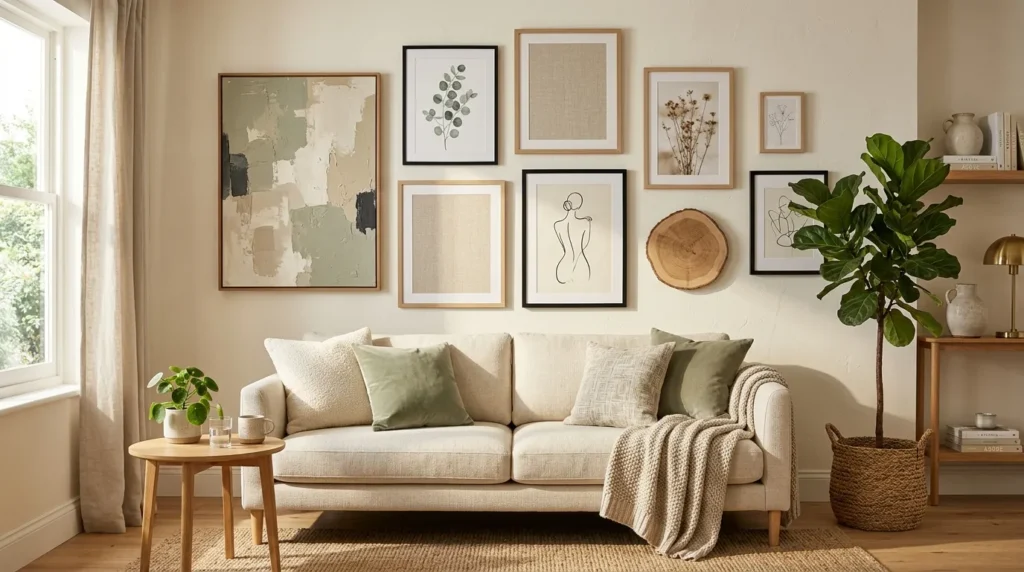
10. Gallery Wall Collection
Quick Benefits
- Personalizes the room
- Fills large walls
- Allows creativity
- Can mix DIY projects
- Easy to expand
Why It Works
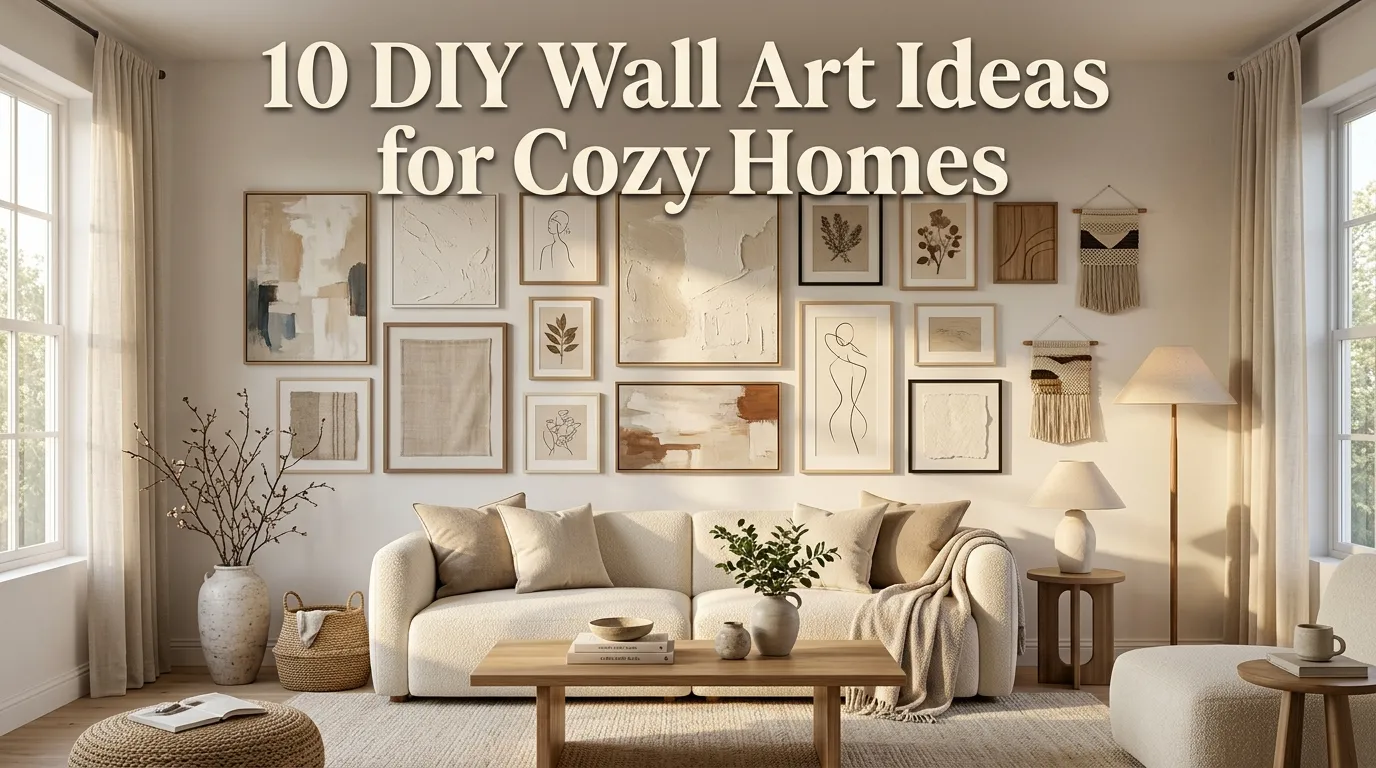
A gallery wall gives you the freedom to combine different artwork styles while maintaining an overall theme.
You can mix abstract art, botanical pieces, fabric, photography, and simple sketches.
How To Style It
Choose a consistent color palette first.
Then mix different sizes and textures.
Use matching or coordinated frames.
Lay everything out on the floor before hanging.
For a cozy home, combine warm neutrals, natural wood, soft botanical elements, and a few darker accents.
How To Make DIY Wall Art Look Expensive
The difference between inexpensive DIY art and polished-looking DIY art often comes down to presentation.
Use large-scale artwork when the wall requires it.
Choose quality-looking frames.
Keep the color palette controlled.
Don’t overcrowd the composition.
Use texture intentionally.
Most importantly, make sure the artwork is appropriately sized for the furniture beneath it.
A small artwork above a large sofa can look disconnected, while a properly proportioned piece can make the entire room feel more professionally designed.
Best Colors for Cozy DIY Wall Art
Consider:
- Warm white
- Cream
- Oatmeal
- Beige
- Taupe
- Soft gray
- Muted sage
- Natural brown
- Charcoal
- Dusty terracotta
These colors work particularly well with warm neutral interiors.
Where To Hang DIY Wall Art
Good locations include:
- Above a sofa
- Above the bed
- Behind a dining table
- Above an entryway console
- Beside a reading chair
- Along a hallway
- Above a fireplace
- On a large blank bedroom wall
Always consider furniture proportions and viewing height before mounting artwork.
Common DIY Wall Art Mistakes
Making the Artwork Too Small
Large furniture usually needs appropriately scaled artwork.
Using Too Many Colors
A restrained palette often looks more sophisticated.
Hanging Everything Too High
Artwork generally looks better when visually connected to the furniture below it.
Mixing Too Many Styles
Different pieces can work together when they share color, framing, or texture.
Overfilling the Wall
Negative space can make artwork more noticeable.
FAQ
What is the easiest DIY wall art idea?
Abstract painting, framed fabric, and simple line art are among the easiest options because they don’t require complicated construction.
How can I make DIY art look expensive?
Use a restrained color palette, quality-looking frames, larger proportions, and intentional composition. Texture can also make simple artwork feel more sophisticated.
What DIY wall art works best for a cozy home?
Textured canvas, woven wall hangings, natural wood artwork, botanical pieces, and warm neutral abstract paintings work especially well.
How big should wall art be above a sofa?
A useful starting point is to choose artwork or a grouping that visually spans roughly two-thirds to three-quarters of the sofa width. Adjust based on the composition and surrounding space.
Can I make wall art without painting?
Absolutely. Try fabric, wood, paper layers, woven materials, botanical elements, or plaster-style texture.
What colors make wall art feel cozy?
Warm neutrals such as cream, beige, oatmeal, taupe, brown, muted sage, and soft terracotta can create a cozy appearance.
How do I create a DIY gallery wall?
Choose a common color palette or theme, gather several different-sized pieces, test the arrangement on the floor first, and use coordinated frames to create visual consistency.
Conclusion
DIY wall art is one of the easiest ways to give a home more personality without spending heavily on decoration.
The goal isn’t to make every project complicated.
A simple textured canvas can become a sophisticated focal point.
A piece of beautiful fabric can become framed artwork.
Wood can bring warmth.
Paper can create dimension.
Botanical elements can introduce nature.
And a carefully planned gallery wall can bring all those ideas together.
If you’re decorating a cozy home, focus on texture, proportion, and a controlled color palette.
Those three elements can make even an inexpensive handmade project feel intentional and polished.
Start with one blank wall and one project you genuinely enjoy making.
Once you see how much difference a thoughtful piece can make, you’ll have an entirely new way to approach the rest of your home’s walls.