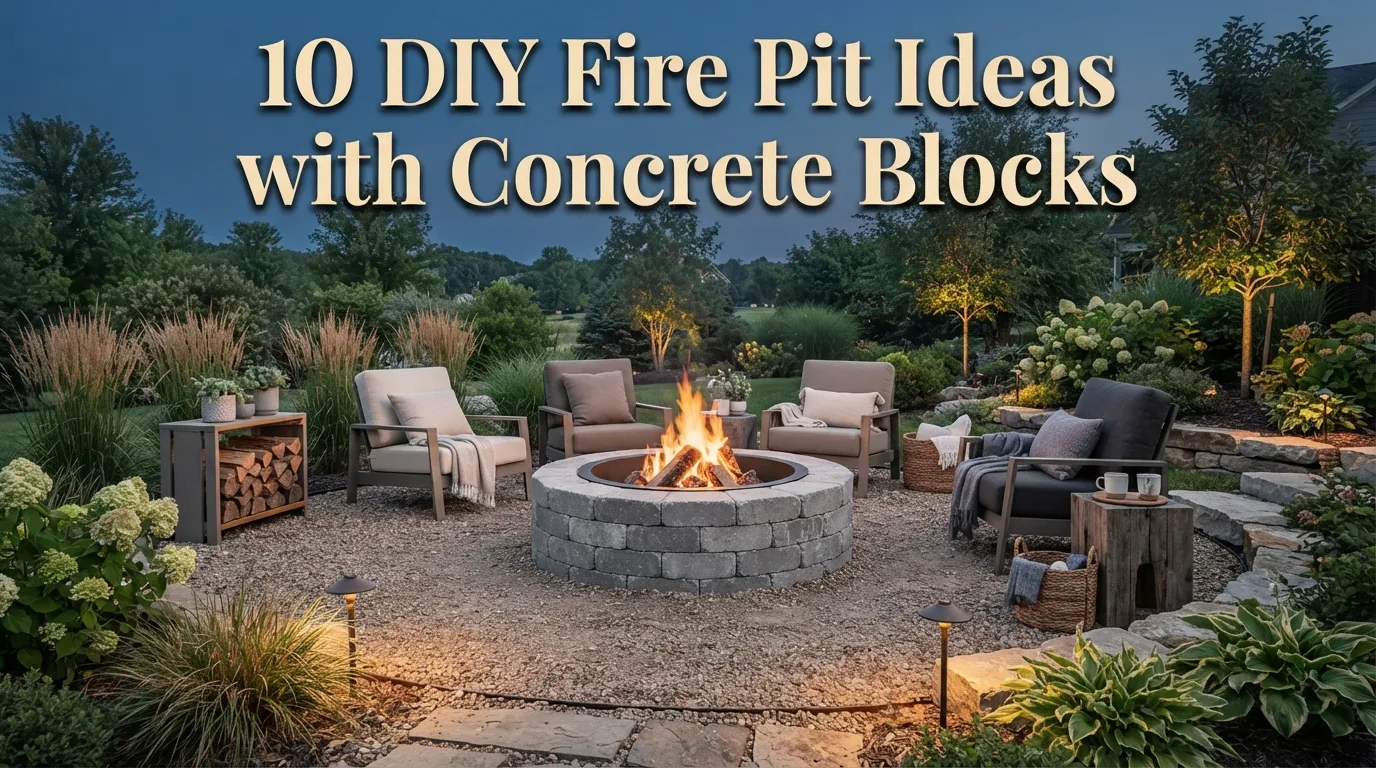
10 DIY Fire Pit Ideas with Concrete Blocks
A backyard fire pit can become one of those outdoor features everyone naturally gathers around. It creates a cozy focal point for cool evenings, casual conversations, roasting marshmallows, and relaxing outdoors without requiring a complicated landscape renovation.
Concrete blocks are especially appealing for DIY fire pit projects because they are widely available, relatively simple to arrange, and can create a substantial-looking structure without the expense of custom masonry.
Still, a fire pit isn’t an ordinary garden project. Heat, fire, smoke, and local regulations all matter. Before starting any project, check your local fire codes, HOA requirements, burn restrictions, and manufacturer’s guidance for any fire ring or insert you plan to use. Use only materials specifically appropriate for fire-pit construction and keep combustible materials safely away from the fire.
The best designs also consider the entire backyard.
A fire pit should have comfortable circulation around it, stable seating, good drainage, and a surface that can tolerate outdoor conditions. Gravel, pavers, stone, and other appropriate noncombustible surfaces can help create a defined gathering area.
Whether you’re working with a compact patio or a spacious backyard, these ideas can help you envision a concrete-block fire pit that looks intentional rather than temporary.
From simple round layouts to modern square designs and cozy seating zones, there are plenty of ways to make a DIY fire pit feel like a natural part of your landscape.
Table of Contents
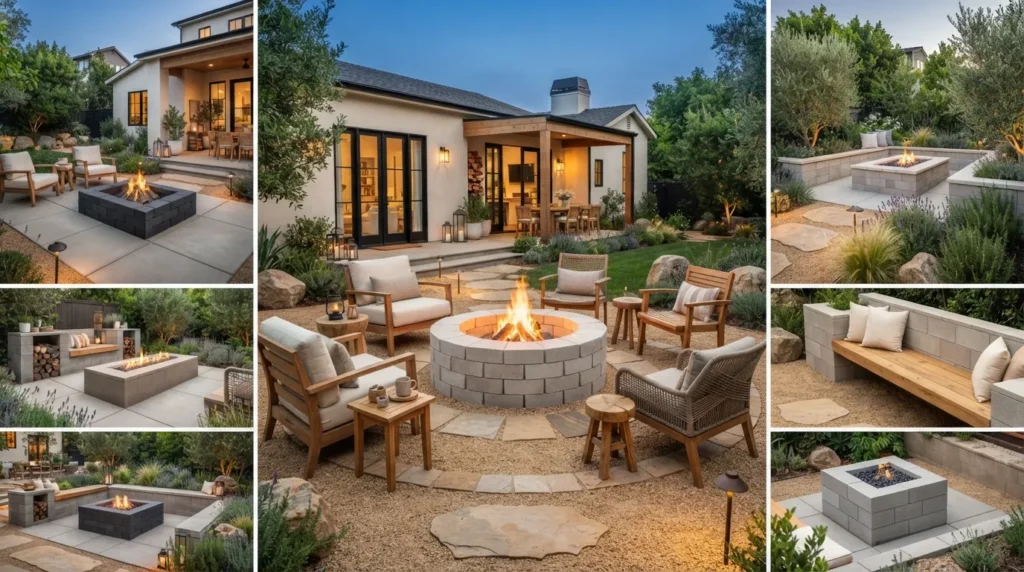
1. Round Block Fire Pit
Create a classic circular gathering area with concrete blocks and a suitable fire-ring system.
2. Square Modern Pit
Give the backyard a contemporary appearance with a clean-lined square layout.
3. Gravel Fire Pit Area
Combine a simple fire pit with a low-maintenance gravel seating zone.
4. Stone And Block Mix
Blend concrete blocks with complementary landscape materials for added character.
5. Built-In Seating Ring
Design the surrounding space for comfortable outdoor gatherings.
6. Raised Block Pit
Create a more substantial focal point with an appropriately constructed raised design.
7. Minimalist Block Pit
Keep the structure simple for a modern backyard aesthetic.
8. Rustic Garden Pit
Combine concrete blocks with natural textures for a relaxed outdoor retreat.
9. Patio Fire Pit Zone
Integrate the fire feature into an existing outdoor living area.
10. Layered Fire Pit Landscape
Surround the fire pit with plants, paths, and hardscape for a finished look.
1. Round Block Fire Pit
Quick Benefits
- Classic backyard appearance
- Creates a natural gathering point
- Simple geometric shape
- Works with many landscape styles
- Easy to surround with seating
Why It Works
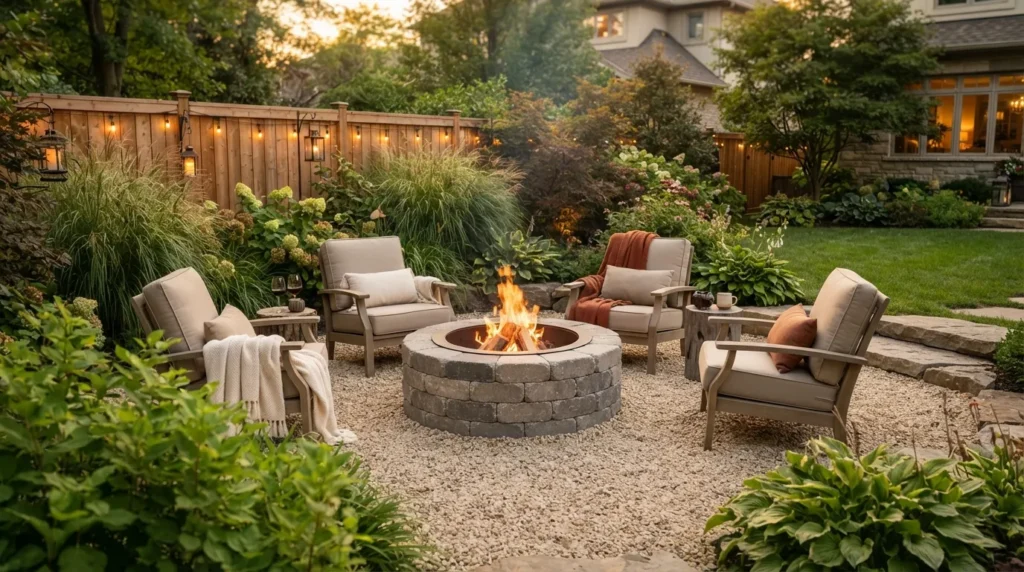
A circular fire pit naturally encourages conversation because everyone can face toward the center.
The shape also works beautifully in landscape design because it contrasts with the straight lines of patios, fences, and rectangular outdoor furniture.
Concrete blocks can create the outer structure, while a properly selected fire ring or insert can provide the designated fire area.
The important part is not simply stacking blocks and lighting a fire.
Materials and construction methods need to be suitable for the temperatures involved. Some ordinary concrete products can crack or deteriorate when exposed to intense heat.
How To Style It
Create the pit on a stable, appropriate noncombustible surface.
Surround the structure with gravel, pavers, or another suitable material.
Add Adirondack-style chairs, simple outdoor lounge chairs, or built-in seating positioned at a safe distance.
Keep the surrounding decor natural.
A few lanterns, planters, and outdoor cushions can make the area feel finished without overcrowding the fire zone.
2. Square Modern Pit
Quick Benefits
- Creates clean architectural lines
- Works with contemporary homes
- Easy to coordinate with rectangular furniture
- Makes a strong focal point
- Looks polished with pavers
Why It Works
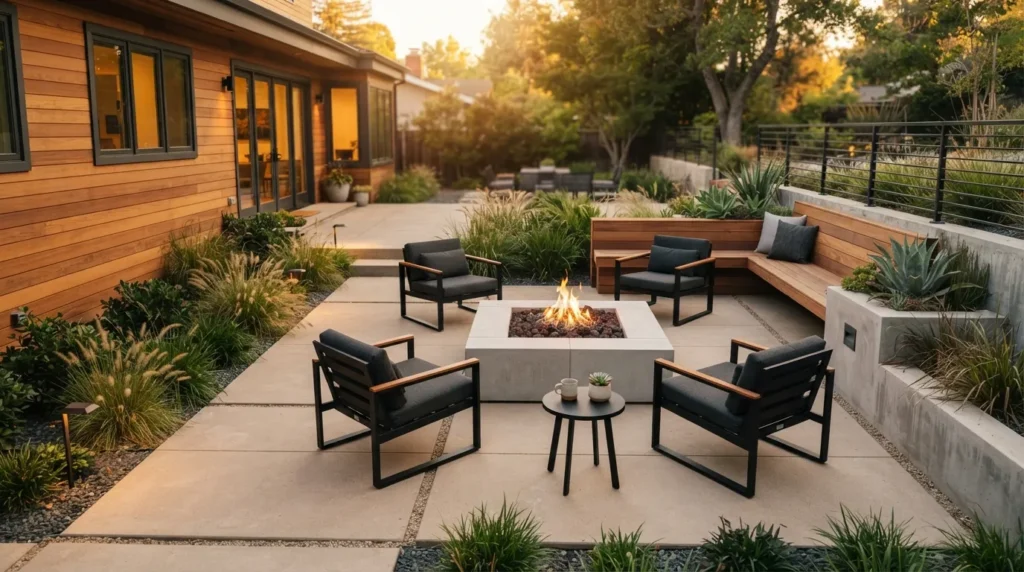
A square fire pit can give a backyard a more architectural appearance.
Its geometry works particularly well with modern patios featuring concrete pavers, rectangular seating, linear planters, and simple fencing.
Instead of trying to disguise the concrete blocks, you can make the clean shape part of the design.
This approach is especially effective when the rest of the landscape has a restrained color palette.
How To Style It
Use evenly arranged blocks and keep the surrounding area visually simple.
Pair the pit with large-format pavers or gravel in a complementary neutral tone.
Add modern outdoor chairs with clean silhouettes.
Black metal, warm wood, charcoal, beige, and natural stone can create a sophisticated palette.
Before constructing the pit, verify that your chosen blocks and fire-ring system are appropriate for the application.
3. Gravel Fire Pit Area
Quick Benefits
- Defines the fire-pit zone
- Reduces lawn around the gathering area
- Creates a casual atmosphere
- Provides visual contrast
- Works well in larger backyards
Why It Works
A fire pit can feel disconnected when it’s simply placed in the middle of a lawn.
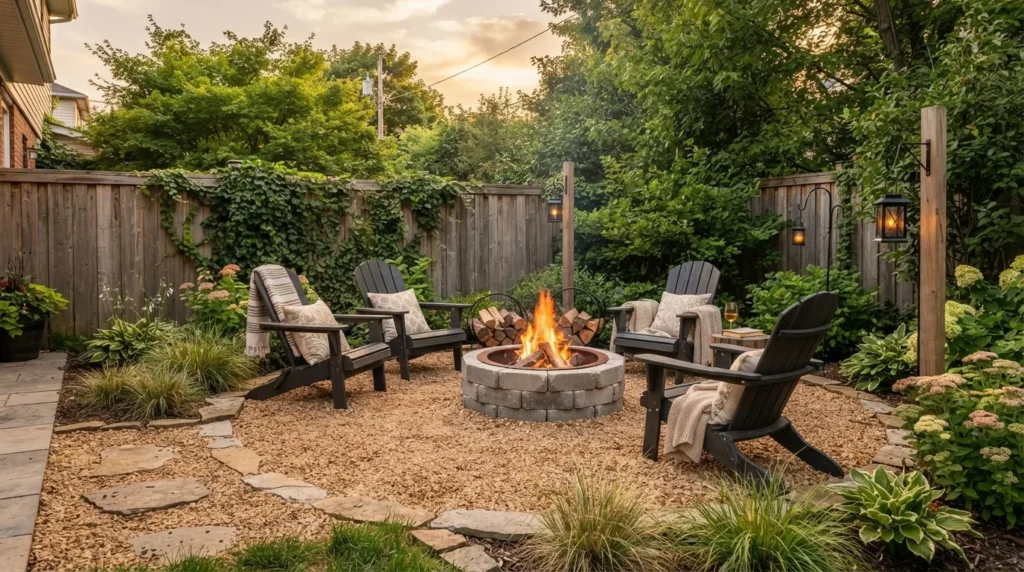
A defined gravel area solves that problem by creating a dedicated outdoor room.
The gravel visually separates the gathering space from the rest of the backyard while providing a practical surface for chairs.
Properly installed gravel can also help create a relaxed, informal aesthetic.
How To Style It
Begin with a clearly defined circular or square area.
Use appropriate edging to prevent gravel from spreading.
Choose a gravel color that complements your home and patio.
Warm tan gravel pairs beautifully with wood and cream furniture.
Gray gravel creates a more contemporary appearance.
Add several comfortable chairs around the perimeter, leaving sufficient clearance from the fire.
Keep decorative plants outside the immediate fire area.
4. Stone And Block Mix
Quick Benefits
- Creates visual texture
- Softens the concrete appearance
- Works with natural landscapes
- Adds a custom feel
- Connects the fire pit to surrounding hardscape
Why It Works
Concrete blocks can look more integrated into a backyard when they are paired with other landscape materials.
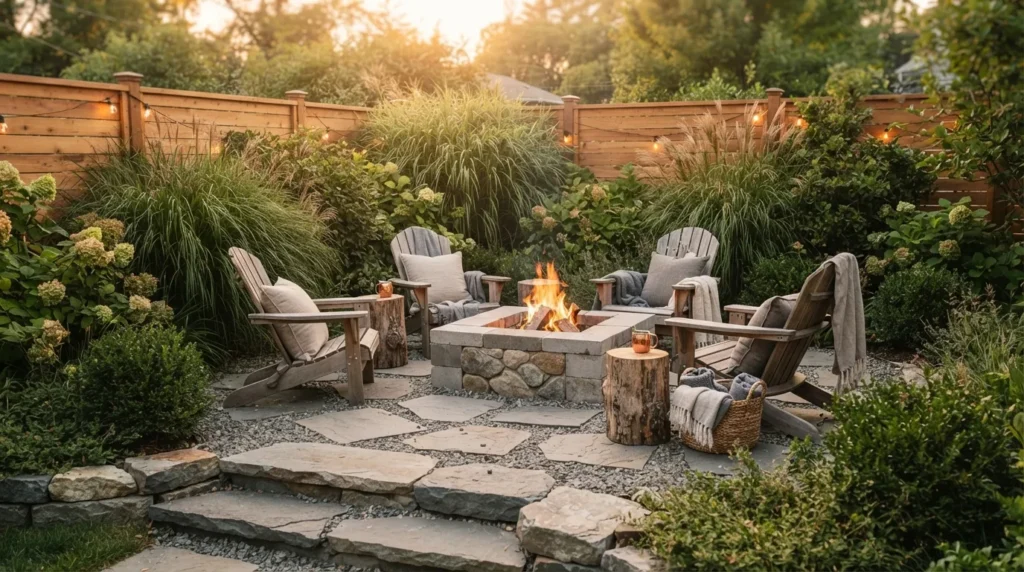
Natural stone, gravel, pavers, and wood can create layers that make the fire pit feel like part of a larger landscape design.
You don’t need to cover every block.
Sometimes contrasting materials look more intentional than trying to make everything match perfectly.
How To Style It
Choose one primary material and one or two supporting materials.
For example, use concrete blocks for the fire-pit structure, natural stone around the perimeter, and gravel beneath the seating.
Keep the color palette consistent.
Warm gray blocks can work with gray stone and charcoal furniture.
Tan stone pairs nicely with warm wood and cream textiles.
Avoid adding too many different materials, as the area can quickly become visually busy.
5. Built-In Seating Ring
Quick Benefits
- Encourages gathering
- Creates a defined outdoor room
- Reduces the need for loose furniture
- Provides visual symmetry
- Works well for entertaining
Why It Works
A fire pit is ultimately about gathering.
The seating arrangement can therefore be just as important as the pit itself.
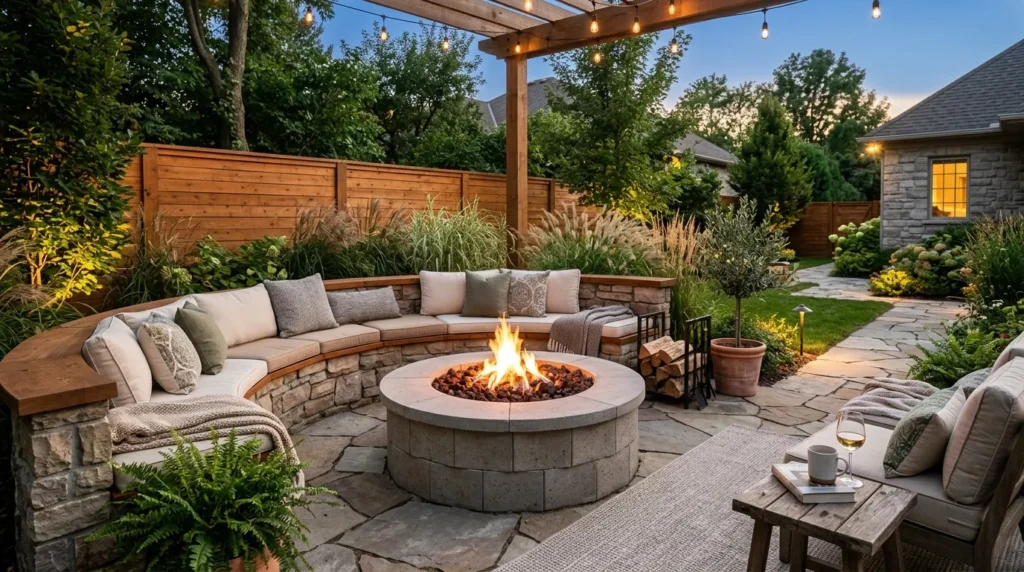
A built-in seating ring can make the area feel permanent and intentionally designed.
However, seating should never be positioned so close that people are exposed to excessive heat or sparks.
Safe clearances depend on the type of fire feature, fuel, construction, and local requirements.
How To Style It
Use appropriately designed outdoor seating around the fire zone.
Natural stone or masonry can create a substantial appearance.
Add weather-resistant cushions where appropriate.
Keep textiles away from the direct fire area.
A low wall or seating structure can also visually define the space without overwhelming the landscape.
Consider circulation carefully so people can enter and leave the seating area comfortably.
6. Raised Block Pit
Quick Benefits
- Creates a strong focal point
- Adds visual height
- Can define a large backyard
- Works with substantial landscaping
- Complements outdoor seating
Why It Works
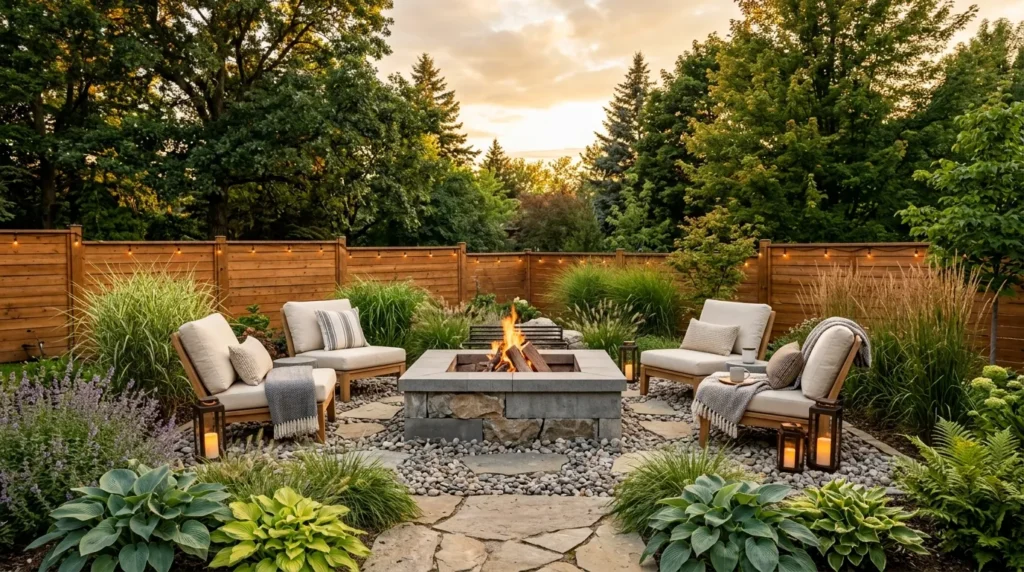
A raised fire-pit structure can give the feature more architectural presence.
Instead of blending into the landscape, it becomes a deliberate centerpiece.
This can work especially well in large backyards where a very low fire pit might feel visually insignificant.
The raised design should still follow safe construction principles.
Simply adding more rows of blocks doesn’t automatically make a fire pit safer or stronger.
How To Style It
Keep the surrounding landscape relatively low.
Low ornamental grasses, gravel, and ground-level planting can emphasize the height of the structure.
Use sturdy outdoor seating nearby.
Natural wood and dark metal can provide contrast against concrete.
If you want a polished appearance, repeat the same block or stone material elsewhere in the yard.
7. Minimalist Block Pit
Quick Benefits
- Simple appearance
- Easy to coordinate
- Works with modern landscaping
- Avoids visual clutter
- Creates a clean focal point
Why It Works
Sometimes the simplest design is the most attractive.
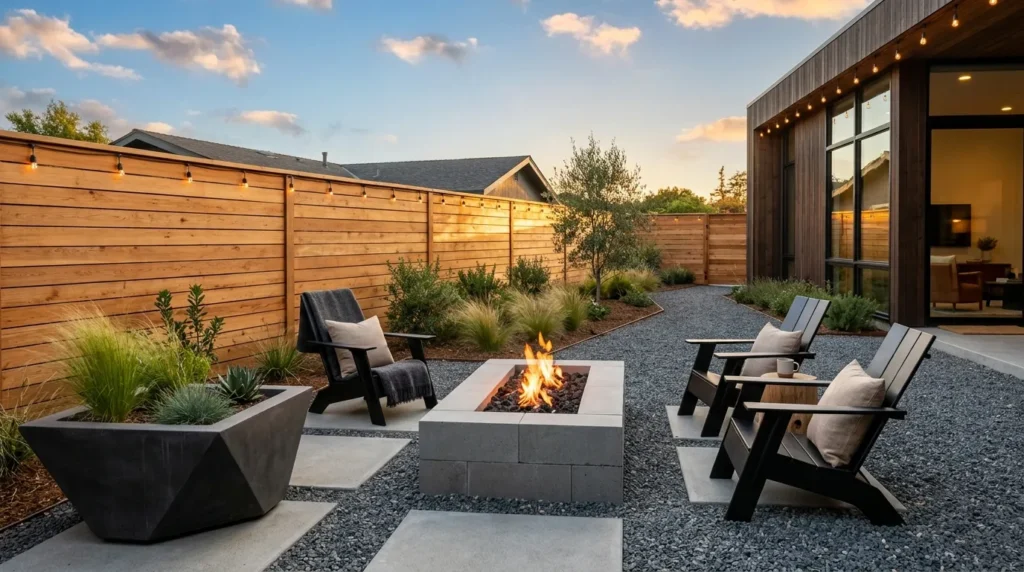
A minimalist fire pit can allow the surrounding landscape to become the main feature.
This works particularly well when your backyard already includes modern architecture, clean planting beds, and restrained materials.
The concrete blocks provide texture while the uncomplicated geometry keeps the overall look calm.
How To Style It
Use a simple neutral block finish.
Pair it with a gravel or paver base.
Choose outdoor furniture with straightforward silhouettes.
Avoid surrounding the fire pit with too many decorative objects.
A single large planter, a few comfortable chairs, and subtle lighting may be enough.
Repeat the same materials throughout the patio for cohesion.
8. Rustic Garden Pit
Quick Benefits
- Creates a relaxed atmosphere
- Complements natural landscaping
- Works with mature gardens
- Adds warmth
- Can feel casual and inviting
Why It Works
A rustic fire pit doesn’t need to look perfectly polished.
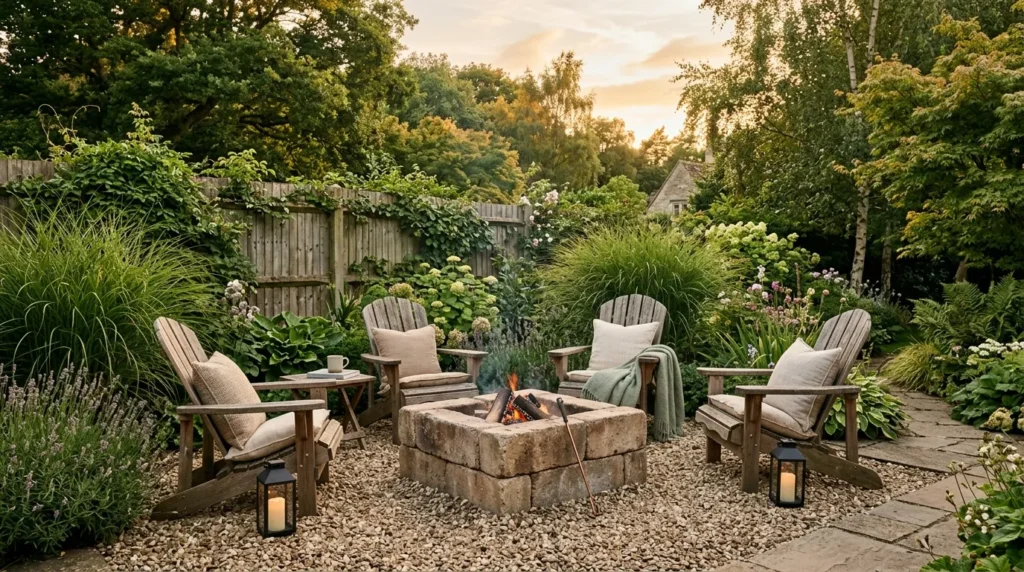
Natural textures, irregular planting, wood furniture, and weathered materials can create an outdoor space that feels comfortable and established.
Concrete blocks can serve as the structural element while surrounding materials soften their appearance.
The result can feel like a natural extension of a garden rather than a separate construction project.
How To Style It
Surround the fire-pit area with gravel, natural stone, and appropriate low-maintenance planting.
Use wooden chairs or benches with weather-resistant cushions.
Add a few large planters around the perimeter.
Avoid placing dry vegetation or combustible mulch directly next to the fire.
Keep plants far enough away from sparks and heat.
9. Patio Fire Pit Zone
Quick Benefits
- Extends an existing patio
- Creates separate activity zones
- Works for entertaining
- Connects indoor and outdoor spaces
- Makes the backyard more functional
Why It Works
If you already have a patio, you don’t necessarily need to build the fire pit in the center of it.
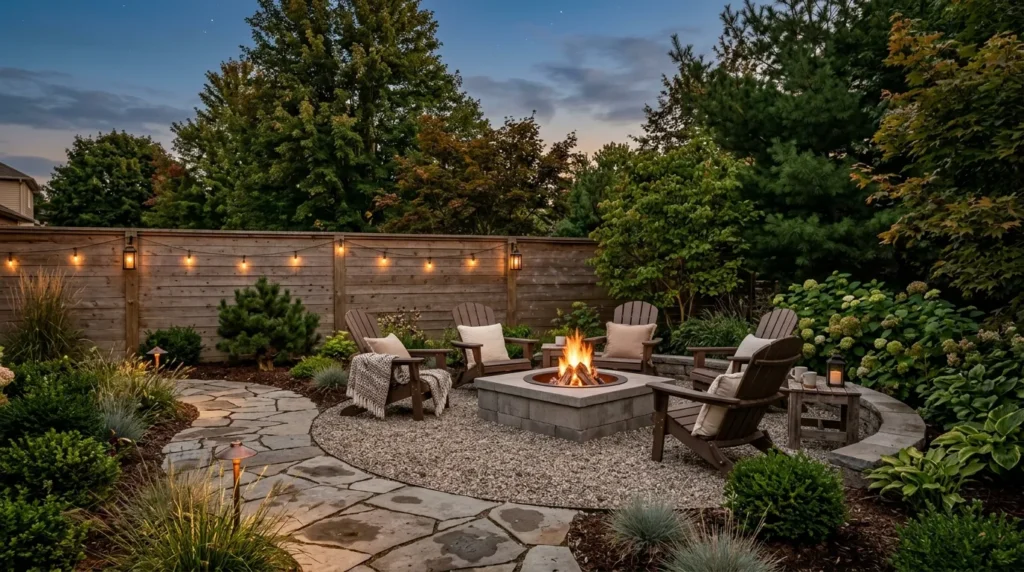
Creating a separate fire-pit zone nearby can divide the backyard into useful areas.
One area can be used for dining.
Another can be dedicated to lounging.
The fire pit becomes a destination rather than competing with the main seating area.
How To Style It
Use the same paving or gravel material to visually connect the fire-pit area with the patio.
A pathway can create an easy transition.
Repeat furniture colors between the two zones.
For example, cream cushions and black metal furniture can appear in both spaces.
Keep the fire pit far enough from structures, furniture, and combustible materials according to applicable safety requirements.
10. Layered Fire Pit Landscape
Quick Benefits
- Makes the fire pit feel integrated
- Adds planting interest
- Creates visual depth
- Improves backyard flow
- Supports multiple outdoor activities
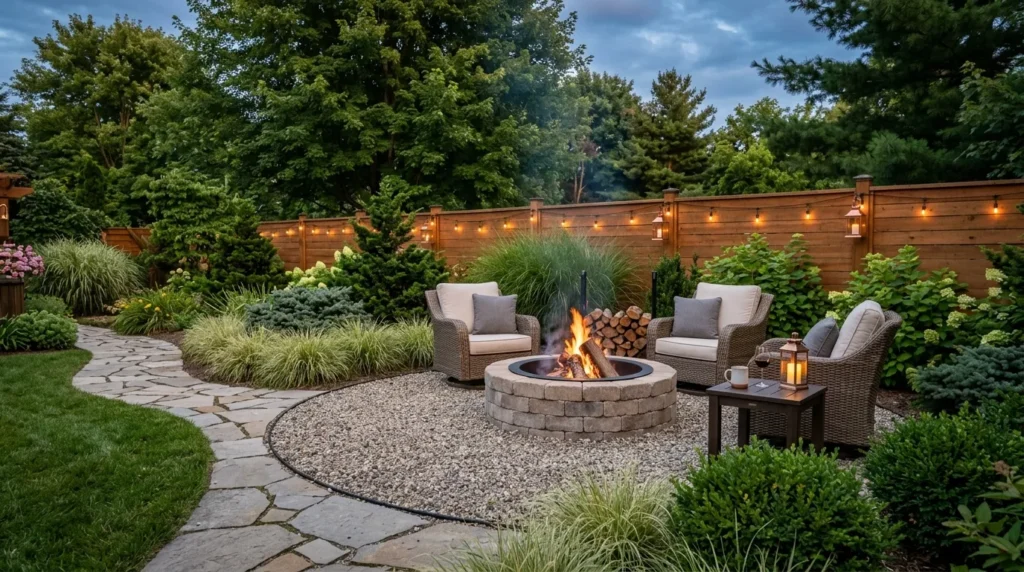
Why It Works
The best backyard fire-pit areas rarely exist in isolation.
They are surrounded by thoughtful landscape layers.
A path leads toward the seating area.
Plants frame the space.
A patio or lawn creates an open transition.
Lighting adds evening atmosphere.
These elements make the fire pit feel like part of the overall backyard rather than an object dropped into an empty yard.
How To Style It
Start with the fire pit as the focal point.
Then work outward.
Define the seating surface.
Add a pathway.
Place low-maintenance plants farther from the heat zone.
Use larger shrubs or trees to frame the broader space while maintaining appropriate clearances.
Finally, add comfortable seating and subtle outdoor lighting.
The result should feel balanced from every direction.
Choosing Concrete Blocks For A Fire Pit
This is one area where appearance should never be your only consideration.
Not every concrete block is intended for direct exposure to high temperatures.
Some products can crack, spall, or deteriorate when subjected to repeated heat.
For that reason, use a fire-ring insert or fire-pit system designed for the application and follow its installation instructions.
If a manufacturer specifies particular block types, liners, or clearances, follow those requirements rather than improvising.
When you’re uncertain about the construction method, consult a qualified local professional.
A beautiful fire pit isn’t worth compromising safety.
Choosing The Right Fire Pit Location
Before building anything, look at the entire backyard.
Think about:
- Distance from the house
- Nearby fences
- Trees and branches
- Decks
- Outdoor furniture
- Utility lines
- Drainage
- Wind direction
- Children’s play areas
- Pet access
- Local fire restrictions
Your city, county, fire department, HOA, or property rules may have specific requirements for outdoor fires.
Check those rules before purchasing materials.
The ideal location should provide enough open space for comfortable circulation while keeping the fire safely separated from structures and combustible materials.
How To Make A Concrete Fire Pit Look Expensive
The structure itself doesn’t have to carry the entire design.
The surrounding landscape makes a huge difference.
Use high-quality gravel or pavers.
Choose comfortable outdoor seating.
Repeat materials from the patio or garden.
Add low-maintenance plants at a safe distance.
Use subtle lighting around the seating zone.
A simple concrete-block structure can look surprisingly polished when the surrounding space is thoughtfully designed.
The biggest mistake is often overdecorating.
Give the fire pit room to breathe.
Fire Pit Safety Basics
Before using any DIY fire pit, confirm that the design and materials are appropriate for the intended fuel and temperature.
Keep the area clear of dry leaves, branches, fabrics, and other combustible materials.
Never leave an active fire unattended.
Have an appropriate way to extinguish the fire readily available.
Watch changing weather and wind conditions.
If children or pets use the backyard, consider how they will interact with the fire-pit area.
And always follow local regulations and the instructions for your fire-ring or fire feature.
These aren’t optional finishing details. They should be part of the design from the beginning.
FAQ
Are concrete blocks safe for a DIY fire pit?
Not every concrete block is suitable for direct exposure to high heat. Use materials and fire-ring systems specifically appropriate for fire-pit construction, and follow the manufacturer’s instructions. If you’re uncertain about the materials or construction method, consult a qualified professional.
What should I put around a concrete-block fire pit?
Common landscape materials include gravel, suitable pavers, natural stone, and other appropriate noncombustible surfaces. Keep combustible materials, dry vegetation, and outdoor textiles at safe distances from the fire.
Does a fire pit need a fire ring?
Many DIY designs use a metal fire ring or purpose-built insert to help contain the fire and protect the surrounding structure. Whether one is required depends on the design, fuel type, manufacturer guidance, and local requirements.
How far should a fire pit be from a house?
Required clearances vary by location and fire-pit type. Always check local fire regulations and the manufacturer’s installation requirements rather than relying on a universal distance.
Can I build a fire pit on grass?
A fire pit should not simply be placed directly on grass without considering heat, sparks, drainage, and the stability of the surface. A properly prepared noncombustible area is generally more appropriate.
How can I make a DIY fire pit look modern?
Use clean-lined blocks, a simple geometric shape, neutral gravel or large-format pavers, minimalist outdoor furniture, and restrained landscaping. Repeating black metal, concrete, natural wood, and greenery can create a sophisticated contemporary appearance.
How do I create seating around a fire pit?
Arrange chairs, benches, or other appropriate outdoor seating around the fire zone while maintaining the clearances required by your fire feature and local rules. Leave comfortable pathways between seats so people can move safely.
Conclusion
A concrete-block fire pit can become a beautiful backyard focal point without requiring an elaborate landscape renovation.
The key is to think beyond the fire pit itself.
Start with a safe location.
Choose materials appropriate for high-heat use.
Follow local regulations and manufacturer instructions.
Then design the surrounding space so the fire feature feels connected to the rest of your backyard.
A gravel base can create a relaxed gathering zone. Pavers can produce a polished modern look. Natural stone can soften the structure. Comfortable seating can turn it into an outdoor living room, while carefully selected landscaping can make the entire area feel established and intentional.
You also don’t have to build the most complicated design.
A simple round structure with attractive seating may be all you need.
If you want something more contemporary, a square arrangement can complement modern architecture. For a rustic garden, natural textures and mature greenery can soften the concrete.
Whatever style you choose, prioritize safety before aesthetics.
Check local requirements, use appropriate materials, keep combustible items away from the fire, and never leave an active fire unattended.
Once those details are handled, you can focus on the fun part: creating a backyard gathering space where people naturally want to linger.
Related Articles
- 10 DIY Garden Projects for a Beautiful Backyard
- 10 Garden Decor Ideas with Outdoor Lanterns
- 10 Garden Decor Ideas That Transform Any Backyard
- 10 Backyard Landscape Design Ideas with Beautiful Garden Paths
- 10 Small Living Room Ideas That Feel Warm All Year