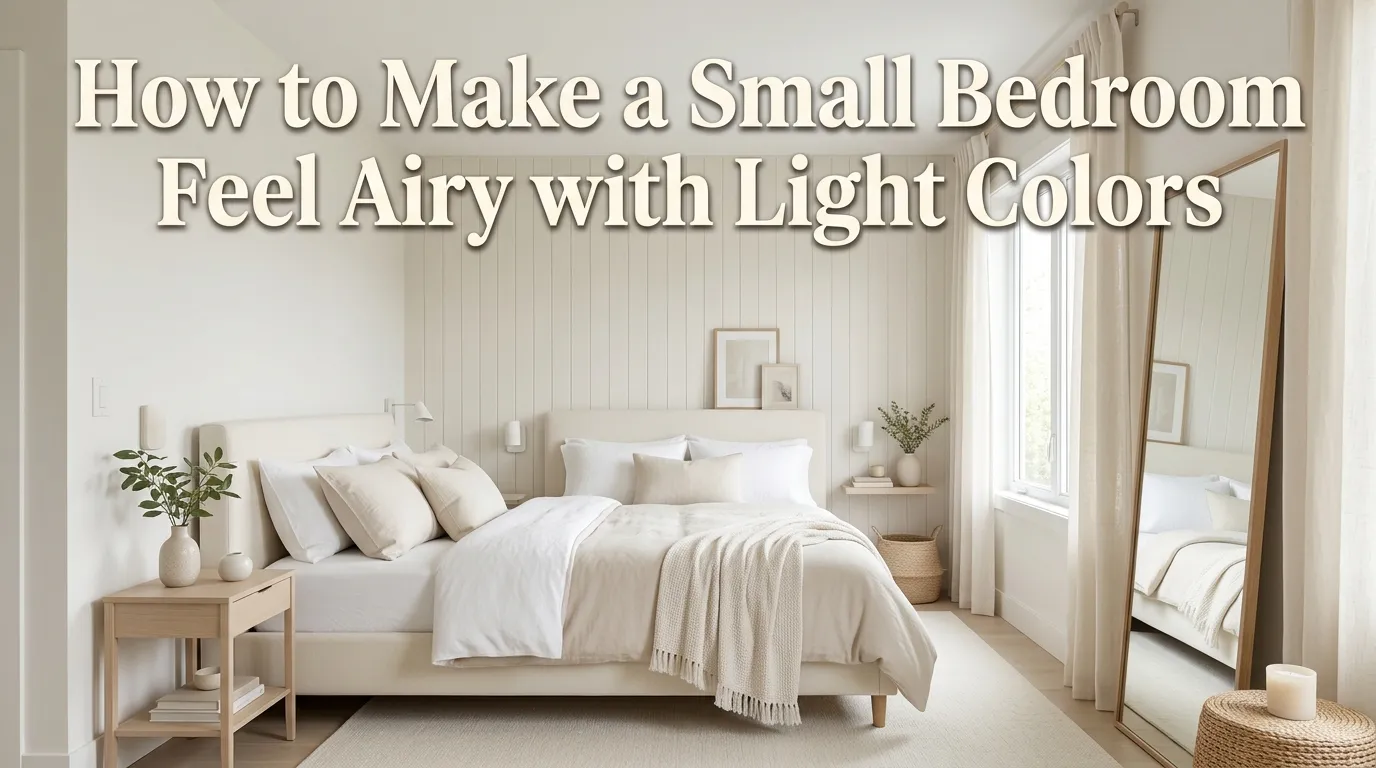
How to Make a Small Bedroom Feel Airy with Light Colors
A small bedroom can feel surprisingly spacious when you use color strategically.
You don’t need to knock down walls or replace all your furniture to create a lighter, airier atmosphere. The right combination of pale colors, reflective surfaces, soft textures, and uncluttered styling can make a compact bedroom feel calmer and more open.
Light colors work because they reflect more available light and create visual continuity. When the walls, bedding, curtains, and larger furnishings stay within a related color family, the eye moves more easily around the room instead of stopping at strong contrasts.
But an airy bedroom shouldn’t feel completely white or sterile.
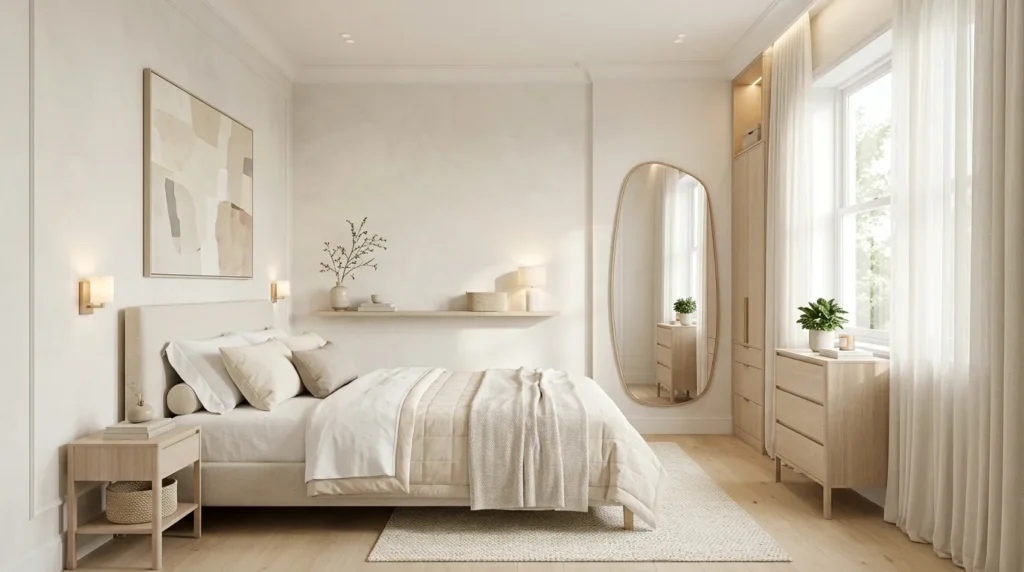
In my experience, the most inviting small bedrooms use layers of warm whites, cream, beige, pale taupe, soft gray, and subtle natural wood. Texture keeps the palette interesting while maintaining the sense of openness.
The furniture scale also matters. Even a light-colored room can feel cramped if the bed, dresser, or nightstand overwhelms the available floor space.
The following ideas focus on simple ways to make a small bedroom feel brighter, calmer, and visually larger using light colors and thoughtful styling.
Table of Contents
- Use Warm White Walls
- Layer Cream Bedding
- Choose Light Wood
- Hang Pale Curtains
- Keep the Ceiling Light
- Add a Soft Neutral Rug
- Use Light-Colored Furniture
- Introduce Subtle Mirrors
- Reduce Dark Contrast
- Keep the Palette Consistent
1. Use Warm White Walls
Quick Benefits
- Reflects natural light
- Creates visual openness
- Works with many styles
- Makes furniture easier to coordinate
- Creates a calm foundation
Why It Works
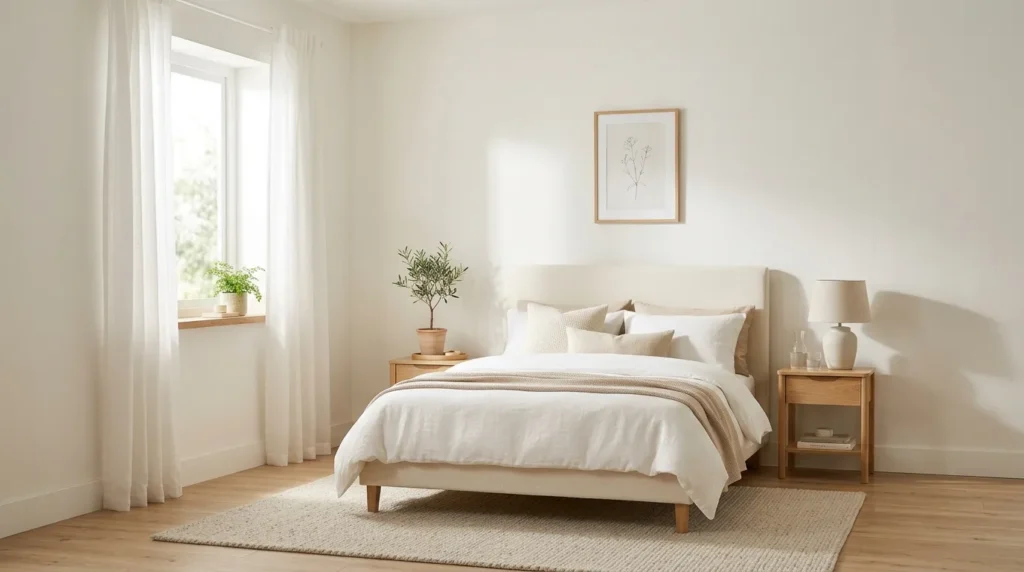
Wall color has a major influence on how large a small bedroom feels.
Warm white can reflect natural light while avoiding the stark appearance that some cooler whites can create.
A continuous light wall color also helps the room feel less visually divided.
How To Style It
Choose a soft warm white rather than an extremely bright blue-white if you want a cozy atmosphere.
Carry the color across the major walls.
Use artwork sparingly.
Let furniture and textiles provide subtle contrast.
2. Layer Cream Bedding
Quick Benefits
- Makes the bed feel inviting
- Creates softness
- Keeps the room bright
- Adds texture
- Works with many accent colors
Why It Works
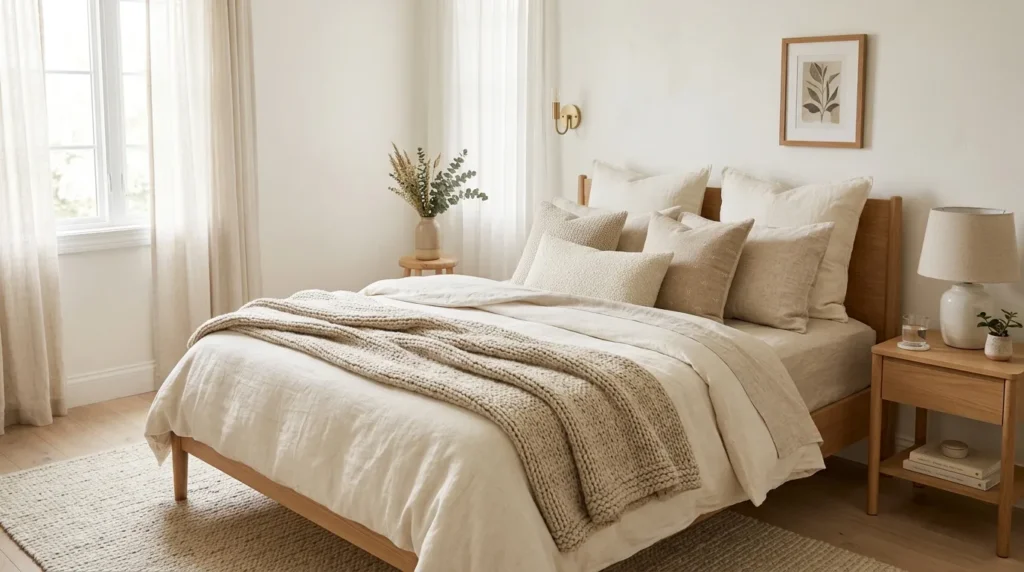
The bed is usually the largest visual element in a bedroom.
Using light bedding keeps that large surface from becoming a heavy visual block.
Layering different cream and ivory textures adds depth without introducing strong contrast.
How To Style It
Start with cream or ivory sheets.
Add a slightly warmer duvet or quilt.
Use pillows in subtle shades such as oatmeal, beige, and soft taupe.
Finish with a textured throw folded loosely at the end.
3. Choose Light Wood
Quick Benefits
- Adds warmth
- Prevents a sterile appearance
- Works with pale colors
- Feels natural
- Creates subtle contrast
Why It Works
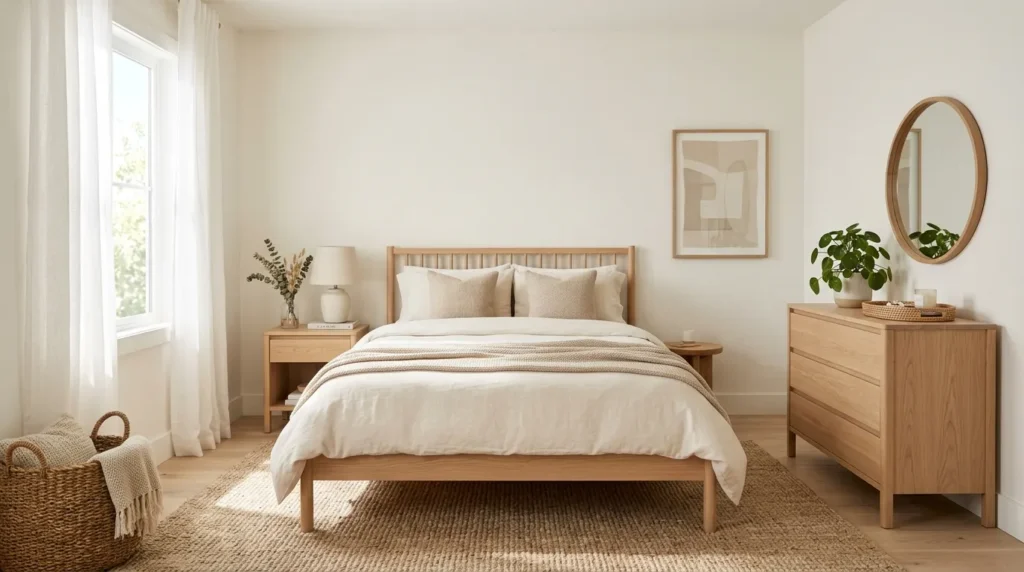
A completely pale room can sometimes feel flat.
Light oak, maple, ash, or similar wood tones introduce warmth without creating the visual heaviness associated with very dark furniture.
How To Style It
Use light wood for nightstands, a bed frame, shelves, or a dresser.
Repeat the same or similar wood tone around the room.
Keep darker wood accents limited if your goal is maximum visual openness.
4. Hang Pale Curtains
Quick Benefits
- Softens windows
- Allows light to spread
- Adds height
- Creates texture
- Keeps the palette airy
Why It Works
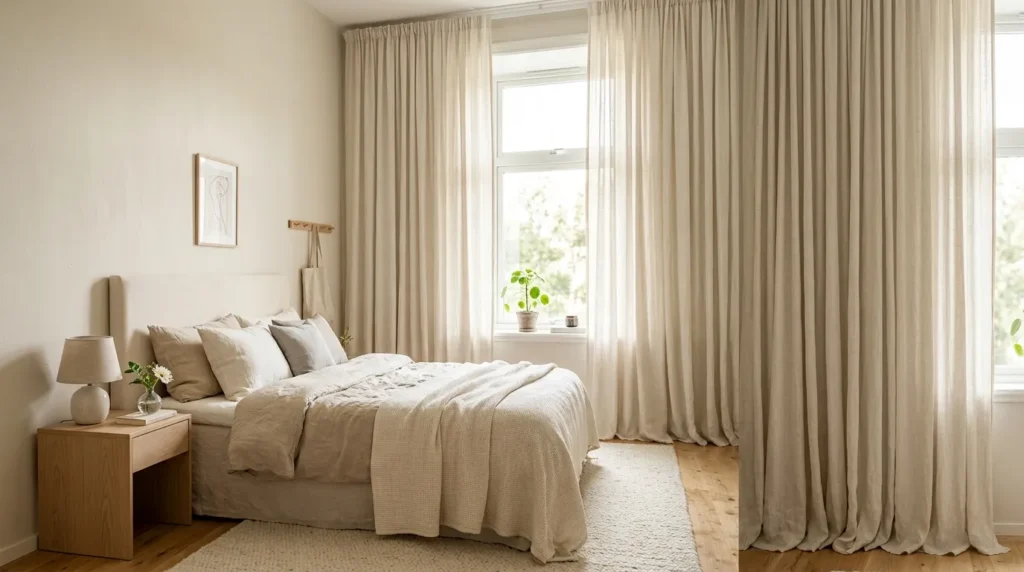
Window treatments can either visually expand or shrink a small room.
Heavy dark curtains can create a strong vertical block.
Light, flowing curtains allow the window area to remain bright and visually soft.
How To Style It
Choose cream, ivory, linen, or another light neutral.
When appropriate, mount the curtain rod higher and wider than the window to create the appearance of a larger opening.
Let the fabric fall naturally toward the floor.
5. Keep the Ceiling Light
Quick Benefits
- Creates visual height
- Reflects light
- Keeps the room open
- Connects with pale walls
- Makes dark furniture less dominant
Why It Works
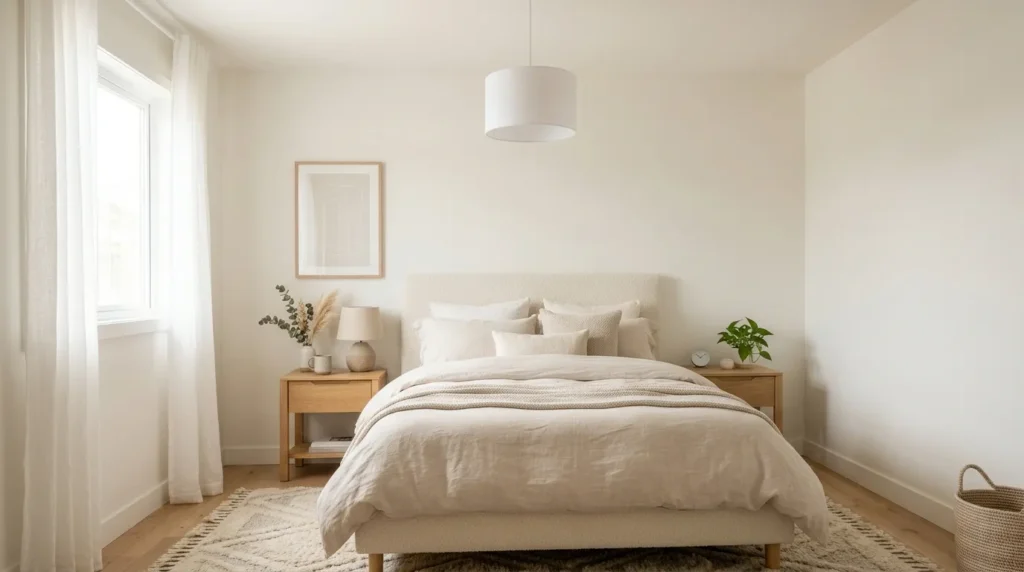
The ceiling is often forgotten when decorating a small bedroom.
A light ceiling creates continuity with the walls and prevents the room from feeling visually compressed from above.
How To Style It
A soft white ceiling usually works well with warm white walls.
Avoid introducing a strong contrasting ceiling color if your goal is maximum openness.
Use a simple light fixture that doesn’t visually overwhelm the room.
6. Add a Soft Neutral Rug
Quick Benefits
- Adds warmth
- Defines the bed area
- Softens the floor
- Creates texture
- Maintains visual continuity
Why It Works
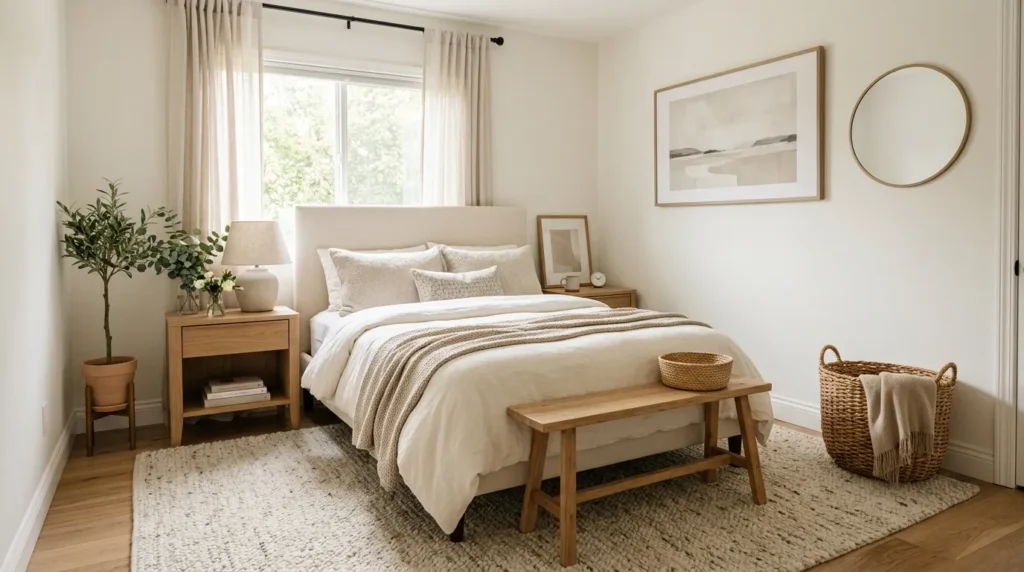
A pale rug can help connect the bed and surrounding furniture into one cohesive composition.
Texture adds interest without requiring bold colors.
How To Style It
Choose cream, oatmeal, beige, or soft gray.
Position the rug so that it visually anchors the bed.
Avoid choosing a pattern with very high contrast.
A subtle texture can be more effective in a small room.
7. Use Light-Colored Furniture
Quick Benefits
- Reduces visual weight
- Keeps the room brighter
- Creates continuity
- Makes small furniture feel lighter
- Works with neutral bedding
Why It Works
Large dark furniture pieces can visually dominate a compact bedroom.
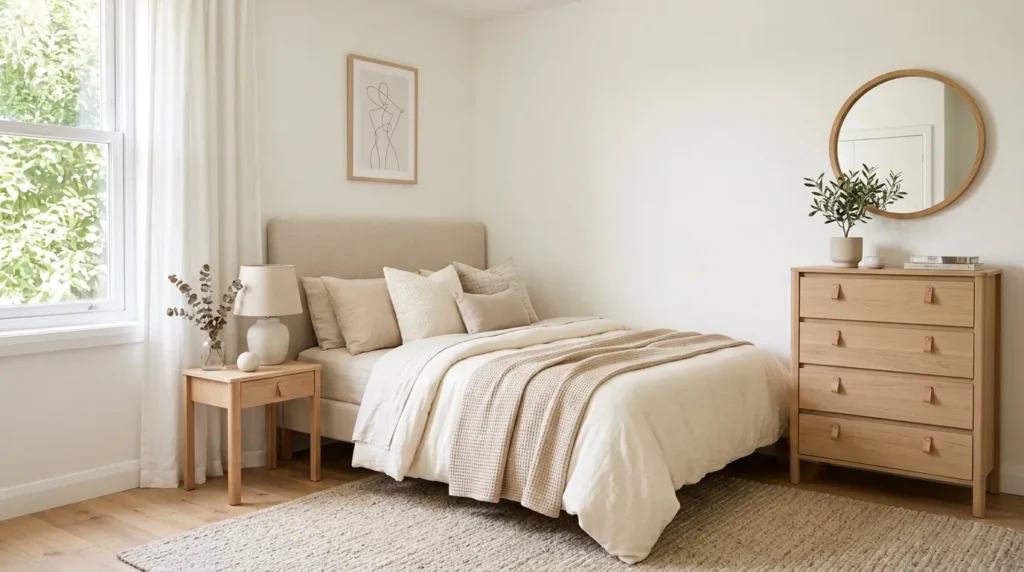
Light-colored furniture blends more easily into the surrounding palette.
How To Style It
Choose white, cream, pale beige, light oak, or soft natural wood.
Prioritize furniture with simple silhouettes.
If you already own darker furniture, balance it with light bedding, pale walls, and lighter accessories rather than replacing everything.
8. Introduce Subtle Mirrors
Quick Benefits
- Reflects light
- Adds depth
- Can visually expand the room
- Provides useful functionality
- Works with many styles
Why It Works
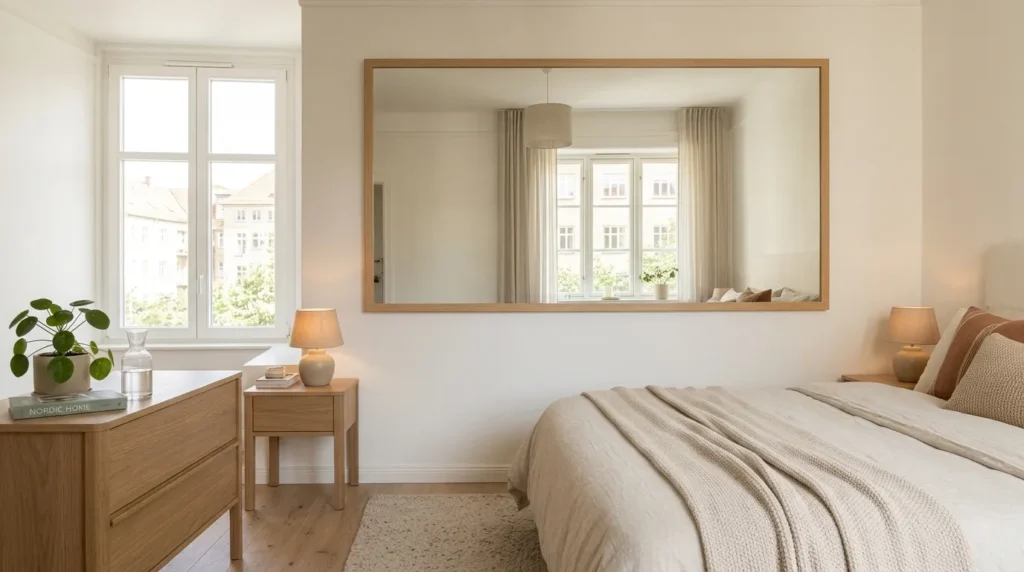
A well-placed mirror can reflect natural or artificial light and create the impression of another visual opening.
The key is placement.
How To Style It
Position a mirror where it can reflect light or a pleasant part of the room.
Avoid placing it where it reflects a cluttered corner.
Choose a simple frame that complements the room.
For safety, make sure larger mirrors are properly secured.
9. Reduce Dark Contrast
Quick Benefits
- Creates visual continuity
- Makes the room feel softer
- Prevents furniture from dominating
- Supports an airy palette
- Simplifies styling
Why It Works
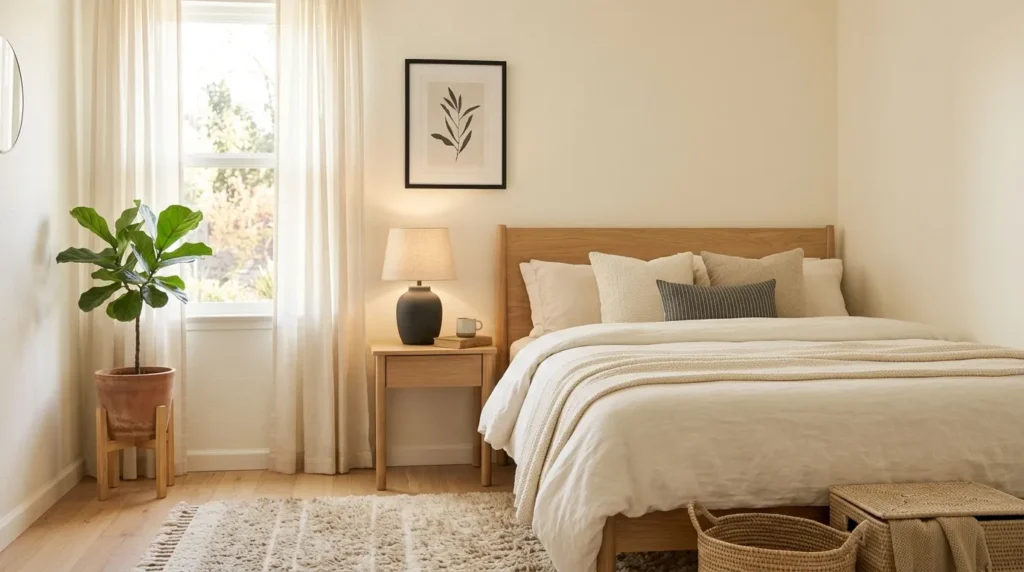
Strong black, dark brown, or deep navy elements can create visual stopping points.
They aren’t forbidden in a small bedroom, but using too many can work against an airy feeling.
How To Style It
Keep major surfaces light.
If you love dark accents, use them selectively through a lamp, frame, hardware, or small decorative element.
This creates definition without overwhelming the room.
10. Keep the Palette Consistent
Quick Benefits
- Makes the room feel larger
- Creates cohesion
- Reduces visual noise
- Makes decorating easier
- Creates a polished appearance
Why It Works
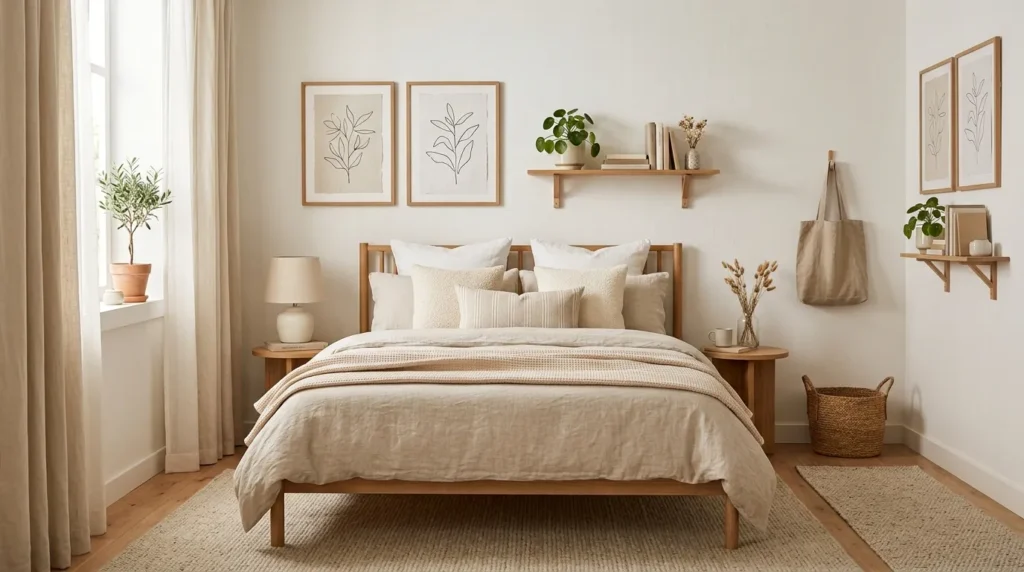
Color continuity is one of the simplest ways to make a compact room feel visually connected.
Instead of introducing a new color in every corner, repeat a small family of related shades.
How To Style It
Try a palette such as:
Warm white + cream + oatmeal + light wood
or
Ivory + pale beige + soft gray + natural oak
Keep accents subtle.
Repeat your chosen colors across bedding, curtains, rugs, artwork, and accessories.
How To Make a Small Bedroom Feel Bigger Without Renovating
Color is only part of the equation.
Use appropriately scaled furniture.
Keep pathways open.
Reduce unnecessary belongings.
Hang curtains to emphasize height.
Use lighting at different levels.
Avoid covering every wall with decor.
And keep the floor as visible as possible.
The goal isn’t to trick the eye with one decorating trick.
It’s to create several small visual improvements that work together.
Best Light Colors for Small Bedrooms
Warm White
Clean but inviting.
Cream
Soft and comfortable.
Pale Beige
Adds warmth without heaviness.
Oatmeal
Works beautifully with natural materials.
Soft Gray
Creates a cooler, more modern feeling.
Pale Sage
Adds color while remaining gentle.
Light Taupe
Adds sophistication without strong contrast.
Common Mistakes
Using Only Stark White
An entirely bright white room can feel cold if it lacks texture.
Too Many Accent Colors
Strong color changes can visually divide the room.
Oversized Furniture
Light colors cannot compensate for furniture that is too large.
Heavy Window Treatments
Dark or bulky curtains can make windows feel smaller.
Covering Every Surface
A small bedroom benefits from visual breathing room.
FAQ
What colors make a small bedroom look bigger?
Warm white, cream, pale beige, soft gray, oatmeal, and other light neutral shades can help create a brighter and more visually open bedroom.
Should a small bedroom be all white?
Not necessarily. Combining warm whites with cream, beige, pale wood, and soft textures often creates more depth while preserving an airy feeling.
Does light-colored furniture make a bedroom look bigger?
It can reduce visual weight and help furniture blend into the room, especially when paired with light walls and bedding.
Do mirrors make a small bedroom look bigger?
A strategically placed mirror can reflect light and create additional visual depth. Placement matters more than simply adding more mirrors.
What color bedding is best for a small bedroom?
Cream, ivory, white, oatmeal, and other light neutrals work particularly well when the goal is a bright, cohesive appearance.
Should small bedrooms have rugs?
A properly sized light neutral rug can add warmth and texture while visually connecting the bed and surrounding furniture.
How do I make a small bedroom feel less cramped?
Declutter, keep pathways clear, use appropriately scaled furniture, maximize natural light, choose lighter colors, and avoid excessive visual contrast.
Conclusion
Making a small bedroom feel airy doesn’t require a major renovation.
Start with light walls.
Choose cream or ivory bedding.
Add pale curtains.
Bring in light wood.
Use a soft neutral rug.
Introduce mirrors thoughtfully.
Then keep your overall palette consistent.
The most important idea is visual continuity.
When the walls, bedding, curtains, furniture, and accessories work within the same light color family, the room feels calmer and less fragmented.
Add texture rather than excessive color.
Keep the floor visible.
Let natural light move through the room.
And don’t be afraid to leave some spaces intentionally empty.
A small bedroom can feel bright, comfortable, and beautifully spacious when every element works together instead of competing for attention.