Picture Frame Casing vs Traditional Stool and Apron: Which Looks More Modern?
Choosing between picture frame casing vs traditional stool and apron styles is a defining moment in any home renovation project. While the former offers a sleek, flush aesthetic that aligns perfectly with contemporary interior design, the latter provides a classic, grounded feel rooted in architectural history. Understanding the visual impact of these two window trim methods helps homeowners decide which fits their vision for a room.
By examining the structural differences and design philosophies of each approach, you will be able to select the finish that best complements your space. This analysis breaks down the technical and stylistic nuances to ensure your choice meets your aesthetic goals.
The Modern Appeal of Picture Frame Casing
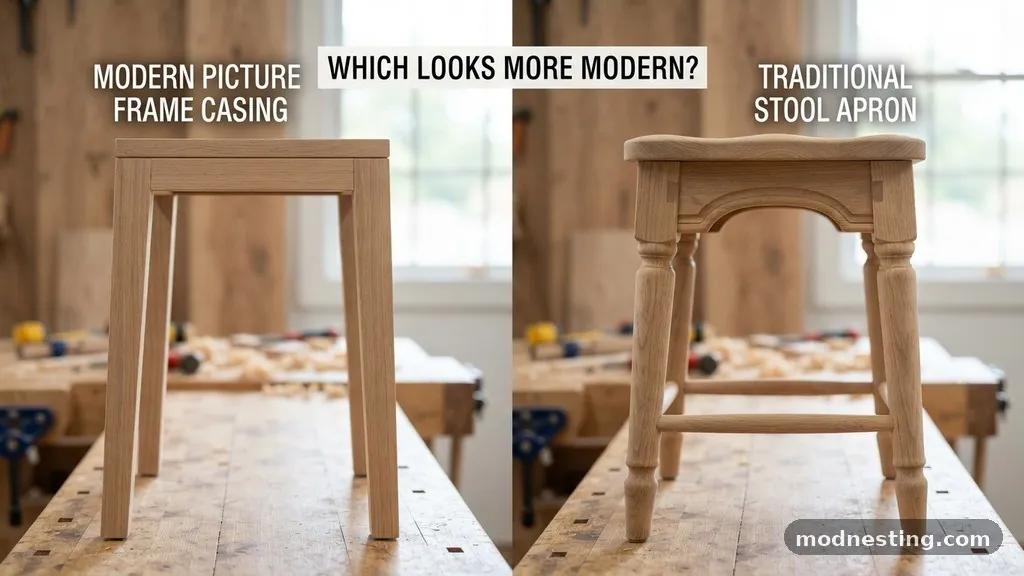
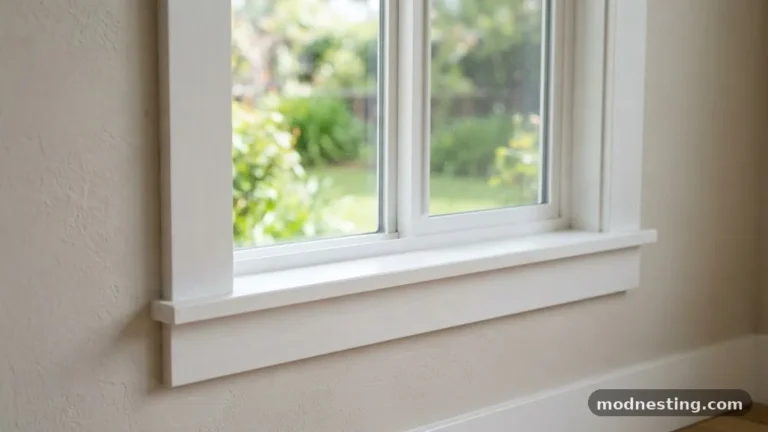
Picture frame casing is widely regarded as the more modern option for residential window finishing. Its defining characteristic is the use of the same profile on all four sides of the window opening.
This creates a uniform, clean border that resembles a picture frame, hence the name. Because there is no protruding sill or apron, the trim sits flush against the wall and the window frame.
This style minimizes visual clutter, which is a hallmark of minimalist and modern design. By eliminating the horizontal ledge at the bottom of the window, the wall plane remains uninterrupted.
This creates a subtle, streamlined look that draws the eye toward the view outside rather than the window frame itself. It is particularly effective in small rooms where reducing architectural complexity makes the space feel larger.
Many designers prefer this method for contemporary homes because it avoids the “stepped” look of traditional trim. It integrates well with drywall returns or modern, flat-casing profiles.
When painted the same color as the surrounding wall, the casing can almost disappear, allowing furniture or art to take center stage. This lack of shadow lines contributes to the overall sense of clean, architectural precision.
Anatomy of the Traditional Stool and Apron
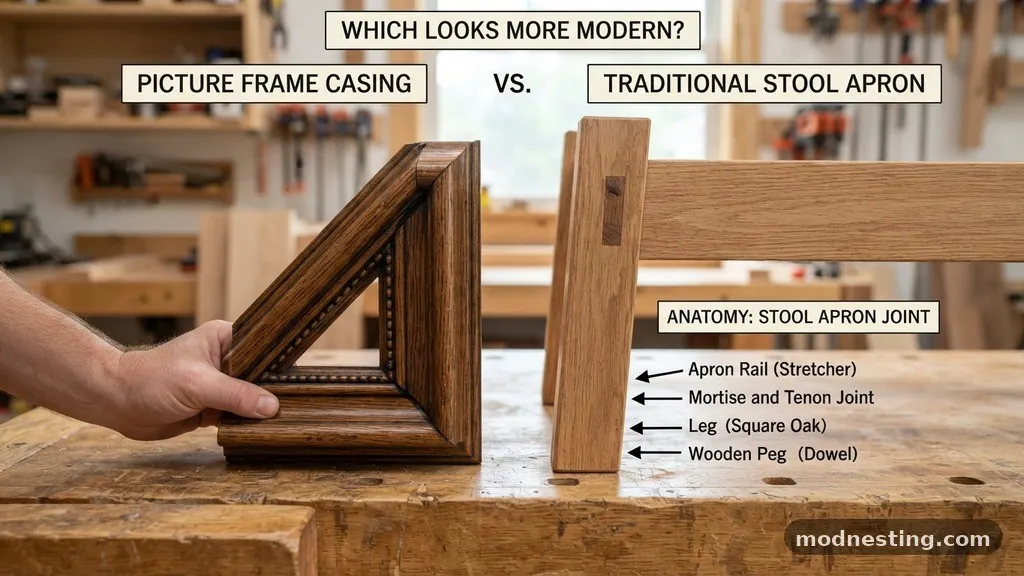
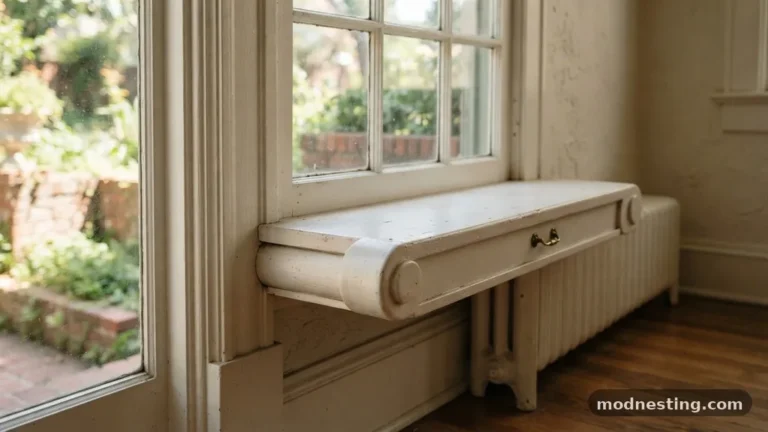
The stool-and-apron style is the quintessential look for colonial, craftsman, and farmhouse-style homes. Unlike the picture frame, this design features a horizontal shelf—the stool—that extends from the bottom of the window frame into the room.
Below this shelf sits the apron, a piece of trim that bridges the gap between the bottom of the stool and the wall. This assembly creates a distinct, three-dimensional profile.
Historically, the stool served a functional purpose, providing a small ledge for plants, candles, or decorative objects. It adds a sense of weight and substance to the window area, grounding the verticality of the glass.
The apron acts as a visual support, making the transition from the window to the wall feel intentional and substantial. This design relies on the interplay of light and shadow created by the projecting sill.
Because of its deep roots in traditional architecture, this style often feels warmer and more “finished” in period-appropriate homes. It provides a tactile element that many homeowners find comforting.
While it is certainly not the “modern” choice in a minimalist sense, it remains a timeless classic. It offers a level of architectural detail that can make a room feel more established and lived-in.
Visual Comparison of Modern vs Traditional Profiles
When comparing these two styles, the primary difference lies in the shadow lines and the silhouette against the wall. A picture frame profile is essentially two-dimensional in its impact, keeping everything within the plane of the casing. In contrast, the stool-and-apron assembly is three-dimensional, creating a ledge that catches light differently throughout the day.
| Feature | Picture Frame | Stool and Apron |
|---|---|---|
| Visual Style | Minimalist, Modern | Classic, Traditional |
| Profile Depth | Flush with wall | Protruding sill |
| Complexity | Lower, uniform | Higher, multi-part |
| Maintenance | Easier to clean | Requires dusting of ledge |
The table above highlights that the choice between these two styles depends heavily on your desired maintenance level and architectural intent. Picture frame casing is inherently easier to clean because there are no horizontal surfaces to collect dust.
The stool-and-apron style, while beautiful, requires more attention to keep the ledge clean. For many, this is a minor trade-off for the added character a stool provides.
Structural Requirements for Installation
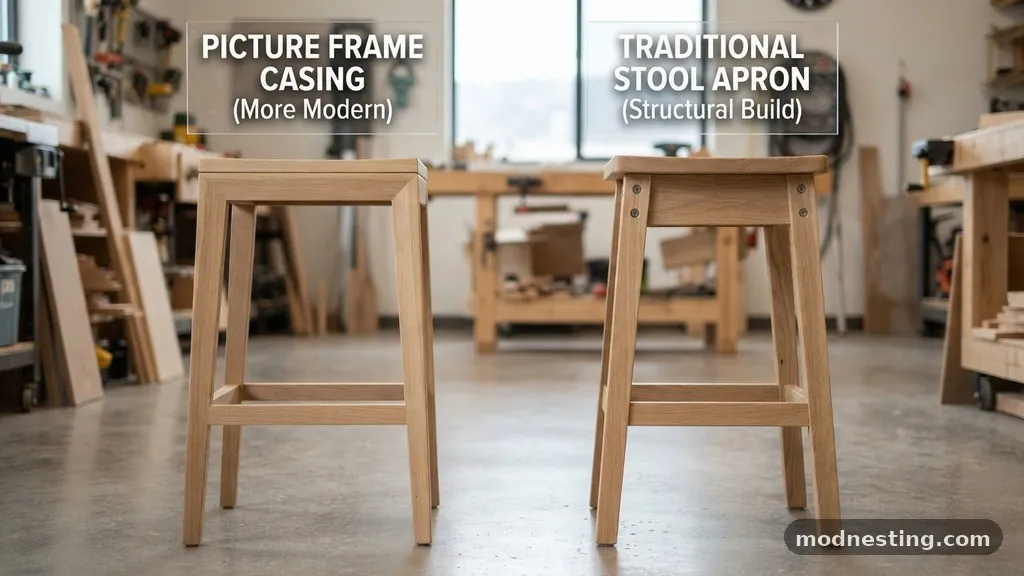
Installing picture frame casing requires a high degree of precision, especially at the corners. Because you are using the same profile on all four sides, every miter cut must be perfect to ensure the joints align seamlessly.
If the window frame is slightly out of square, a picture frame design will highlight that flaw immediately. This style demands a flat, stable surface for the casing to sit against, often requiring careful shimming during installation.
The stool-and-apron method is often more forgiving of minor wall irregularities. The stool itself acts as a bridge, hiding potential gaps between the window frame and the wall below.
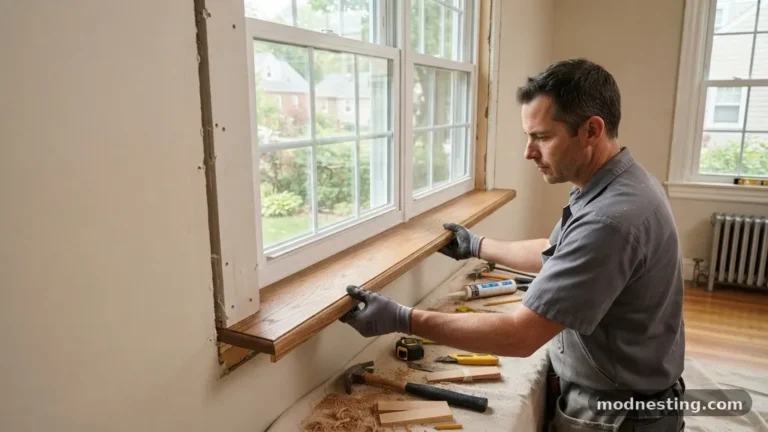
Because the side casings sit on top of the stool, you have more flexibility in adjusting the fit. However, cutting the stool to fit around the side casings or wall returns requires careful measuring and specialized tools like a coping saw.
Both methods benefit from modern adhesives and high-quality fasteners to prevent movement over time. Because houses shift with seasonal temperature changes, using a flexible, paintable caulk is essential for either style.
This ensures that the joint between the trim and the wall does not crack or separate as the wood expands and contracts. Proper installation is the difference between a professional finish and a DIY headache.
Impact on Room Aesthetics
Your choice of trim can fundamentally alter how a room is perceived. In an open-concept living area, picture frame casing helps maintain a cohesive, airy feeling.
It allows the architecture to recede, which is ideal if you have large windows with a significant view. It prevents the windows from feeling like “black holes” on the wall, instead framing the outside environment with a light touch.
On the other hand, the stool-and-apron style adds a layer of “furniture-like” detail. It can make a room feel cozier and more intimate, which is often desired in bedrooms or dens.
The ledge creates a natural place for decor, such as a row of succulents or a small collection of books. This adds a layer of utility that the picture frame style cannot provide.
Consider the other trim in your house, such as baseboards and crown molding. If you have thick, ornate baseboards, a thin, minimalist picture frame casing might look out of place.
Conversely, if your home has no other trim or very simple baseboards, a heavy stool-and-apron assembly might feel disjointed. Consistency is key to a polished interior design scheme.
Material Considerations for Different Finishes
The material you choose for your window trim affects both the final look and the cost of the project. Medium-density fiberboard (MDF) is a popular choice for painted trim because it is stable and cost-effective.
However, it is not ideal for high-moisture areas like bathrooms where wood might be a better choice. For stained wood finishes, pine, oak, or poplar are common, offering distinct grain patterns that add warmth.
When choosing between picture frame casing vs traditional stool and apron, think about how the material will be finished. A white-painted picture frame trim looks very crisp and modern, especially with a matte or satin finish.
A stained oak stool with a matching apron, however, emphasizes the craftsmanship and natural beauty of the wood. This can be a significant visual statement in a home with wood floors or beams.
You can learn more about maintaining historic wooden window elements from the National Park Service. Their resources explain how different materials respond to environmental conditions over time.
Even if you are building a new home, understanding these material properties helps in selecting trim that will last for decades. Regardless of the style, high-quality wood or engineered products will always yield better results than low-grade plastic or vinyl alternatives.
Managing Gaps and Transitions
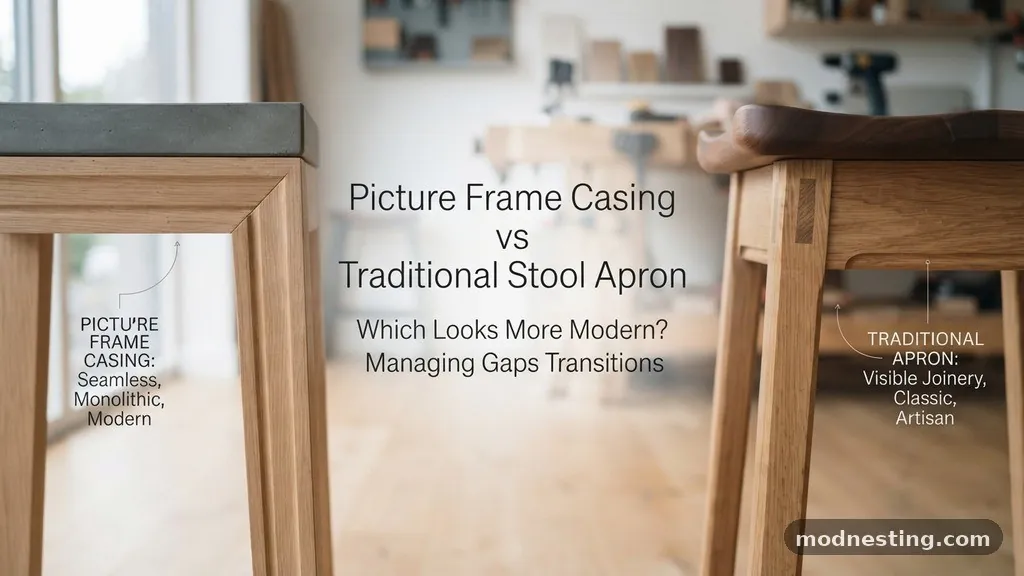
One of the most difficult aspects of window trim installation is managing the transition between the trim and the wall. In older homes, walls are rarely perfectly plumb or flat.
When installing picture frame casing, you must account for these variations by using wider casing or by carefully scribing the trim to the wall. This ensures there are no unsightly gaps that require excessive amounts of caulk.
The stool-and-apron approach offers a different set of challenges. The stool must be cut to fit the specific depth of the window jamb, which often varies from one window to the next.
If the stool is too short, you are left with an awkward gap between the casing and the end of the sill. If it is too long, it can interfere with adjacent wall features or furniture placement.
Always measure each window individually rather than assuming they are all identical. Even in new construction, framing tolerances can lead to small differences in opening sizes.
Taking the time to custom-fit each piece ensures that the final result is tight and professional. This attention to detail is what separates a high-end look from a generic, builder-grade installation.
Budget and Time Requirements
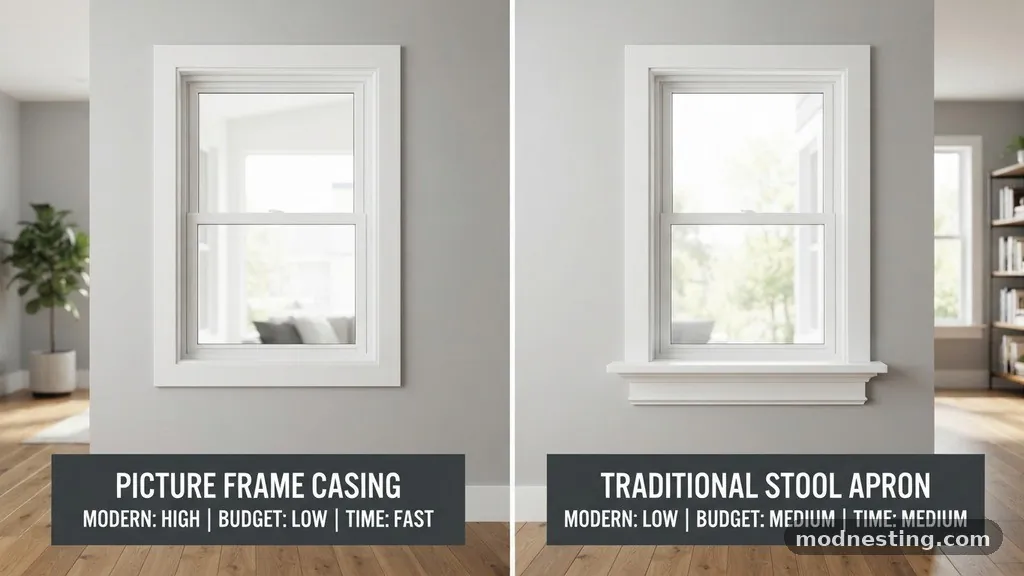
The cost difference between these two styles is primarily driven by labor and materials. Picture frame casing is generally faster to install, as it involves four straight or mitered cuts per window.
It requires less lumber since there is no stool or apron assembly to construct. For a project with many windows, this can result in significant savings on both time and material costs.
Stool-and-apron trim is more labor-intensive. It requires the installation of the stool, the apron, and then the side and top casings.
This multi-step process means more time spent measuring, cutting, and fitting each component. You are also purchasing more trim material, which adds to the total cost.
If you are hiring a professional carpenter, expect to pay more for the labor associated with the stool-and-apron style. However, the value added to a traditional home by this more detailed trim can be significant.
If you are aiming for a resale value that aligns with classic, high-end design, the extra investment might be worth it. For a modern, budget-conscious renovation, the picture frame approach is usually the better financial choice.
Common Mistakes to Avoid
A frequent error is choosing a casing width that is out of proportion to the window size. A very thin, modern casing on a large, prominent window can look cheap and unfinished.
Conversely, a bulky, traditional stool-and-apron assembly can overwhelm a small, narrow window. Always test a piece of trim against the window before committing to a specific width.
Another mistake is failing to account for the thickness of the window jamb. If your casing is too thick, it may interfere with the operation of the window, especially if there is a handle or latch that protrudes into the room.
Always check the clearance needed for window hardware before finalizing your trim choice. This is particularly important for casement windows that swing inward.
Do not overlook the importance of finish quality. Rough, unpainted edges or visible nail holes can ruin the look of even the most expensive trim.
Always fill nail holes, sand the surface, and apply at least two coats of high-quality paint or stain. A well-executed finish makes even a simple picture frame casing look like a deliberate, high-design choice.
Frequently Asked Questions
Is picture frame casing cheaper than stool and apron?
In most cases, yes. Picture frame casing requires less material and less labor, as it does not involve the construction of a sill or an apron. This makes it a more cost-effective choice for large-scale renovations where budget is a primary concern.
Can I mix these styles in the same house?
While it is technically possible, it is generally discouraged. Mixing styles can make the house feel disjointed and lacking in a cohesive design language. It is usually best to choose one style and carry it throughout the entire home for a professional, uniform look.
Which style is better for a modern home?
Picture frame casing is almost always the preferred choice for modern homes. Its minimalist, flush profile aligns perfectly with modern architectural principles that emphasize clean lines and a lack of unnecessary ornamentation. It helps maintain the uncluttered look that is central to modern design.
Does the stool and apron style add value to a home?
In traditional or period-style homes, the stool-and-apron style is often expected and can be a selling point. It adds a sense of craftsmanship and character that many buyers appreciate. However, in a modern home, this style might be seen as dated, potentially detracting from the overall aesthetic.
Can I add a stool to a picture frame window later?
Adding a stool to an existing picture frame window is a significant project. It would require removing the bottom piece of casing and potentially the side casings to fit the new stool and apron correctly. It is much easier to choose your preferred style during the initial installation phase.
Conclusion
Selecting the right window trim is a balance between personal taste, the architectural style of your home, and your budget. Picture frame casing offers a clean, modern aesthetic that is ideal for current design trends, while the traditional stool and apron provides a classic, grounded feel that suits period-appropriate architecture. By considering the structural requirements, maintenance, and visual impact of each, you can make a decision that you will be happy with for years to come.
Whether you lean toward the simplicity of a picture frame or the character of a stool and apron, the most important factor is consistent application throughout your space. Focus on high-quality materials and precise installation to ensure your windows look their absolute best. We encourage you to evaluate your home’s unique character and choose the trim that best reflects the atmosphere you wish to create.